Oct 13, 2026Services Overview
304 vs 316 vs 420 Stainless Steel for Gua Sha Tools: A B2B Sourcing Guide
A B2B sourcing guide to 304, 316 and 420 stainless steel for gua sha tools: corrosion, relative cost, which grade fits which product, our own soak test, MOQ.
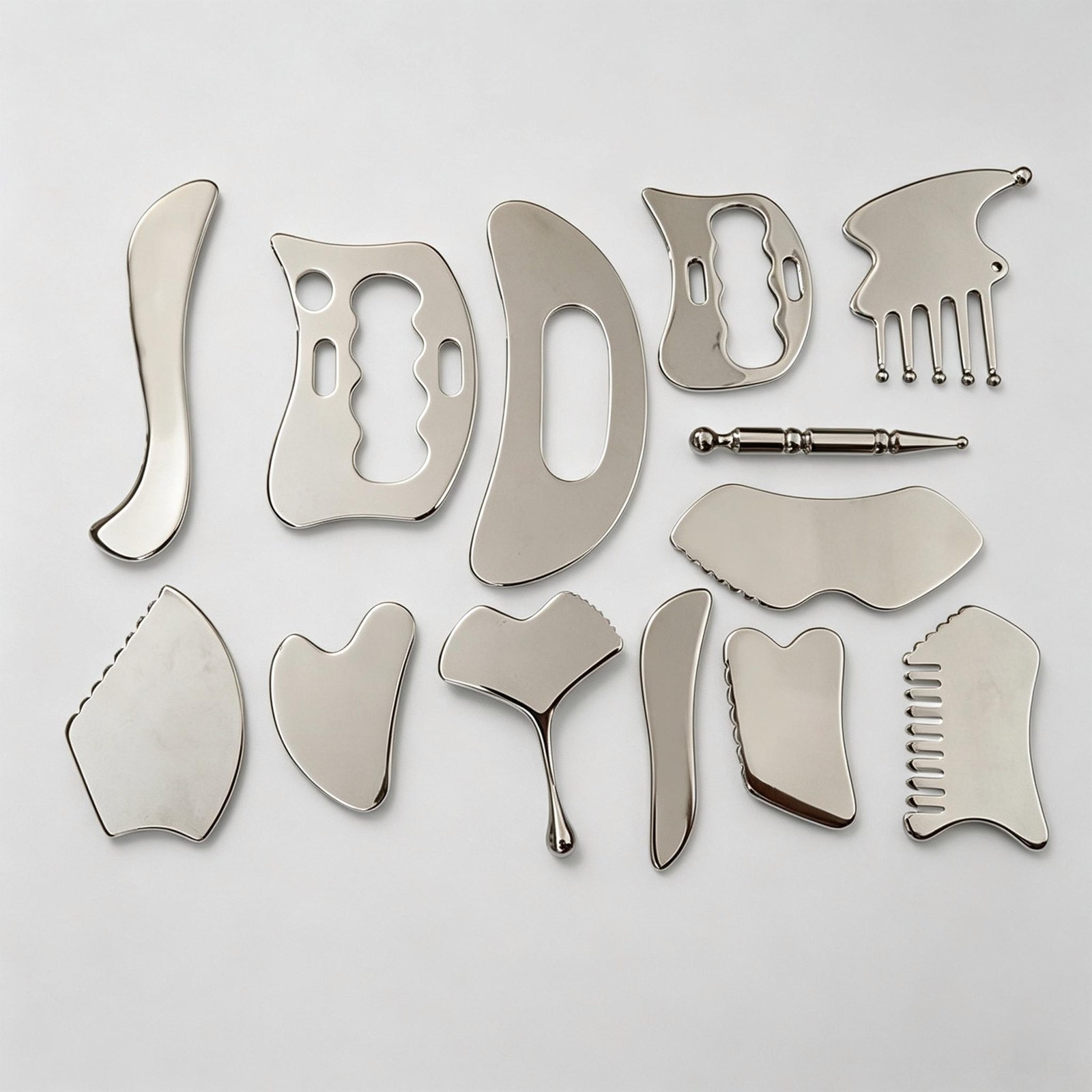
Should I choose 304, 316 or 420 stainless steel for my gua sha tool? It is normally the first material question a buyer asks, and many suppliers answer it in three words: 316 is better.
That answer is incomplete. Higher corrosion resistance does not automatically make a better product, and it does not automatically make a better business decision. This guide compares the three grades the way we discuss them with brands: performance, production, relative material cost, MOQ and where each grade actually fits.
Whether you are developing facial gua sha boards, body tools or fascia knives, the grade decision runs through everything downstream: material cost, production route, minimum order and the retail story you can defend.
1. Why 304 Is the Common Choice
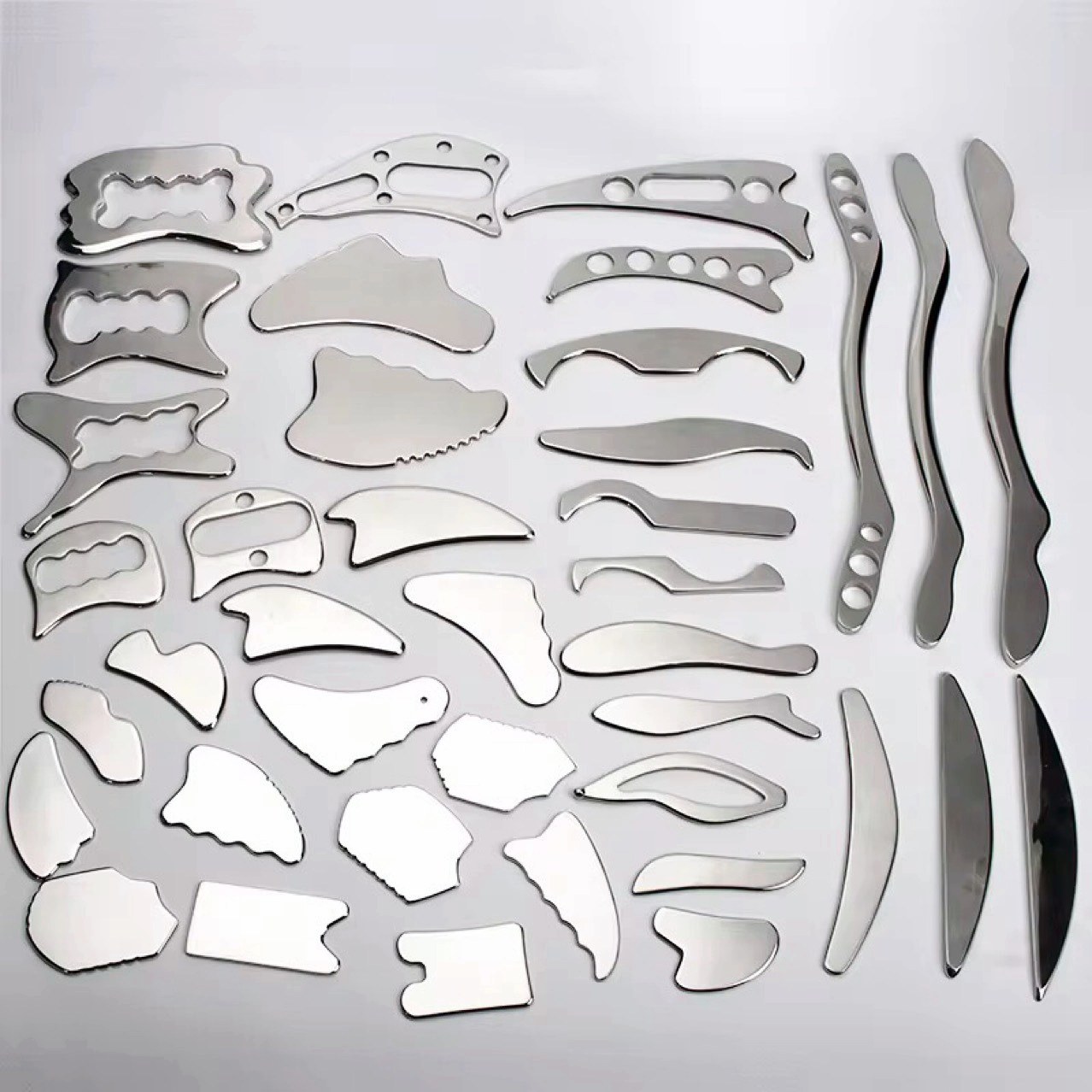
For most stainless steel beauty tools, 304 hits the practical balance: corrosion resistance, durability, manufacturability and cost. It is the grade behind most gua sha boards, facial massage tools, body scrapers and fascia knives on the market.
A gua sha tool lives a wet life. It meets water, facial oils, massage oils, skincare products and sweat, and it gets washed. 304 handles that environment well, which is why it earned the food grade label in the first place.
The commercial argument matters just as much. Material choice flows straight through the project: material cost into production cost, into minimum order, into wholesale terms and finally into the retail margin a brand can defend.
Moving up a grade does not automatically create a product customers will pay proportionally more for. For most brands, 304 is where product performance and commercial viability balance.
2. What About 316?
316 offers higher corrosion resistance than 304, particularly against salt and chlorides. On paper that sounds attractive for a wet product, so the question that matters is narrower: does your product actually need the extra resistance?
316 makes sense when the buyer specifies it, when the tool will live in an aggressive environment such as a busy spa or a coastal market, or when the brand wants a specific material story on the pack.
The trade-off is a higher material cost across the whole run, and on some shapes a different production behaviour to manage. It is a specification decision, not a default upgrade.
3. Why We Do Not Push 316 as the Default
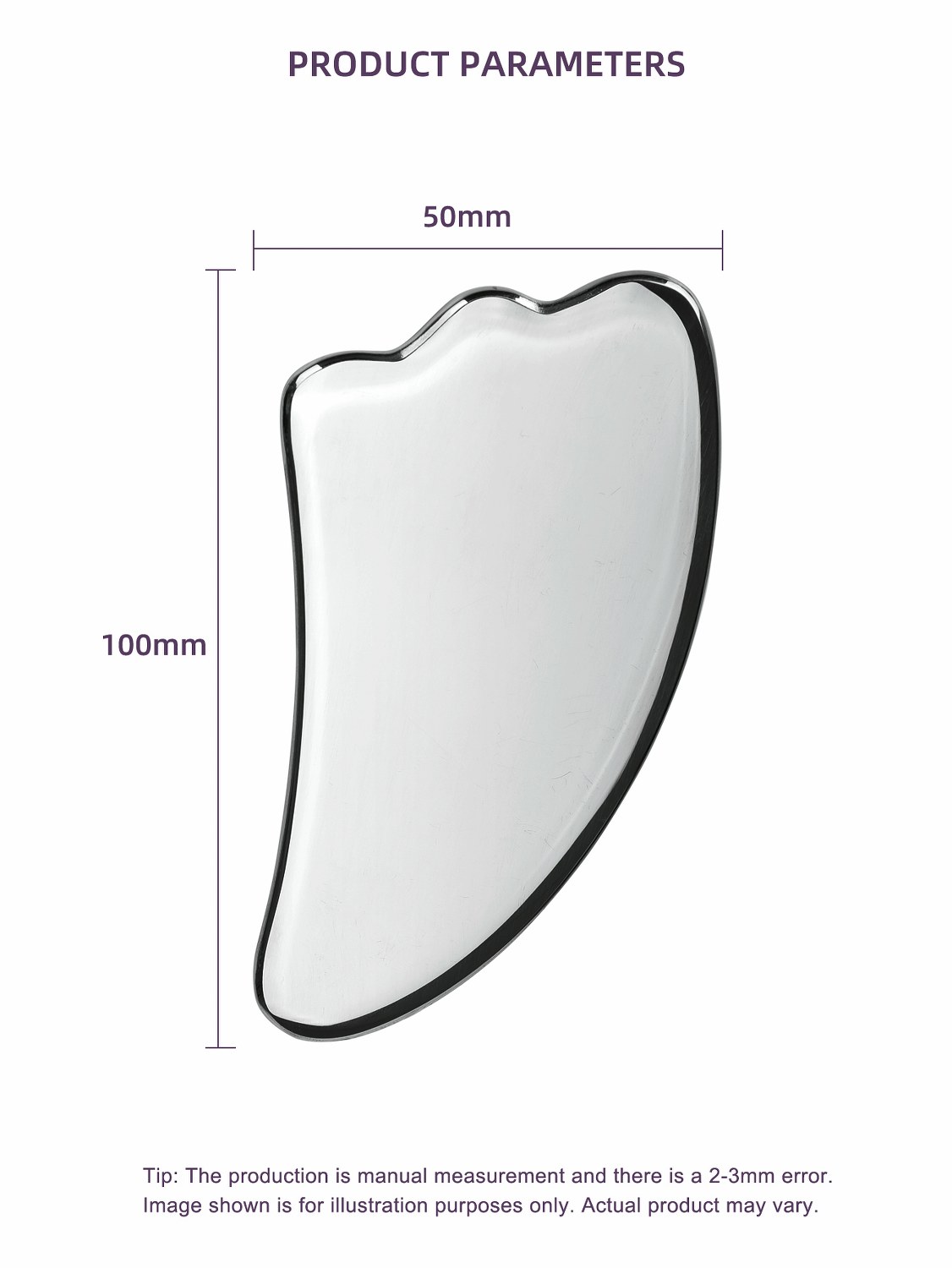
Here is the part most suppliers leave out. A consumer cannot look at a finished gua sha tool and tell 304 from 316. Both polish to the same mirror. The upgrade has to be sold through specification, not through appearance.
Take a typical custom project: a modified shape with a laser logo and private label packaging, running at the 1,000 to 3,000 pieces a custom shape requires. Moving that order from 304 to 316 raises the material cost on every piece in the run.
Sometimes that is the right call, especially for spa, clinical or coastal markets. Often it is not. The better product strategy for most brands is simple: 304 for the standard product, 316 where the specification genuinely requires it.
4. What About 420?
420 is a martensitic stainless steel: high hardness, lower cost, and a regular in cheap hardware. For a gua sha tool the hardness is not the point, and the corrosion behaviour is the problem.
A gua sha tool meets water, oils, sweat and humid bathrooms. 420 carries less chromium and no nickel, so its protective surface layer is weaker, and in wet or salty conditions it pits and stains.
We ran the test ourselves rather than repeating industry talk. Same shape, two grades, soaked side by side - the photograph below is ours.
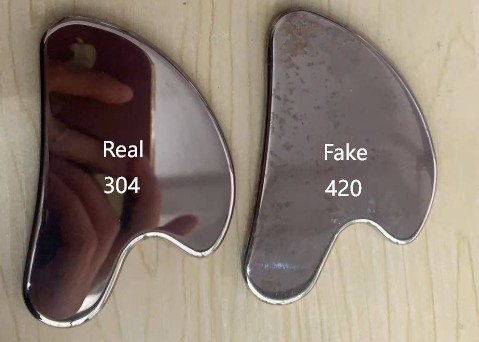
We do not recommend 420 as the default material for beauty tools. It can suit a project with a strong cost target where the buyer understands the limitations and can stand over the care instructions.
If a quotation arrives far below the others for the same shape, finish and packaging, the difference is somewhere. Grade and edge finishing are the two places it usually hides.
5. The Practical Comparison
Put side by side, the three grades separate cleanly.
Grade | Corrosion resistance | Hardness | Relative material cost | Where it fits |
|---|---|---|---|---|
304 | Good for normal wet use | Moderate | Moderate | Most gua sha and fascia tools |
316 | Higher, resists salt and chlorides | Moderate | Higher | Spa, clinical, specified projects |
420 | Lower when wet or salty | High | Lowest | Cost-led projects with careful care expectations |
Read the table as fit, not as a ranking. It does not say 316 is the better product. It says different materials suit different requirements, and for most standard projects 304 is the practical balance of performance and cost.
6. Grade Is Only One Part of Quality
Two factories can both use 304 and still produce very different tools. The grade answers one question; the buyer should also look at what the grade does not cover.
Edge finishing: the contact edge should be smooth, rounded and free of sharp points along the whole contour, including the tight interior curves.
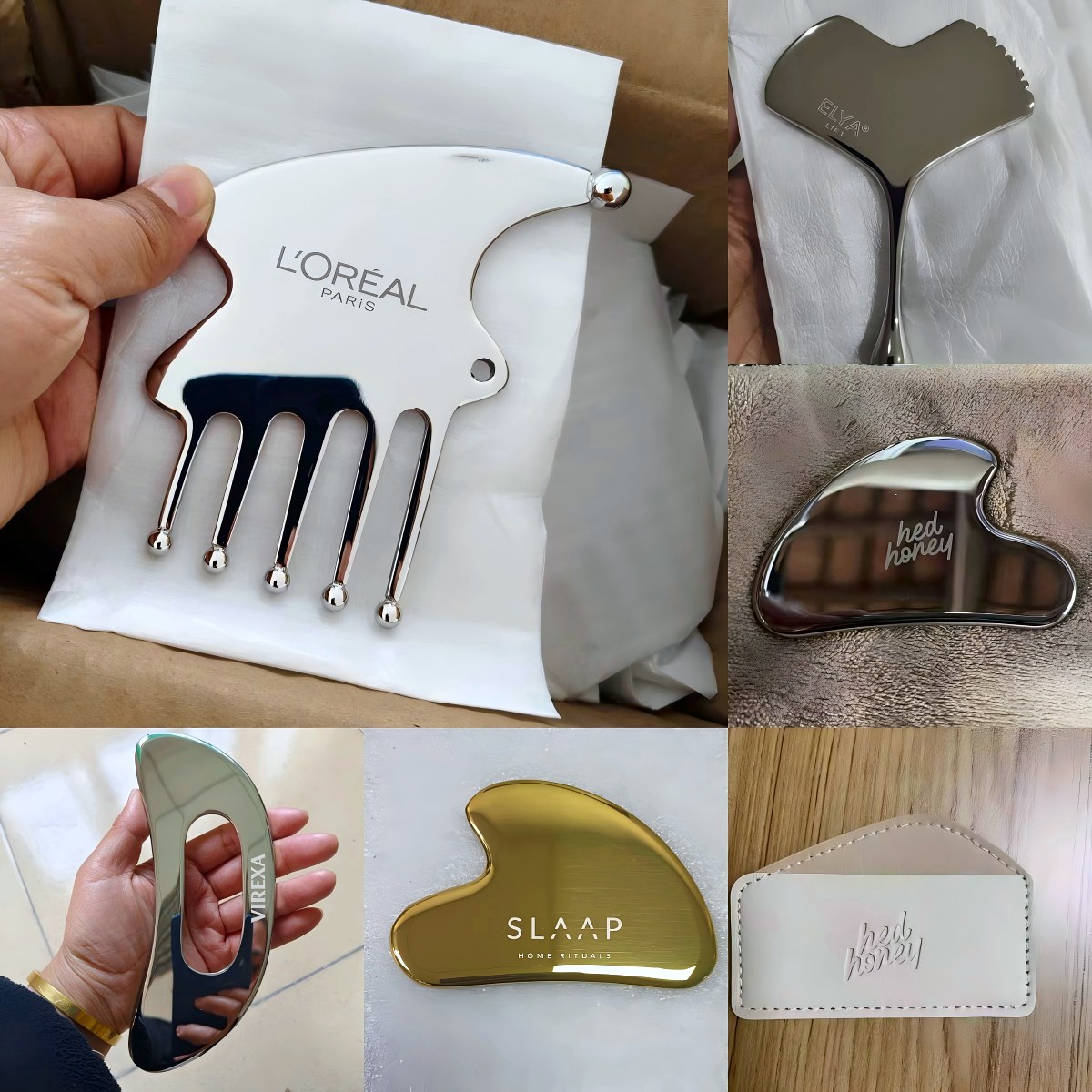
Surface polishing, shape accuracy and logo quality complete the picture. Mirror, satin or PVD each create a different product from the same steel, the geometry decides how the tool works on skin, and the logo has to sit consistently on every piece.
7. What to Ask a Manufacturer
Before placing an order, put these questions to the supplier. The speed and specificity of the answers tells you most of what you need.
Which grade do you use? What polishing and finishing routes do you run? How do you guarantee the edges are skin-safe?
Can you manufacture a custom shape from our drawing? Which logo methods do you run in house? Will we approve a physical sample before mass production? What inspection records ship with the batch?
And the commercial frame: what is the minimum for a stock shape with our logo, what is the minimum for a custom shape, and what does private label packaging add to the schedule?
8. Our Approach
Alison Gua Sha Factory runs food grade 304 as the standard grade across gua sha boards, facial tools, body scrapers and fascia knives, with 316 available for projects that genuinely require it. Cutting, polishing, marking, inspection and packing happen under one roof.
We will tell you when a stock shape serves your market as well as a custom one, and we say so before you spend on tooling.
9. Custom Shape Development
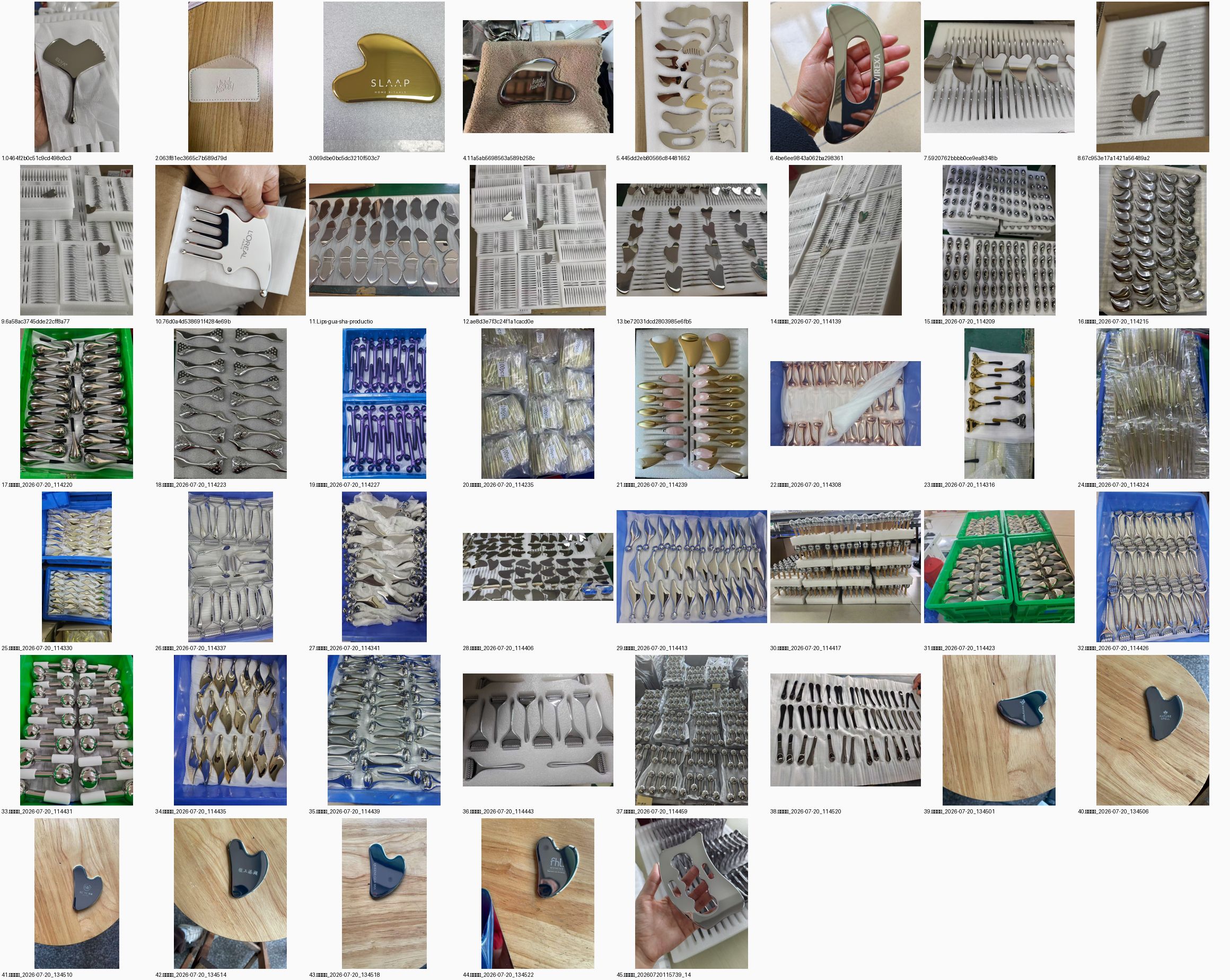
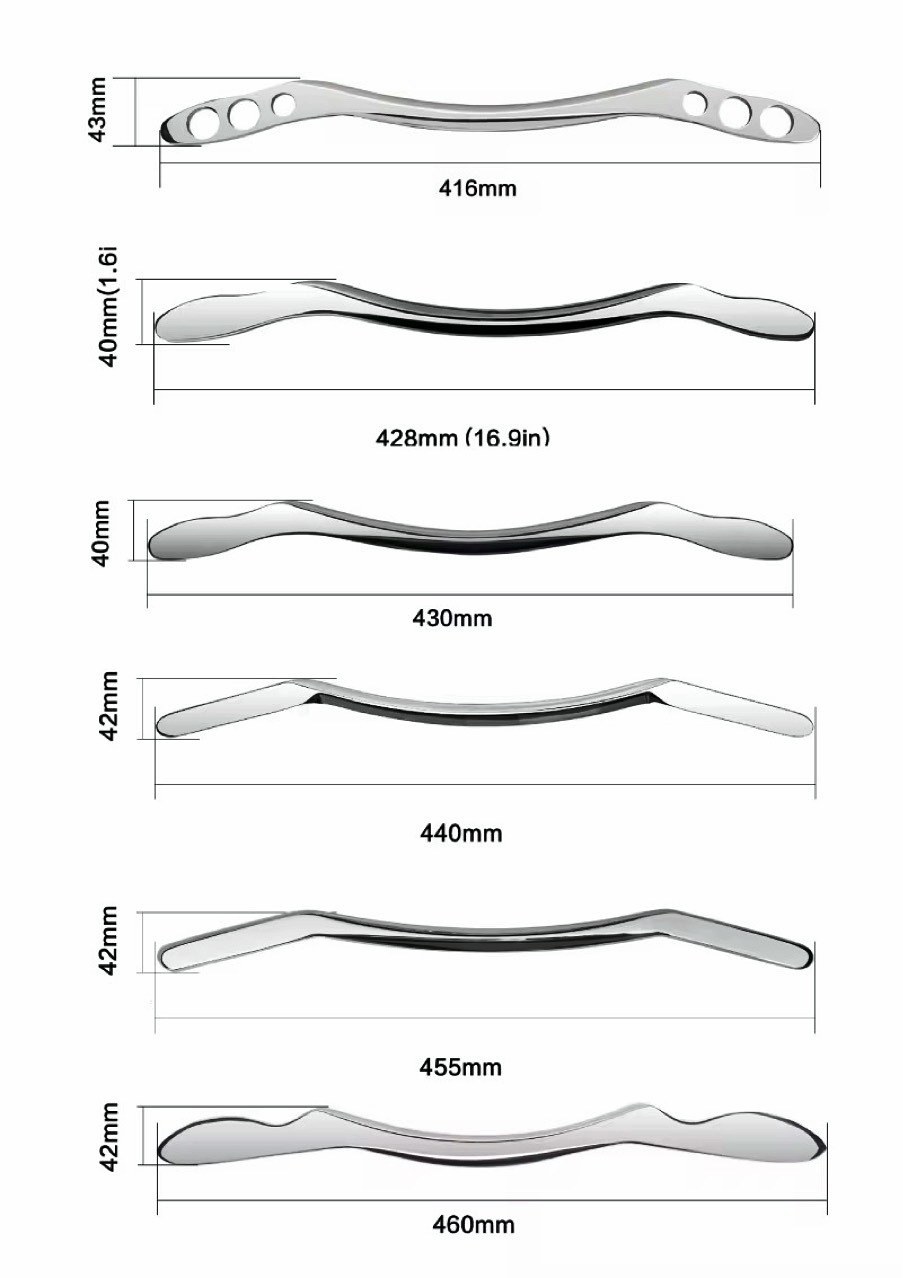
You do not need to pick from a fixed catalogue. Send a sketch, a reference tool, a CAD file or a physical sample, and we will confirm the overall dimensions, thickness, ergonomics, edge radius, logo position, finish and packaging with you.
One requirement is firm: a custom shape is cut from a mould, so we need a CAD file or a dimensioned technical drawing. A generated image or sketch alone shows appearance but carries no technical parameters, so there is nothing to tool from.
The route is the same every time: drawing approval, prototype, sample approval, mass production, inspection, shipment. Custom shapes start from 1,000 to 3,000 pieces because of the mould, confirmed against your drawing and material.
10. MOQ and Customisation
A stock shape with your laser logo starts from 200 pieces per shape, which is the lowest-commitment route to market. A custom shape needs a mould and starts from 1,000 to 3,000 pieces. Custom packaging is set per design.
Beyond those two anchors, the minimum moves with the design, the grade, the finish, the logo method and the packaging. Tell us the target quantity and what you want the product to carry, and we will recommend the grade and the production route that fit.
Start low on a stock shape, prove the design, then move to a custom shape once you know which sizes sell.
Frequently Asked Questions
Is 304 stainless steel good for gua sha?
Yes. It balances corrosion resistance, durability, manufacturability and cost, which is why it is the practical standard for gua sha boards, facial tools and fascia knives.
Is 316 better than 304 for gua sha?
316 resists corrosion better, but better resistance is not automatically a better product. For most standard beauty tools 304 is sufficient. Specify 316 when the environment or the brand position genuinely requires it.
Is 420 stainless steel suitable for gua sha?
It can suit a strongly cost-led project, but it is not our default for beauty tools. In wet or humid use it needs careful drying and maintenance, and our own soak test showed visible rust on 420 while the 304 was unchanged.
Which grade is most common for gua sha tools?
304. It is the grade most stainless steel gua sha and massage tools are made from, across retail, spa and clinical channels.
How can I verify the grade before ordering?
Smell it: genuine 304 has no odour. Try a magnet: 420 grips firmly while 304 is typically non-magnetic. Soak it in salt water for 24 hours and watch for yellowish-brown staining. Then ask for the mill certificate.
Is 304 stainless steel food grade?
Yes. 304 is what the industry calls food grade, and 420 is not. The higher chromium and nickel content is what keeps the surface passive through skin contact and cleaning.
Can I customise a stainless steel gua sha?
Yes. Shape, dimensions, thickness, surface finish, logo engraving, colour treatment and private label packaging are all customisable.
Can you make a custom shape from my drawing?
Yes. Send a CAD file, a dimensioned drawing or a physical sample. An AI-generated image alone is not enough because it carries no technical parameters. A custom shape needs a mould and starts from 1,000 to 3,000 pieces.
Looking for a Stainless Steel Gua Sha Manufacturer?
If you are developing a private label stainless steel gua sha, facial massage tool or fascia tool, send us the design, the target quantity, your logo file and your packaging requirements.
We will help you evaluate the grade, the structure, the finishing options, the customisation feasibility, the minimum order and the packaging, and we will say so plainly when a simpler specification would serve you better.
guashafactory@gmail.com | +86 133 3260 7156 | No. 88 Zhengkeng Street, Changan Town, Dongguan City, Guangdong, China