Oct 13, 2026Services Overview
Custom Gua Sha Manufacturer: Shapes, Materials, Logo and Packaging
What a custom gua sha manufacturer can change: shape, material, size, logo, finish, colour and packaging. Bian stone custom shapes from 200 pcs; stainless and ceramic from 1,000 pcs.
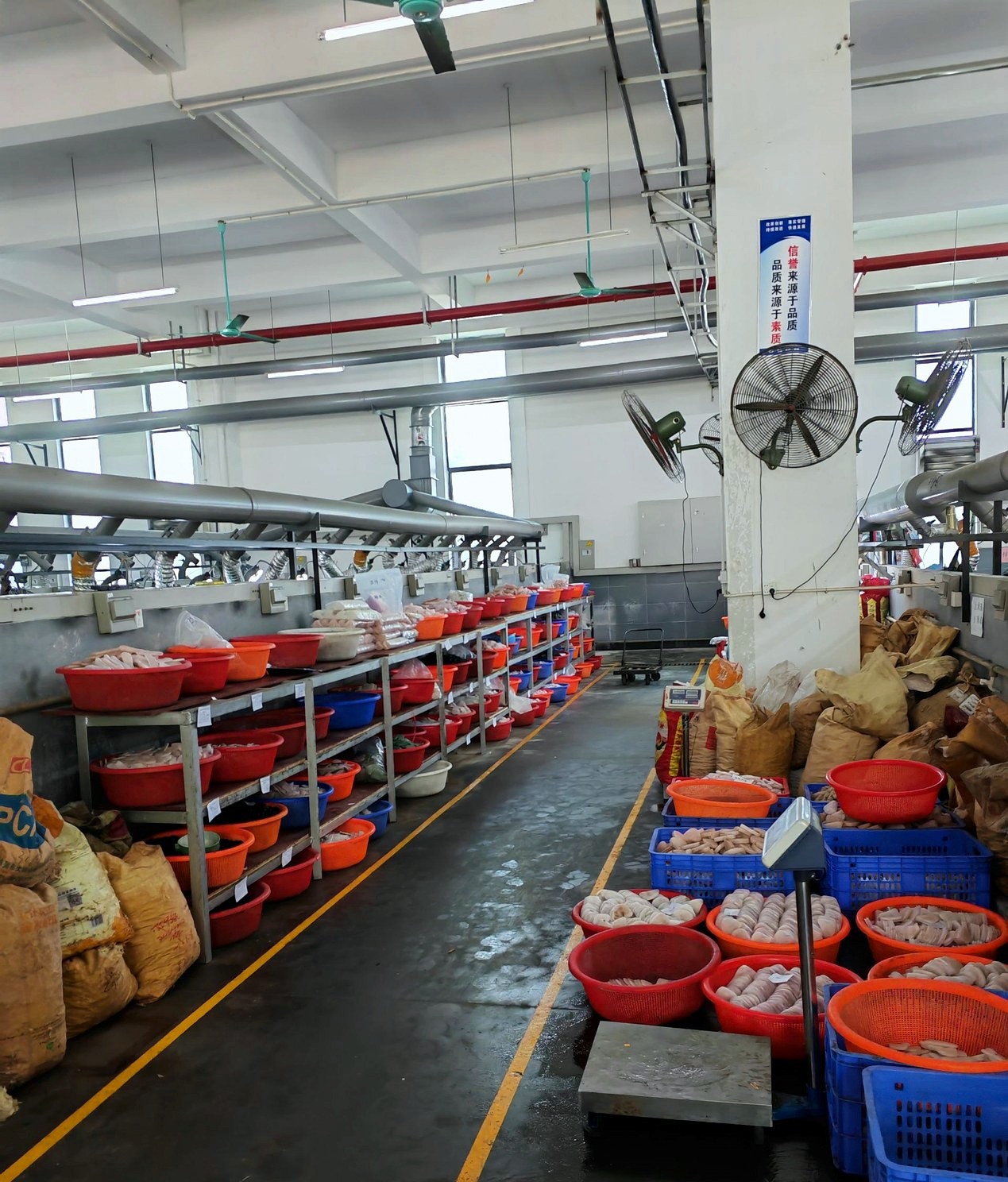
Custom gua sha manufacturing covers seven variables: shape, material, size and thickness, logo, surface finish, colour and coating, and packaging.
Change one and you have a differentiated product; change several and you have a proprietary format no competitor can list against you. Here is exactly what can be changed, what each change costs you in time and MOQ, and how a custom project runs at our factory in Dongguan.
1. What Custom Really Means
Custom is often used loosely. In manufacturing it splits into three levels, and knowing which level you are buying keeps quotes comparable.
Level 1 - Branding Custom
Existing tool, your logo, your packaging. Fastest and cheapest: laser engraving has no minimum on stock shapes, and there is no tooling. This is where almost every brand should start.
Level 2 - Specification Custom
Existing silhouette adjusted in thickness, edge radius, size, finish or colour to fit your positioning. Stone re-profiles without a mold, so no tooling is needed. Stainless steel and ceramic custom shapes do require a mold, which adds tooling cost and raises the minimum to 1,000 pieces.
Level 3 - Fully Custom Development
New shape from your sketch, CAD file or reference sample, proprietary to your brand. Minimums depend on material: bian stone from 200 pieces, other stone from 500 pieces, stainless steel and ceramic from 1,000 pieces. Worth it once a brand has proven demand and wants a defensible product.
Move up the levels only when the market has answered. A laser-logoed stock shape that sells is worth more than a proprietary mold that sits in a warehouse.
2. Custom Shape
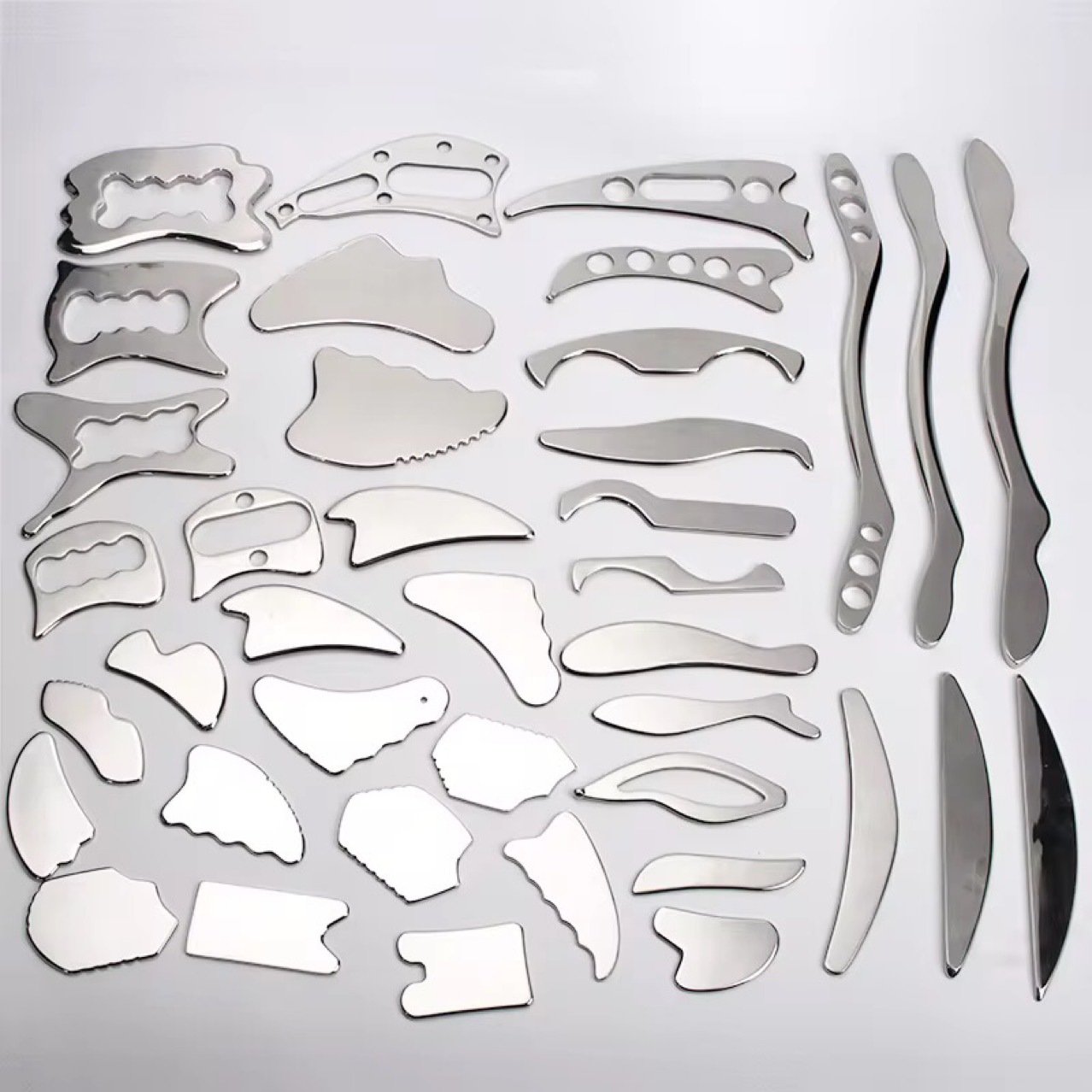
Shape is the most visible customization and the one buyers underestimate most. We need the working edge profile and the intended stroke direction, not just an outline.
From a Sketch or Photo
A clear photo with a reference object for scale, or a hand drawing with approximate dimensions, is enough for us to propose dimensions, weight and material options.
From a CAD File
Preferred for fully custom work. We review for manufacturability - minimum radius at the working edge, thickness at the thinnest point, and how the tool will be held - and flag anything that will not polish cleanly before tooling is made.
From a Reference Sample
Send a physical sample. We reverse-engineer dimensions and edge geometry, and can either reproduce it closely or improve the parts that are uncomfortable to hold or hard to clean.
Stock Shapes You Can Adjust
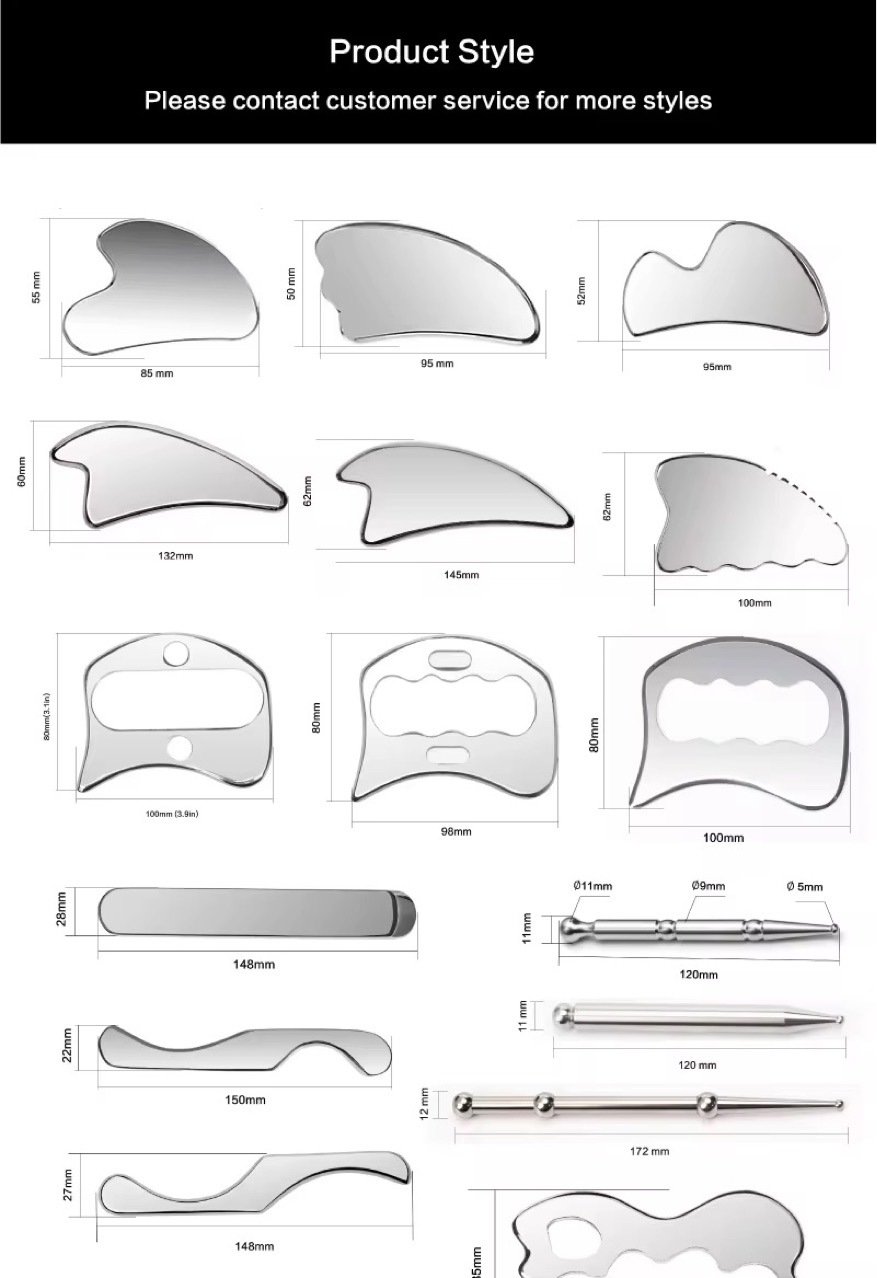
Heart, S-shape, wave, I-shape, hook, fish, thumb, mushroom, double-curve and comb formats can all be scaled and re-profiled without new molds in stainless steel, which makes this the fastest route to a distinctive tool.
3. Custom Material
Material sets your price position, your product claim and your durability story. The five families we manufacture behave very differently in all three.
Stainless Steel (304 Food Grade, 316, 420)
Best all-round choice for the finished product: hygienic, unbreakable, sterilizable and naturally cool. Note the trade-off on the tooling side - stainless steel custom shapes require a mold, so a bespoke stainless profile carries tooling cost and a 1,000-piece minimum, while stone forms without a mold and starts lower.
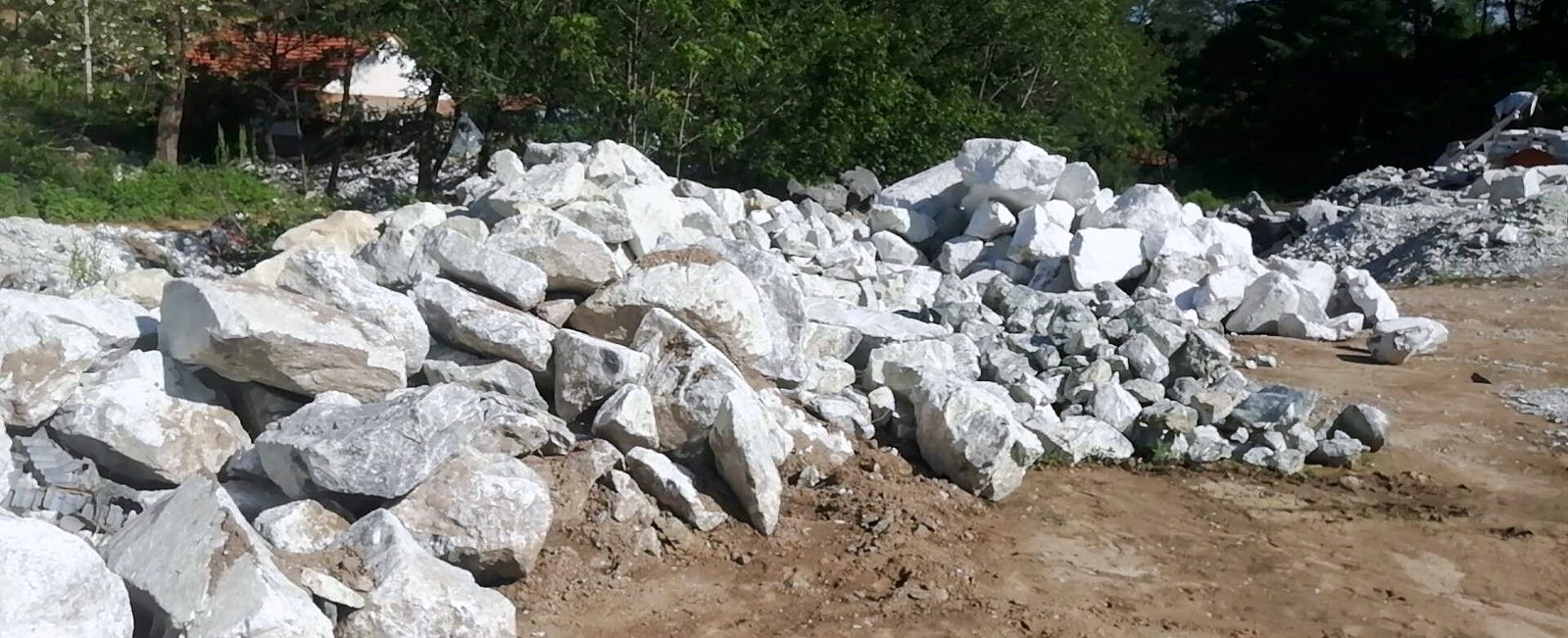
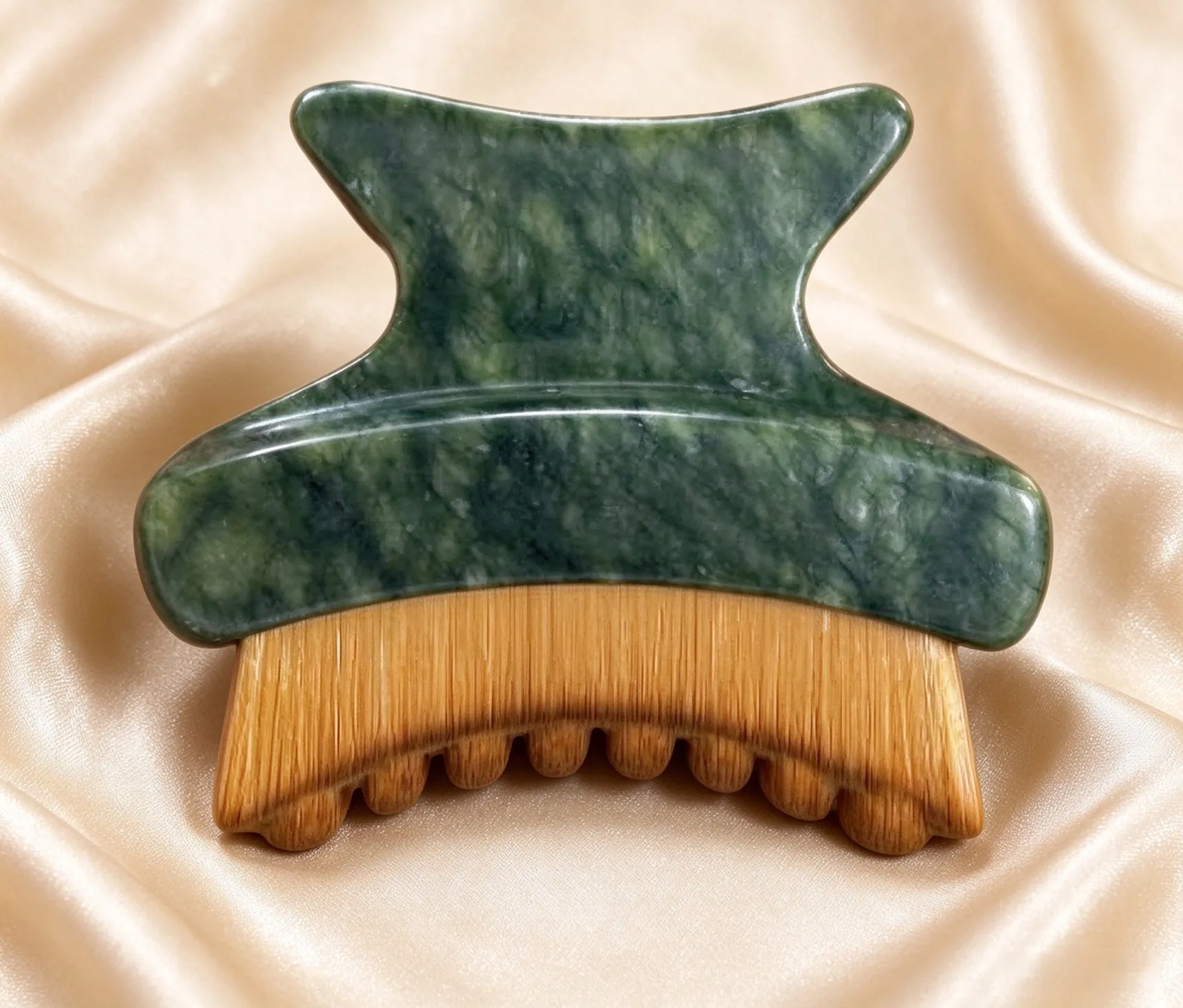
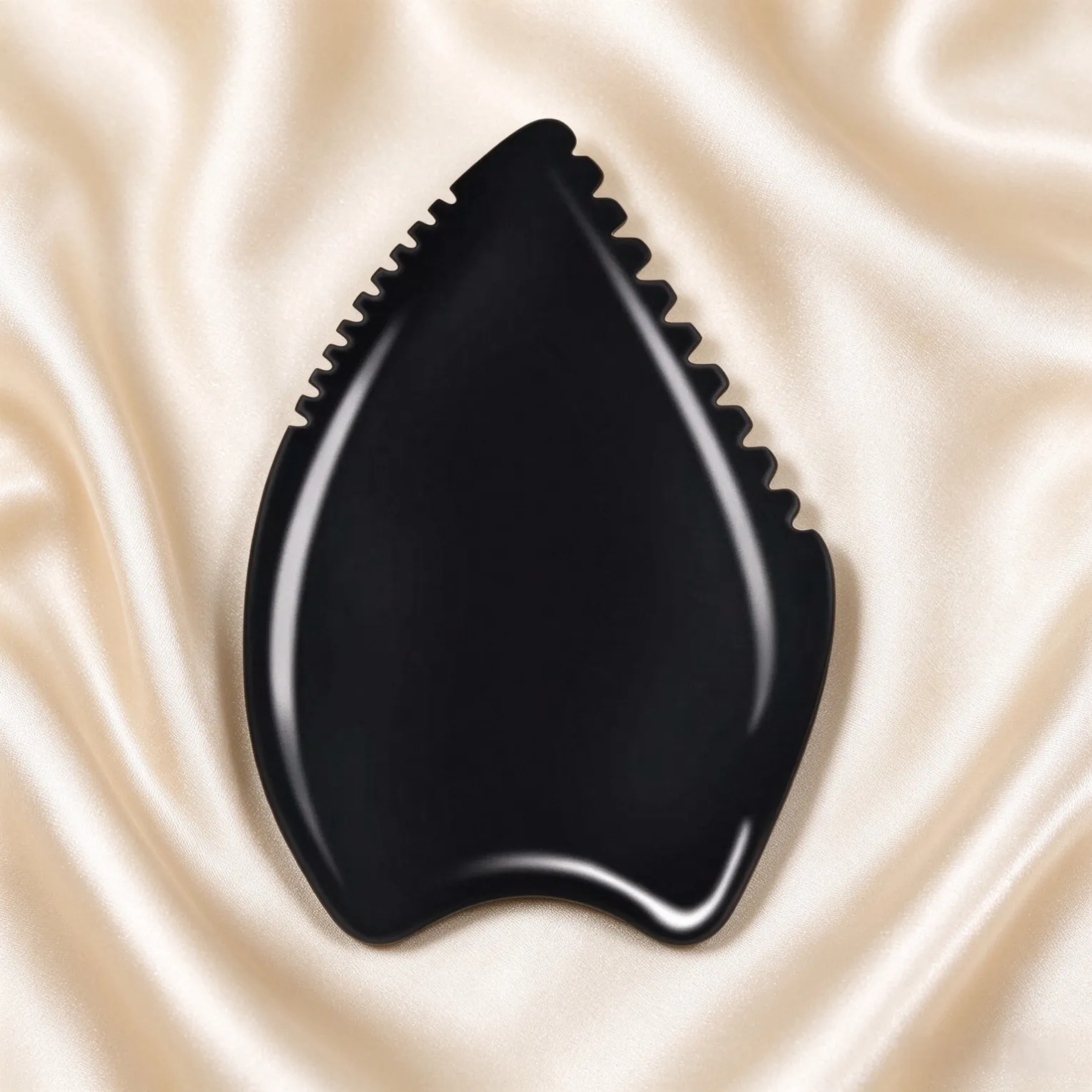
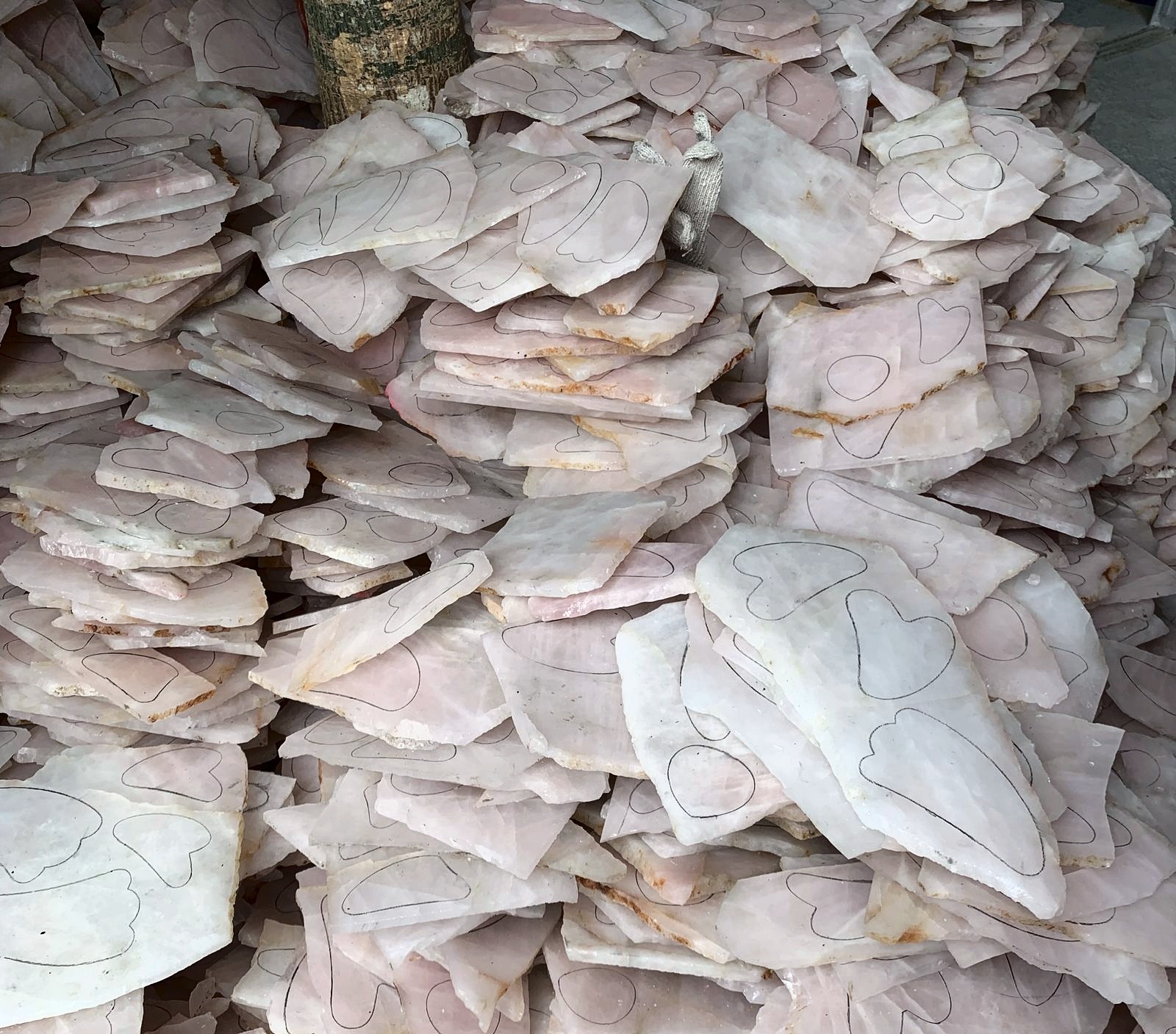
Natural Stone (Jade, Rose Quartz, Obsidian, Red Jade, Blue Spot Jasper)
Best for wellness storytelling and gift appeal. Expect natural colour and grain variation between pieces, more careful packing requirements, and hand-finishing that makes each tool slightly individual. Rose quartz is our best-selling material and carries the widest grade range, from A+ down to B.
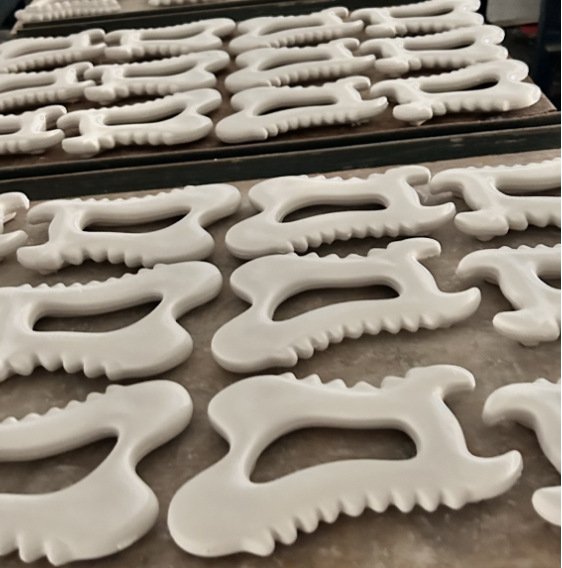
Bian Stone and Ceramic
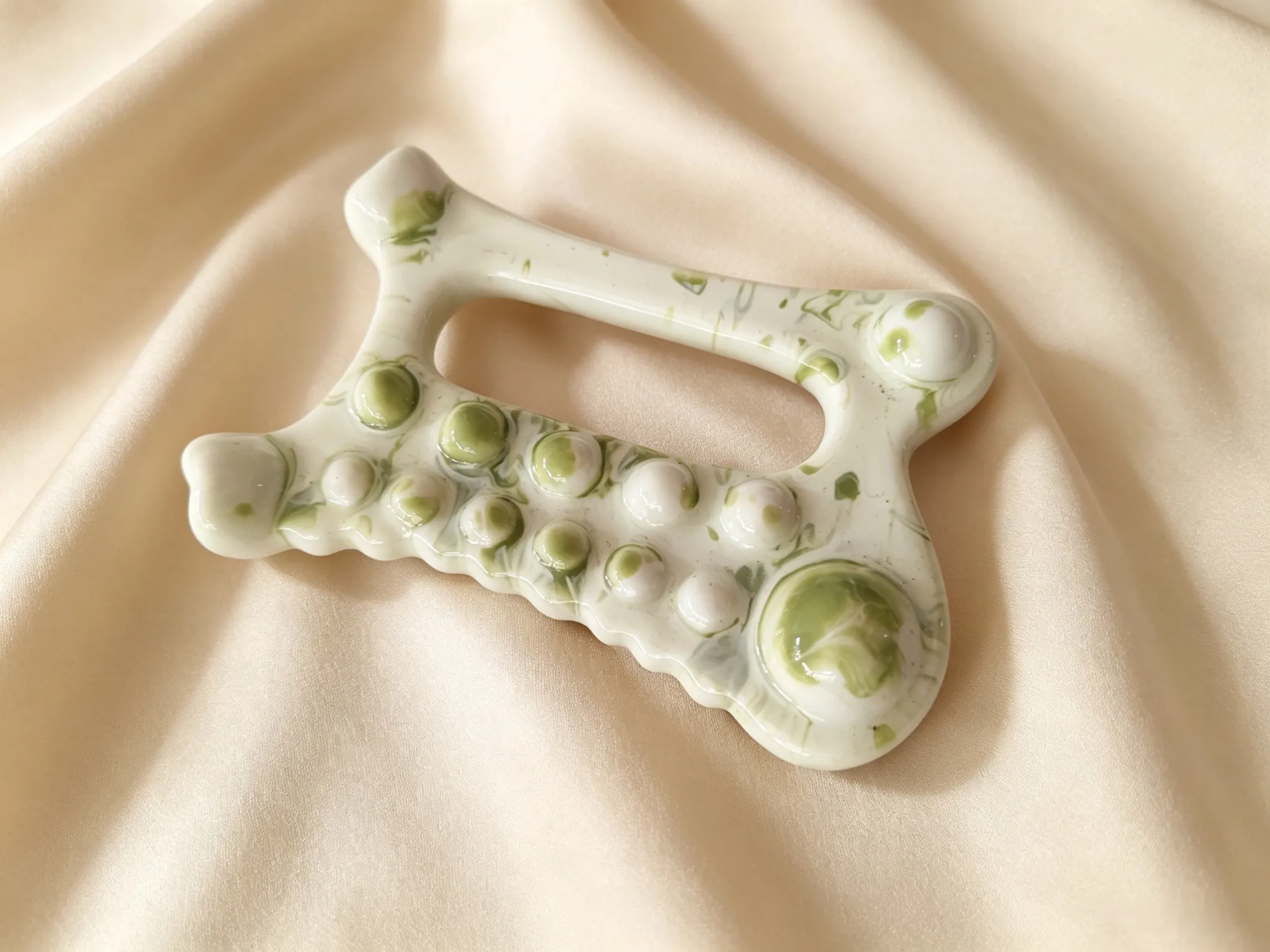
Bian stone is heavy, retains heat and is prized in traditional therapy - usually hand-polished, so it suits professional body tools and heritage-positioned brands. Ceramic is pressed and glazed, giving uniform surface and colour with the most colour control of any family.
Terahertz
Premium engineered stone with a distinctive luster and cool surface. Highest cost, curated assortments, best for top-tier price positioning.
Material choice should follow the channel: steel for clinics and hygiene-led search, stone for wellness retail and gifting, ceramic and terahertz for design-led premium lines. About half of the inquiries we receive name the material before anything else - it is the decision buyers make first.
4. Custom Size, Thickness and Weight
Size and weight must be engineered together. A body tool that is too light cannot transmit pressure; a facial tool that is too heavy tires the hand during a routine, and weight is one of the first things a customer notices when they open the box.
Facial Tools
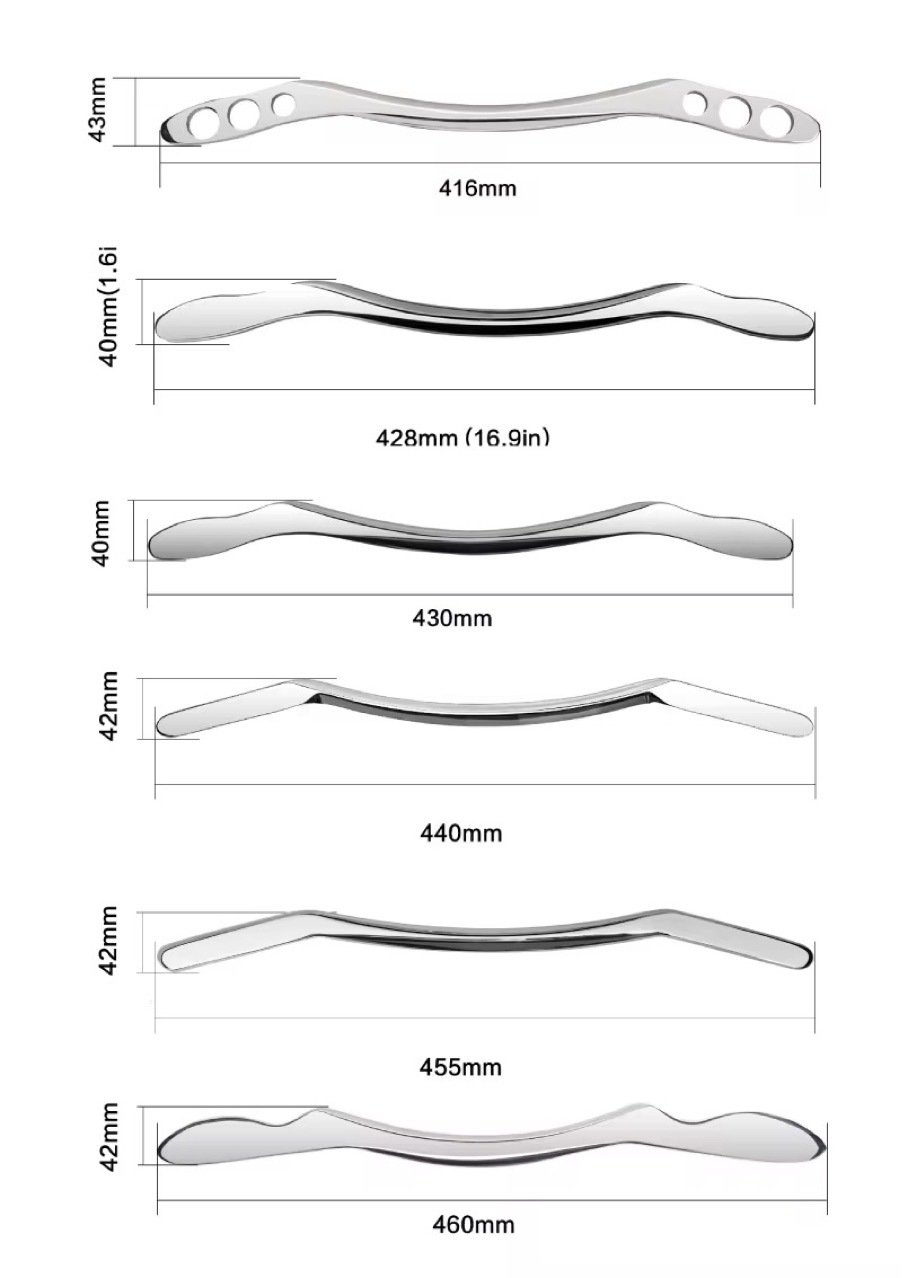
Thin, light, small working edge, designed for controlled strokes along the jawline, cheek and brow. A standard heart shape is 82 x 51 x 6.5 mm, with a working edge around 3-5 mm and a bulk tolerance of roughly 2 mm.
Body and IASTM Tools
Thicker, heavier, longer working edge with additional grip area. These tools are used with pressure, so rigidity and hand comfort matter more than weight reduction.
Travel and Gift Formats
Reduced footprint versions that fit pouches and gift boxes alongside rollers or brushes, often sold as part of a set rather than as a standalone SKU.
5. Custom Logo
Branding turns a tool into your product, and it is the lowest-cost customization available to a new brand. Two processes cover most orders.
Laser Engraving
Permanent mark etched into the surface. Available from 200 pieces per model on stock shapes, and the method most of our brand customers choose because adhesion and durability are strongest. On natural stone the mark follows the mineral structure, so the edge is slightly uneven - normal for the material.
Silk Screen Printing
A printed mark that sits flatter on the surface, which suits stone and ceramic when you want a cleaner, more uniform appearance. Minimum order is 1,000 pieces. Multi-colour marks are possible with UV or heat transfer printing, at higher cost and with somewhat lower adhesion.
Placement and Artwork
Send vector artwork where possible. We confirm placement, size and contrast on a digital mock-up, then on a physical sample. Because our tools are cut and finished by hand rather than molded, the same logo can sit 1-2 mm differently between pieces - engravers adjust within a small range to land on the flattest spot so every mark stays clear and complete.
Colour and Exclusivity
Single-colour engraving gives the best visual result and the strongest adhesion, which is why it is our recommendation. Custom shapes can be covered by a confidentiality agreement, and we do not produce an exclusive design for other buyers.
6. Custom Surface Finish
Finish changes how the tool feels on skin, how it photographs and how it wears. It is one of the cheapest ways to differentiate a product that shares a shape with competitors.
Mirror Polish
High-shine, smoothest glide, premium look. Requires the most careful handling during packing because surface marks show easily.
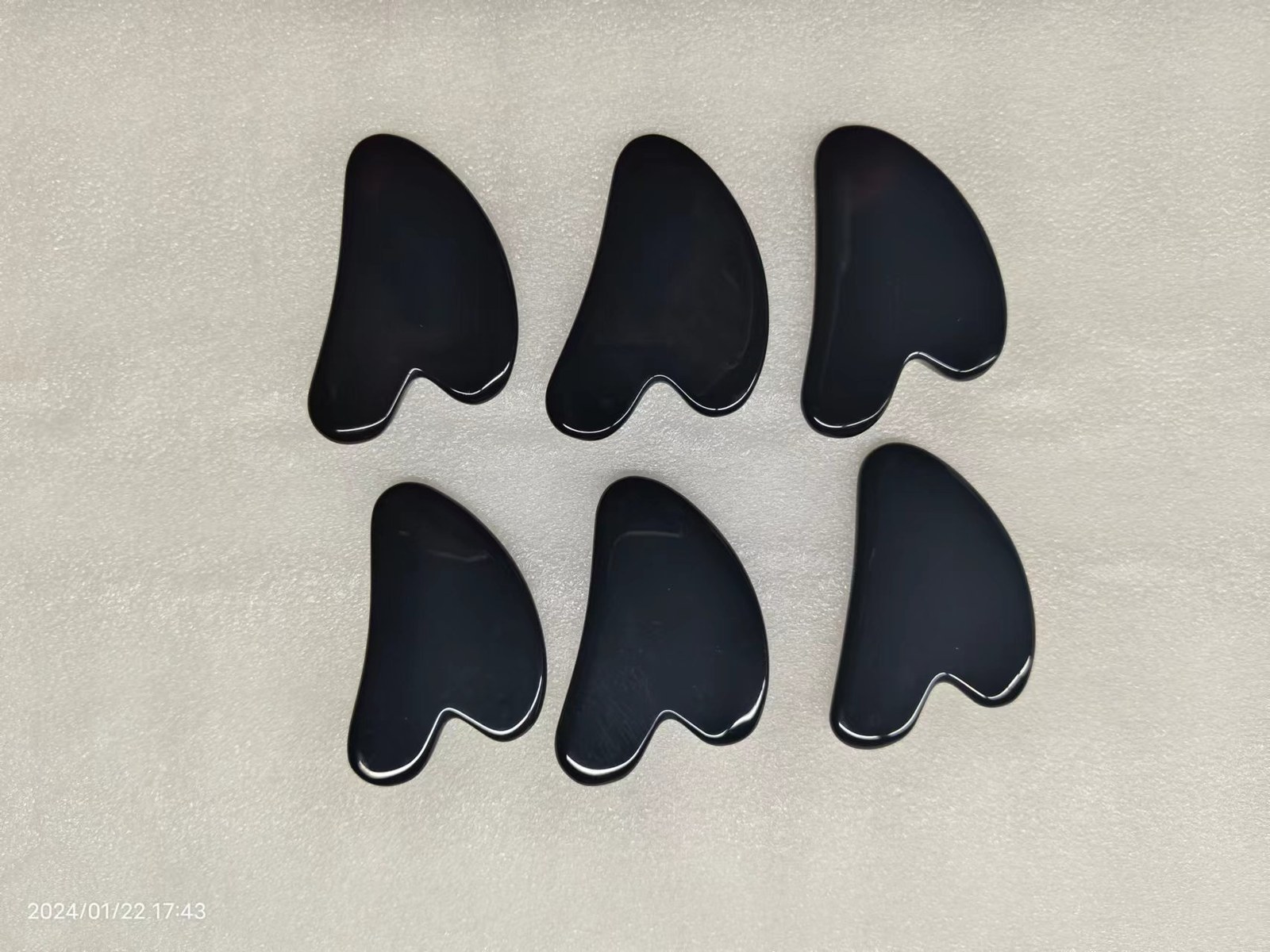
Satin, Brushed and Matte
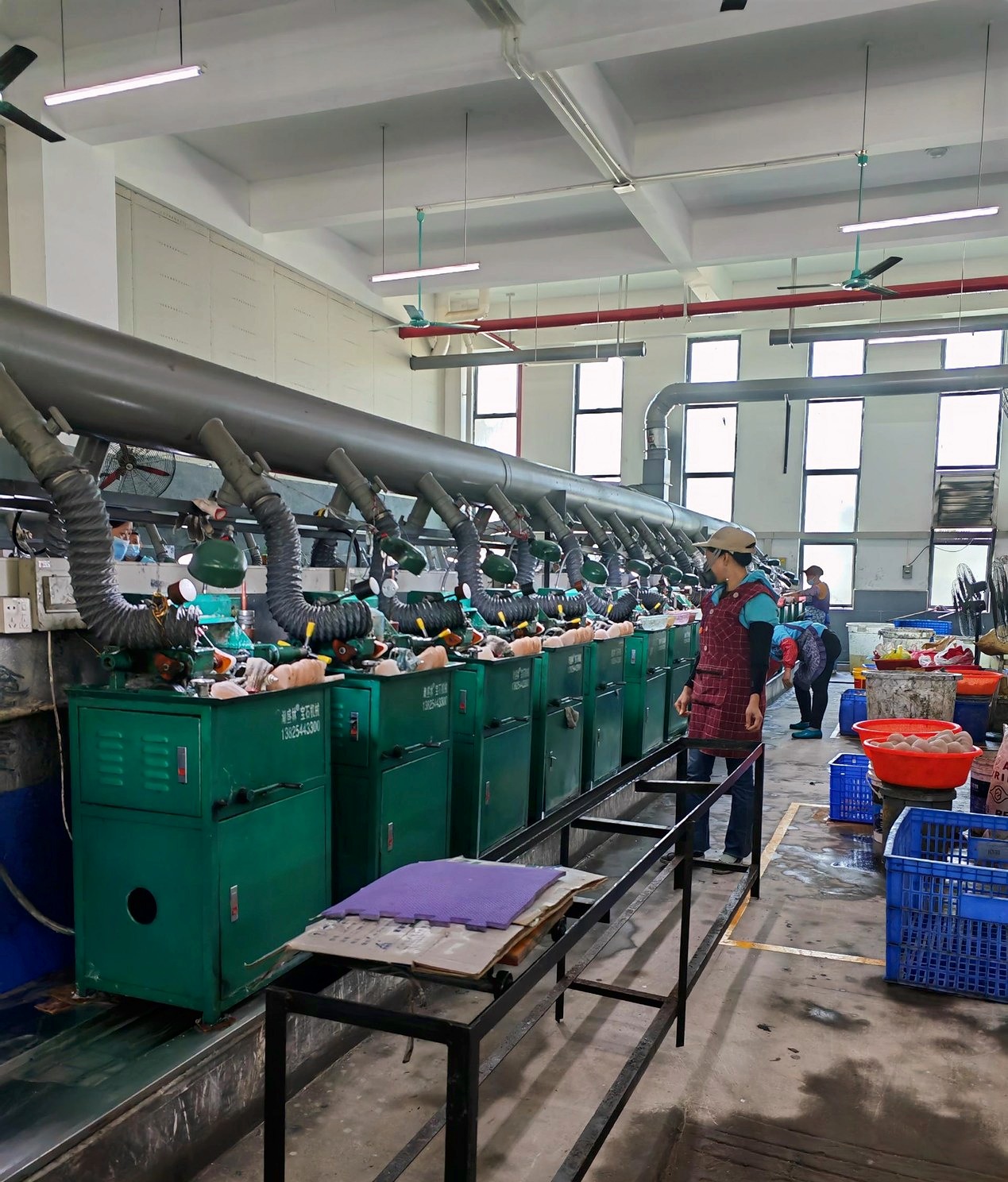
Non-reflective, modern, and more forgiving of handling marks. Matte and brushed finishes also offer a little more grip than mirror. Our polishing cycle runs a minimum of four days per batch to reach these standards consistently.
Sandblasting and Coatings
A textured surface improves grip and creates a clearly different visual identity. Coated steel - titanium, gold PVD, black or rainbow - adds a premium or fashion-led look with additional surface hardness, at higher unit cost and a higher minimum quantity.
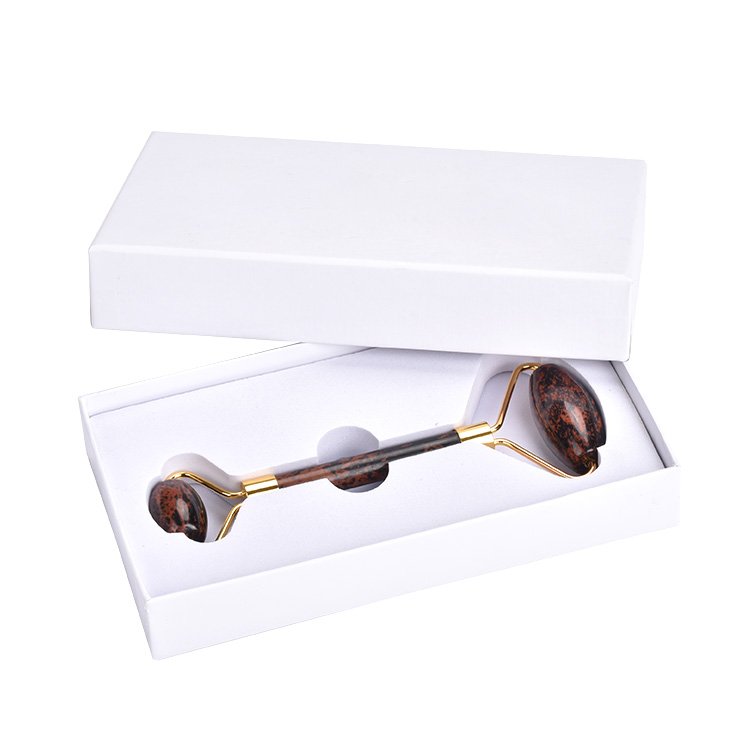
Hardware Finishes
For rollers and tool handles, hardware colours include light gold, champagne, matte gold and silver. Each batch of hardware is salt-spray tested for 48 hours before assembly, which is worth specifying if your market is humid or coastal.
7. Custom Colour
Ceramic can be produced in custom glazes and colourways, and coated steel can be coloured. Natural stone colour is fixed by nature: rose quartz runs from very pink through normal and light pink to pinkish white, and white jade from solid white through translucent to grayish white.
If exact colour matching matters to your brand, ceramic is the material with the most control. If you are specifying stone, tell us the colour you want and we will recommend the material that gets closest, then grade batches for consistency so a reorder does not arrive visibly different from the first shipment.
8. Custom Packaging
Packaging is where buyers most often lose time, because it is confirmed late and produced through a different supplier chain.
Formats and Minimums
Printed rigid gift boxes, folding cartons with window, fabric and velvet pouches, paper sleeves, molded pulp or foam inserts, and instruction cards. Custom flip boxes start at 500 pieces, custom window boxes at 1,000 pieces, and cloth bags at 500 pieces. Packaging minimums cannot be reduced - below the minimum the total tooling cost stays the same and spreads over fewer units, so the unit price rises.
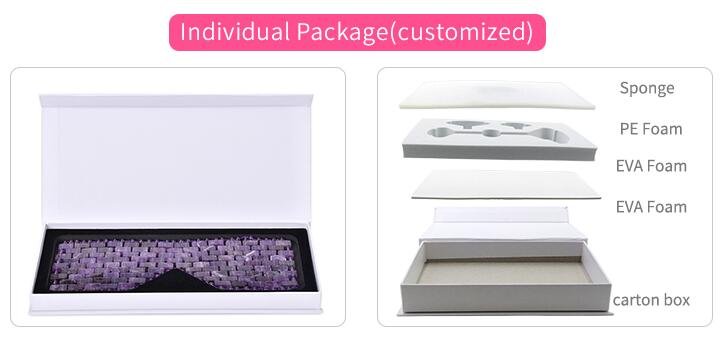
What to Decide Early
Box dimensions, print method, insert type and how the tool sits when the lid opens. A tool that arrives loose in an oversized box reads as cheap no matter how well it was made. Packaging samples run from a digital proof to a physical sample, and the physical sample is credited back at the qualifying order volume - we confirm both with your quotation.
Sets and Multi-Item Packaging
A single box holding a gua sha plus a lymphatic brush or roller needs an insert designed for both items. Sets should be specified as one packaging project, not as two products sharing a carton.
9. Custom Gift Sets and Product Combinations
Combination sets are the most reliable way to lift order value. Proven formats include gua sha plus lymphatic brush, stainless steel body tool plus cryo globe, facial gua sha plus roller for a complete routine, and holiday sets pairing stone and steel across price points. We assemble sets under one SKU with unified packaging, so your warehouse and your marketplace listing both see a single product.
10. How a Custom Project Runs
Eight stages take a project from idea to shipment. The sequence is fixed; the duration depends on how much of the tool is custom.
Stage 1 - Brief
You send the idea, reference image or drawing, material preference, logo file, target quantity and market.
Stage 2 - Feasibility and Quotation
We confirm materials, propose dimensions and edge profile, flag manufacturing constraints, and quote with MOQ and lead time.
Stage 3 - Sample Development
A pre-production sample is produced. Laser engraving samples take 1-3 days; silk screen 7-10 days; custom stone shapes 14-20 days.
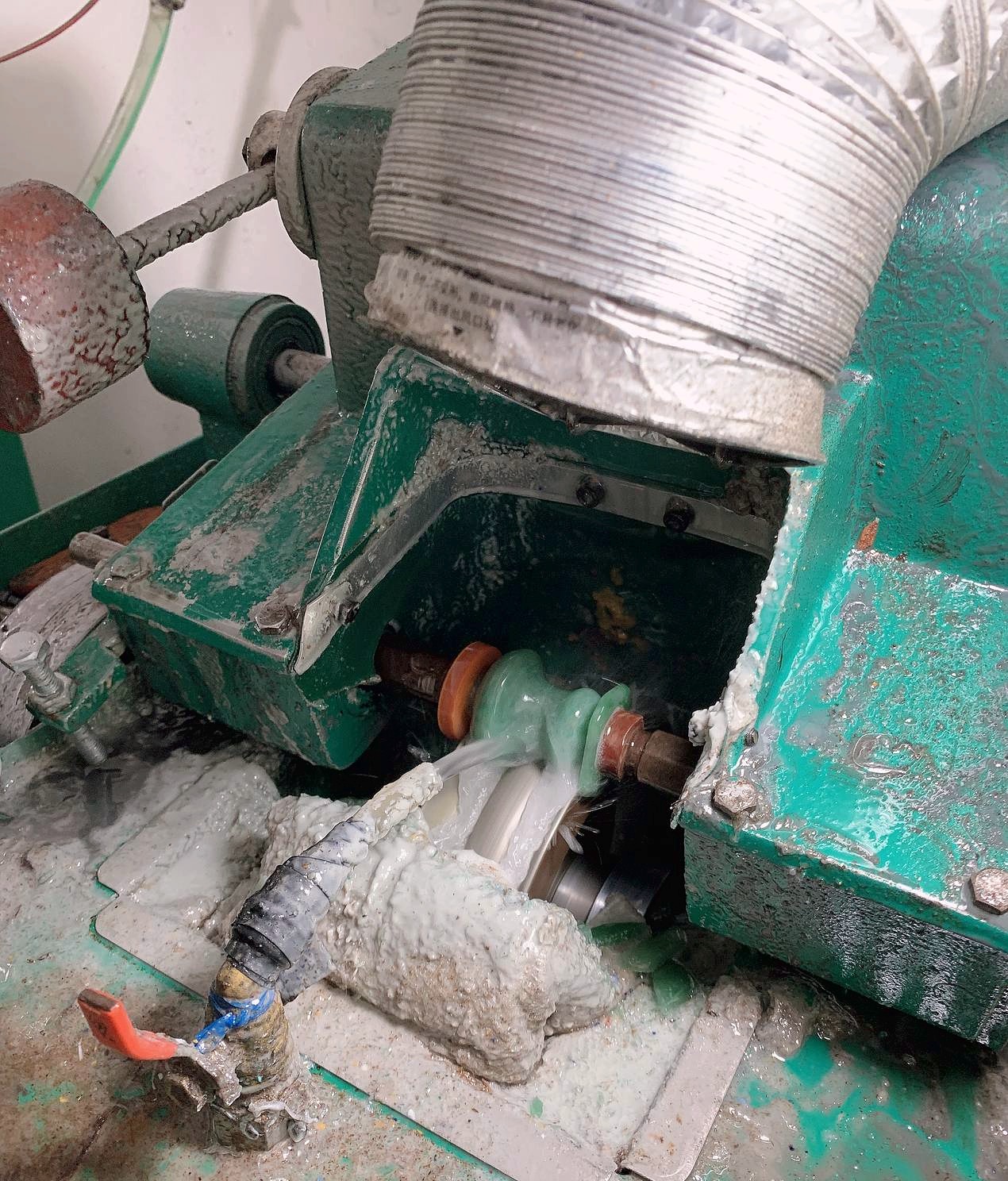
Stage 4 - Logo and Packaging
Branding and packaging are applied so you approve the complete product, not just the tool. Packaging adds 3-12 days depending on whether you take a digital proof or a physical sample.
Stage 5 - Sample Approval
You approve in writing. That approved sample becomes the inspection reference for the whole batch, and we also issue a signed limit sample for defect comparisons.
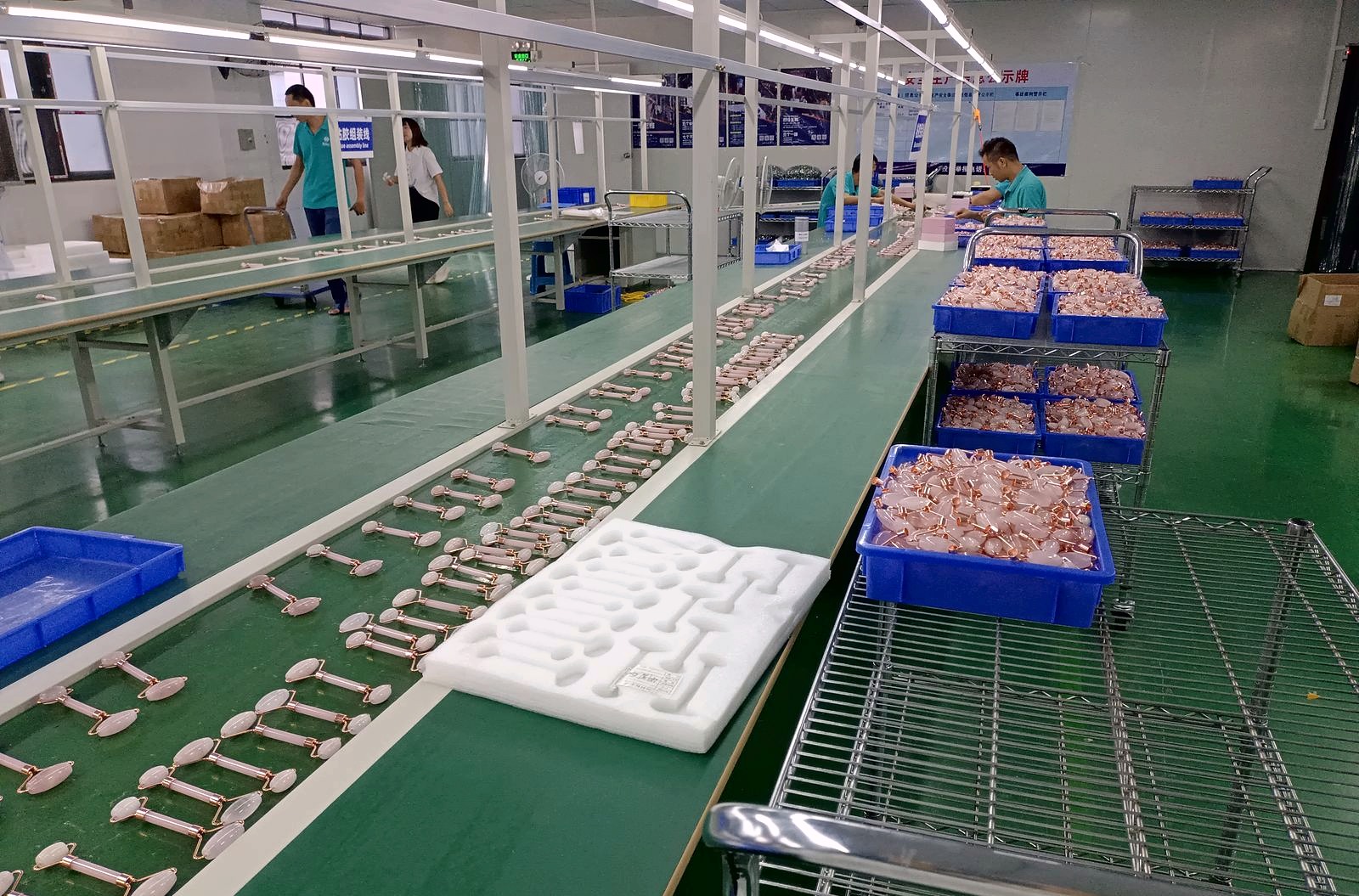
Stage 6 - Mass Production
Made-to-order production starts at 25-30 days. Stock shapes with laser logos sit at the fast end; a custom shape with printed packaging sits at the slow end.
Stage 7 - Inspection
Three full inspections: bulk completeness, quality grading against the published standard, and a final full inspection of assembled and packed goods before shipment.
Stage 8 - Shipping
Export packing and shipping by express, air or sea, with consolidation available if you are ordering several models. Bulk cartons are standard K=K board with protective corners.
11. Sampling, Approval and Changes
Samples exist to surface the problems that are expensive to fix later. Approve the sample on the variables that cannot be changed after production: edge feel, weight, finish, logo legibility and how the tool sits in its packaging.
Sampling comes before mass production on every custom project, and sample cost is credited back against the order at the qualifying volume. Once bulk production starts, shape and tooling cannot be revised without restarting the batch.
If you change a specification after sample approval, tell us before production begins. A change inside the sample stage is a revision; the same change after tooling is a new project.
12. What Shapes a Custom Quote
A custom quotation is not a mystery number once you know what drives it. Six factors account for almost all of the difference between two quotes for similar-looking tools, and understanding them lets you compare quotations properly instead of comparing totals.
Tooling
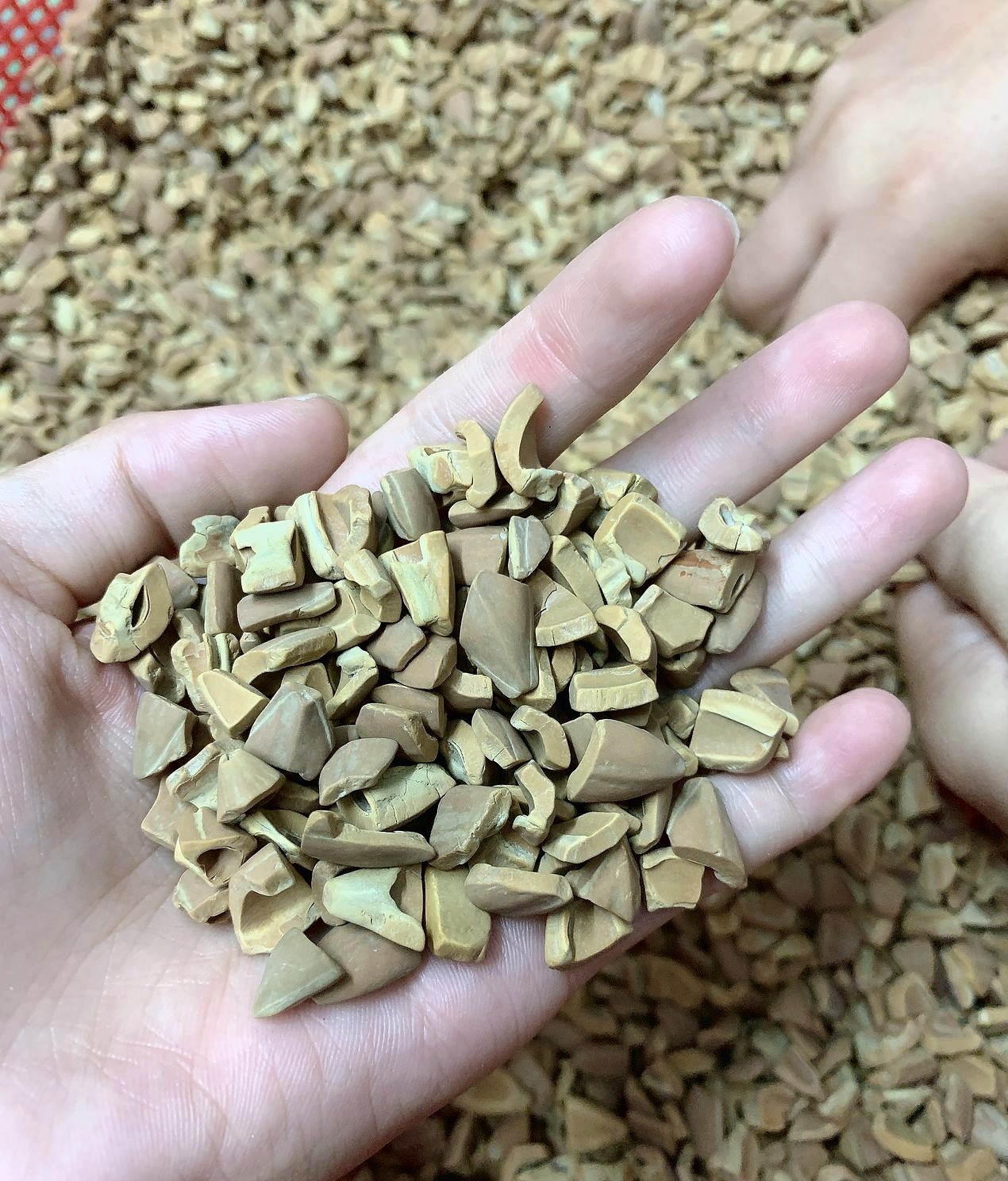
Tooling is where materials diverge. Stone - bian stone in particular - forms without a mold, so a custom stone shape needs no tooling and starts at 100 pieces. Stainless steel and ceramic require a mold, so tooling is an extra cost and the minimum is 1,000 pieces. That is why the cheapest material to buy is not the cheapest to customise.
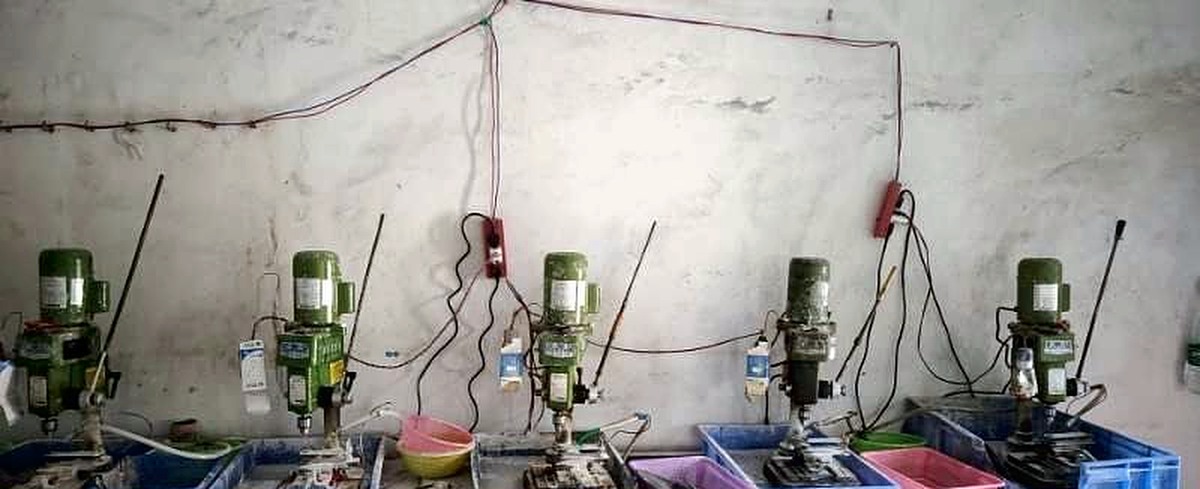
Material
Machined stainless steel sits at the accessible end of the range, natural stone in the middle, terahertz and coated steel at the top.
Hand Labour
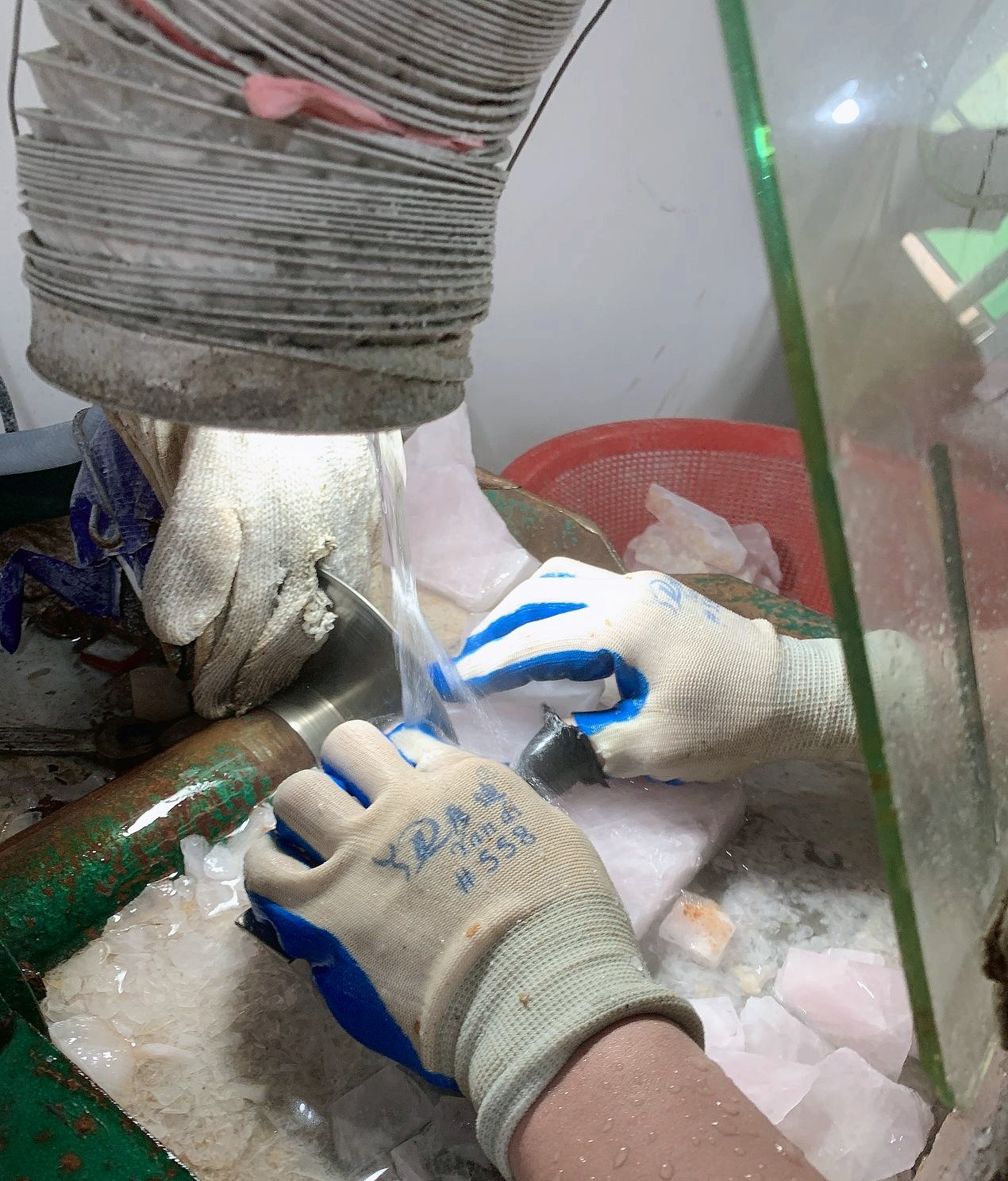
Hand-polished stone and bian stone consume far more labour per piece than machined and polished stainless steel. Polishing alone runs a minimum of four days per batch, which is a large share of the 25-30 day production cycle.
Logo and Coating Method
Laser engraving is economical and has no minimum on stock shapes. Silk screen starts at 1,000 pieces. Multi-colour processes run in batches and raise the minimum further.
Packaging
A printed rigid gift box can account for a large share of the finished unit cost. Specify packaging with that in mind rather than assuming it is incidental to the tool.
Quantity and Consolidation
Unit cost falls with volume, and combining several models in one production run and one shipment lowers landed cost further. Note that tiers are normally calculated per model per material, not across a mixed order.
13. Custom Mistakes to Avoid
Assuming Stone Needs No Tooling
If you are customising the shape, material matters more than price per piece. Stone - especially bian stone - forms without a mold and starts at 100 pieces. Stainless steel and ceramic need a mold, so a custom shape there carries tooling cost and a 1,000-piece minimum. Decide the material before you budget the project.
Choosing a Logo That Disappears
Thin, low-contrast logos vanish on curved or dark surfaces. Test on a sample before committing, and consider that laser marks on stone are less uniform than silk screen.
Deciding Packaging After Production
Packaging has the longest lead time in the chain and its own minimums - 500 to 1,000 pieces depending on format. Deciding it last delays the whole launch.
Ordering Below a Testable Quantity
Committing to a large custom run on an unproven shape is the most expensive mistake in this business. Stock shapes with laser engraving start at 200 pieces precisely so you can test the market first, and only then move to a custom shape.
Skipping the Physical Sample
Weight and edge feel cannot be judged from a photo. Every custom project should pass through a physical sample, and the approved sample should be kept as the reference for grading.
14. Frequently Asked Questions
What can I customize on a gua sha tool?
Shape, material, size and thickness, weight, logo, surface finish, colour or coating, packaging, and set composition. Branding on a stock shape is the fastest and cheapest level; a fully new shape is the most differentiated.
What is the MOQ for a custom logo?
Laser engraving on stock shapes starts at 200 pieces per model, and silk screen printing starts at 1,000 pieces. For custom shapes the minimum follows the material: bian stone 100 pieces, other stone 500 pieces, stainless steel and ceramic 1,000 pieces.
Can you make a custom shape from a drawing?
Yes. A sketch with approximate dimensions, a CAD file, a photo with scale, or a physical reference sample are all workable starting points. CAD is preferred for fully custom development.
How long does custom development take?
Sample turnaround is 1-3 days for laser engraving, 7-10 days for silk screen, and 14-20 days for custom stone shapes. Bulk production then runs 25-30 days for made-to-order work. Stock items without customization can ship in as little as 3 days.
How much does tooling cost?
Same reason as above: stone forms without a mold, so a custom stone shape needs no tooling and starts at 100 pieces for bian stone. Stainless steel and ceramic need a mold, which adds tooling cost and raises the minimum to 1,000 pieces. Stainless is cheaper to buy and more expensive to customise.
Which material is cheapest for a custom shape?
Bian stone, once the shape itself is customised. It forms without a mold, so it has the lowest minimum at 200 pieces and the lowest sample cost. Other stone starts at 500 pieces. Stainless steel and ceramic need a mold, which makes them the more expensive route for a custom shape even though the raw material is cheaper.
Can I get my logo on a stone gua sha?
Yes, in two ways. Laser engraving starts at 200 pieces on stock shapes but follows the stone's mineral structure, so the mark edge is slightly uneven. Silk screen printing sits flatter for a cleaner look and starts at 1,000 pieces.
What surface finishes are available?
Mirror polish, satin and brushed, matte, sandblasted texture, and coated finishes including titanium, gold PVD, black and rainbow. Mirror is the most premium-looking; matte is the most forgiving.
Can I have custom colors?
Ceramic offers the most colour control through custom glazes, and steel can be colour-coated. Natural stone colour is fixed by nature - we recommend the closest material and then grade batches for consistency.
Can I have multi-colour logos?
Yes, using UV or heat transfer printing, but minimum quantity and cost are higher and adhesion is weaker than single-colour engraving. Single-colour engraving gives the best visual result and durability.
Why does my logo shift position slightly between pieces?
Our tools are cut and finished by hand rather than molded, so dimensions carry roughly a 2 mm tolerance. Engravers adjust placement within a small range to land on the flattest spot and keep every mark clear and complete.
Can you produce a set with several tools in one box?
Yes. Sets such as gua sha plus lymphatic brush or body tool plus cryo globe are assembled under one SKU with packaging designed for both items.
Do I need to pay for samples?
Sample cost depends on the material and the development involved, and is credited back once your cumulative order reaches the qualifying volume. We confirm the terms with your quotation. Packaging samples follow the same principle.
Can I change the design after seeing the sample?
Yes, within the sample stage. Once tooling is made and bulk production begins, shape changes restart the batch, so all specification changes should be raised before production.
Can you match a competitor's product?
We can reproduce dimensions and edge geometry from a reference sample and improve parts that are uncomfortable or hard to clean. We do not copy protected designs, and we can help you develop a distinct alternative.
Will my custom design stay exclusive?
Yes. Custom shapes can be covered by a confidentiality agreement, and we do not produce an exclusive design for other clients. Your specification and artwork are filed confidentially.
What information do you need to quote?
Shape or reference, material, target size or weight, logo requirement, packaging requirement, quantity per model, and destination market. That set of details is enough for an accurate quotation.
15. Start Your Custom Gua Sha Project
Send your sketch, CAD file, reference sample or logo, tell us the material and quantity you have in mind, and we will come back with a recommended construction, MOQ, lead time and price. If a stock shape would sell just as well for a fraction of the investment, we will say so.
guashafactory@gmail.com | +86 133 3260 7156 | No. 88 Zhengkeng Street, Changan Town, Dongguan City, Guangdong, China