Oct 13, 2026Services Overview
How to Choose a Stainless Steel Gua Sha Manufacturer for Your Beauty Brand
How to vet a stainless steel gua sha manufacturer: 304 vs 316 grade, why cheap 420 tools rust, edge geometry, burrs, finishes, MOQ tiers and custom shapes.
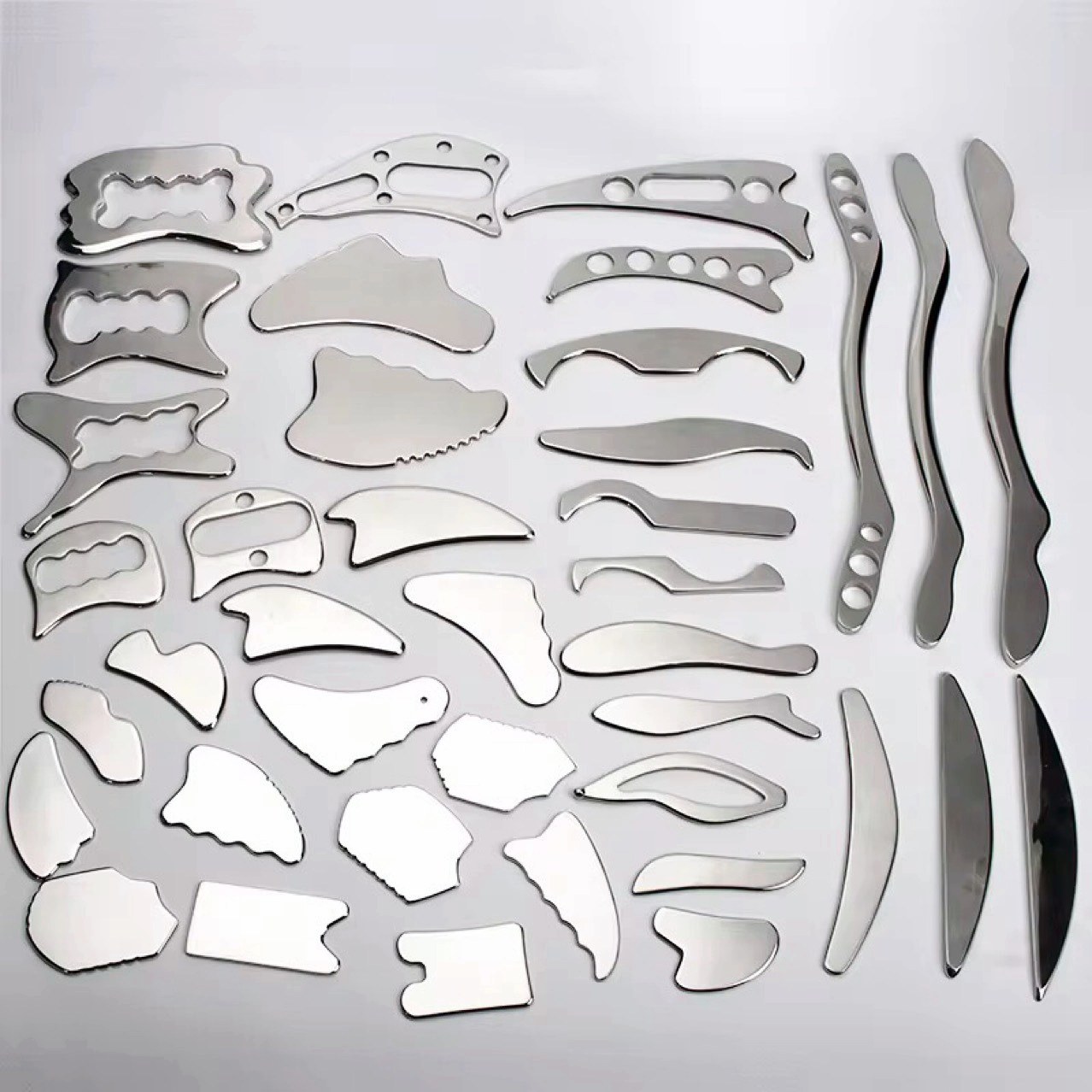
1.Stainless steel has become the fastest growing material in the gua sha category.
It does not chip like stone, it can be washed and sanitised, and it survives the drop test that ends most jade tools. That combination has pushed it from a niche clinical item into mainstream retail skincare.
The difficulty is not finding a supplier. It is finding a supplier who actually controls the material, the surface finish and the edge geometry. Those three things decide whether your stainless steel gua sha feels premium in a customer's hand or feels like a stamped metal blank.
This guide explains what to look for, what to ask, and where most buyers get caught. It is written from our own production floor at Alison Gua Sha Factory, where stainless steel tooling is cut, finished, laser marked and packed in one building.
2. Steel Grade: 304 and 316 Are Not Marketing Words
Food grade stainless steel in this category means 304 or 316 austenitic stainless. Both resist corrosion and both are safe for skin contact. The difference is molybdenum content, and molybdenum is what buys corrosion resistance in the presence of salt and chlorides.
316 adds roughly two to three percent molybdenum. That makes it noticeably more resistant to pitting in salt water, sweat and cleaning chemicals. It also costs more and machines differently.
Property | 304 stainless | 316 stainless |
|---|---|---|
Corrosion resistance | Good for normal skin and water contact | Higher, resists salt and chlorides |
Molybdenum | None | About 2-3 percent |
Best for | Retail facial tools, gift sets, most brands | Spas, clinical use, salt-water environments |
Surface after long use | Keeps its finish with normal care | Holds finish marginally longer |
Relative material cost | Lower | Higher |
Availability of shapes | Widest range | Broad, some shapes tooling-limited |
For a facial gua sha sold into a normal skincare retail channel, 304 is the sensible default. For tools that live in a wet spa room or a clinical practice, or for markets where customers read the grade line carefully, 316 is worth the increment.
Ask your supplier for the material certificate before the order, not after. A mill certificate with the steel grade and heat number takes minutes to produce if the steel is real, and is impossible to produce if it is not.
3. Why Cheap Stainless Steel Rusts: The 420 Problem
There is a third grade nobody mentions in the sales conversation, and it is the reason some stainless steel tools rust in a bathroom drawer while others never do.
The good options in this category are 304 and 316. Both are austenitic stainless steels carrying around 18 percent chromium, and 316 also carries molybdenum. The cheap option is 420.
420 is a martensitic stainless steel with roughly 12 to 14 percent chromium, a higher carbon content and no nickel. It is built to be hardened, which is exactly what you want in a kitchen knife and exactly what a gua sha tool does not need.
Property | 304 | 316 | 420 |
|---|---|---|---|
Family | Austenitic | Austenitic | Martensitic |
Chromium | 18 - 20 percent | 16 - 18 percent | 12 - 14 percent |
Nickel | 8 - 11 percent | 10 - 12 percent | None |
Molybdenum | None | 2 - 3 percent | None |
Magnetic | No, typically | No, typically | Yes, strongly |
Corrosion resistance | Excellent | Excellent | Lower - rusts when wet or salty |
Food grade | Yes | Yes | No |
Designed for | Skin contact, wet use | Wet and clinical use | Cutting edges, hardness |
The hardness 420 is designed for is a knife requirement. Heat treatment makes it better at holding a cutting edge, and none of that transfers to a tool that glides across skin. What does transfer is the weaker corrosion resistance.
420 does resist rust in the dry. Left sitting in a drawer it looks exactly like 304. It is water and salt that separate them, and a gua sha tool is a wet product: it is used on skin, meets sweat and skincare, and gets washed.
How a 420 Tool Fails
Corrosion in 420 usually begins as small dark pits, often on the working face or near an edge, then spreads into brown staining. In a salt or chlorinated environment it can appear within days rather than months.
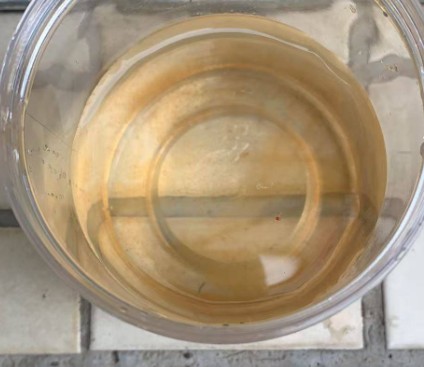
We ran the soak ourselves, and the photograph below is ours. It shows what the tool left behind in the water. This is not surface dirt, it is iron oxide coming out of the steel.
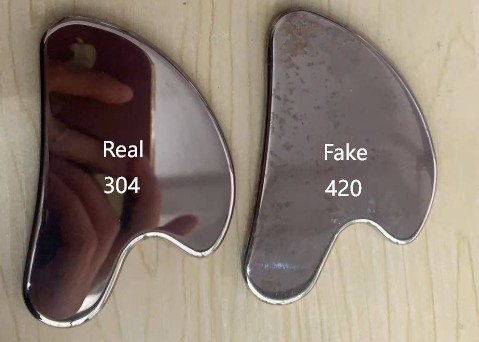
We soaked the same shape in both grades, side by side, and photographed the result. The 304 on the left holds its polish. The 420 on the right has developed a rust bloom across the face and along the edge.
There is a hygiene argument alongside the cosmetic one. 304 is what the industry calls food grade, and its higher chromium and nickel content is what keeps the surface passive, so it does not leach or react with skincare products. A tool that is rusting is a tool that is breaking down at the surface.
That is the point that matters commercially. A rusted tool comes back as a complaint, and it is usually the customer's one negative review about the whole brand rather than about one product.
One fair note: on feel alone you cannot tell them apart. Both grades polish to a very smooth surface and both feel cool on skin. Smoothness is a polishing decision, not a grade giveaway, which is why the tests below matter.
Tumble Polishing and Hand Polishing
Material grade is the first cost decision in a cheap tool and polishing is the second. The two usually travel together.
Tumble polishing puts the parts in a rotating drum with abrasive media and lets them rub against each other. It is fast and inexpensive, and it rounds the edge by contact rather than by design, so the radius ends up uneven around the contour.
Hand polishing works each piece against a wheel. It costs more per unit because it is labour, and it allows the edge to be formed to a specified radius and finished consistently, including on the tight interior curves where tumble polishing is least effective.
Aspect | Tumble polished | Hand polished |
|---|---|---|
Method | Parts rub against media in a drum | Each piece worked individually |
Edge result | Rounded unevenly by contact | Formed to a specified radius |
Interior curves | Hardest area, usually inconsistent | Finished to the same standard |
Surface | Can look dull or slightly rippled | Even, controlled finish |
Cost driver | Machine time | Labour time |
You can usually see the difference in raking light. A tumble-polished face often has a slightly rippled or dulled quality, and the edge has no crisp transition, because there was never a defined radius to begin with.
Burrs
A burr is the sharp raised line of metal left along an edge when a shape is stamped or cut from sheet and the edge is never properly formed.
Burrs are the most common defect on low-cost metal tools and the easiest to miss in a photograph, because the tool looks correct from the front. They concentrate where the tool is hardest to finish: the tight inside curves and any point.
The test is physical. Run a finger along the whole contour, or draw the edge lightly across a soft cloth. A properly finished tool glides. A burred tool catches.
A burr is not a cosmetic issue. It scratches skin, and no amount of good packaging recovers a tool that does that on first use.
How to Check What You Are Actually Buying
The two grades can look identical on a table, which is exactly why mislabelling happens. We ran the five checks below on our own tools, and the photographs here came out of those tests. They are ordered from quickest to most conclusive.
The scent test. A genuine 304 tool has no discernible odour. A strong metallic or rusty smell is an early warning that the material is not what it claims to be.
The magnet test. 420 is strongly magnetic. 304 and 316 are typically non-magnetic. The caveat matters: stamping and forming work-harden 304 and can leave it slightly magnetic, so a weak pull proves nothing. A tool that grips a magnet firmly is a strong signal that it is not 304.
The saltwater test. Fill a glass with tap water and ordinary table salt, submerge the tool completely and leave it for 24 hours. Then look at both the water and the tool.
If the water turns yellowish-brown, or you see yellow mottled staining on the surface, the tool has started to corrode. If the water stays clear and the face is unchanged, the grade is behaving as it should.
The edge and surface check. Look for burrs, for a radius that changes around the contour, and for a rippled or dulled surface under raking light. This is the check the saltwater test cannot do for you.
The certificate. A mill certificate stating the grade and heat number is the only answer that settles the question outright. It takes minutes to produce for real steel and cannot be produced for steel that is not what it claims to be.
That is why we treat the certificate as part of the product rather than as paperwork. Specify the tool however you like, but the grade is not a negotiable detail.
What to Specify Instead
If you are sourcing stainless steel tools, the specification is short: 304 for retail facial tools, 316 for wet, spa and clinical use, a formed and hand-polished contact edge, and a mill certificate with the batch.
If a quotation comes in far below the others for the same shape, finish and packaging, the difference is somewhere. Grade and edge finishing are the two places it usually is.
4. Edge Geometry Is Where Cheap Tools Fail
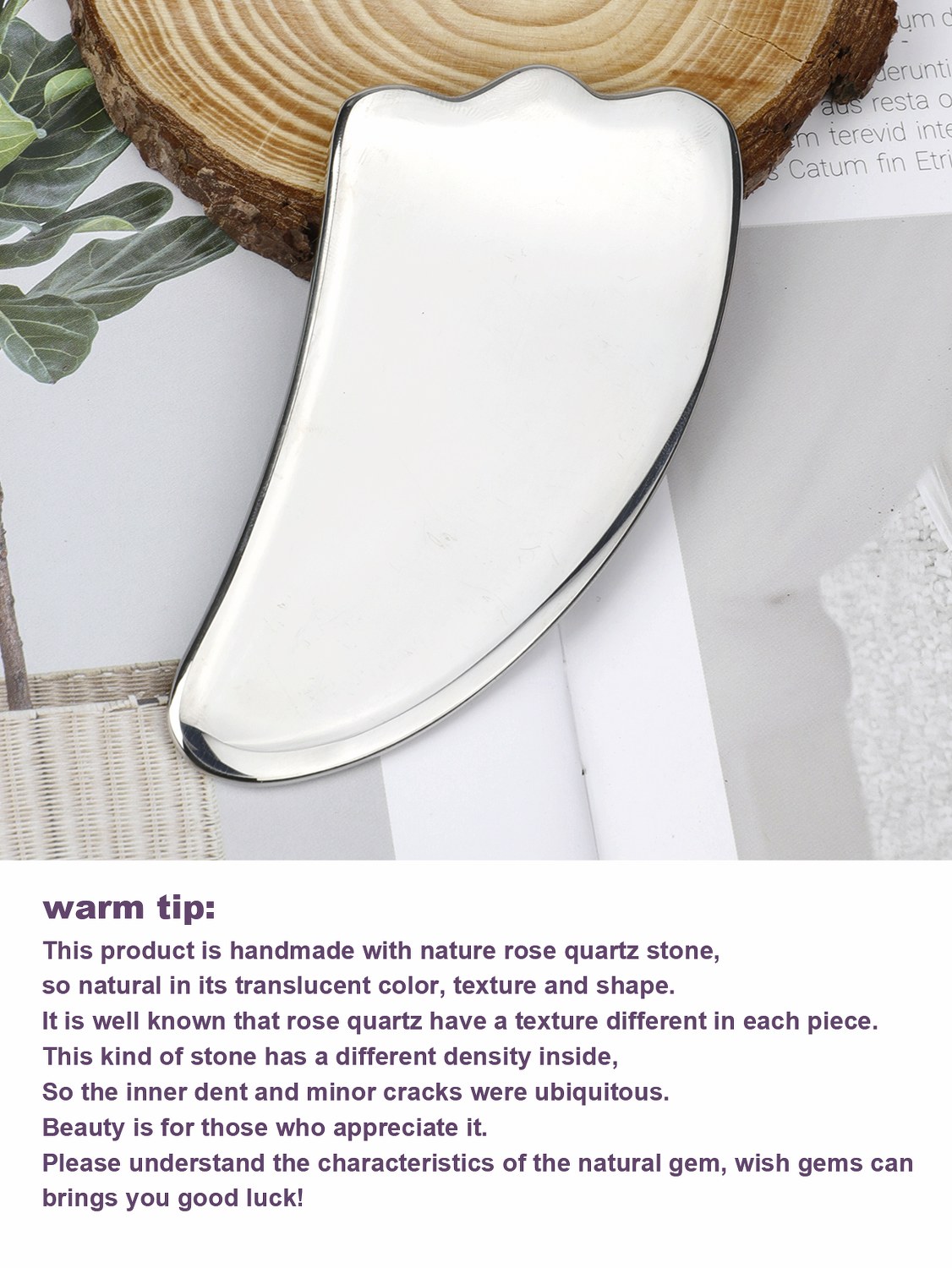
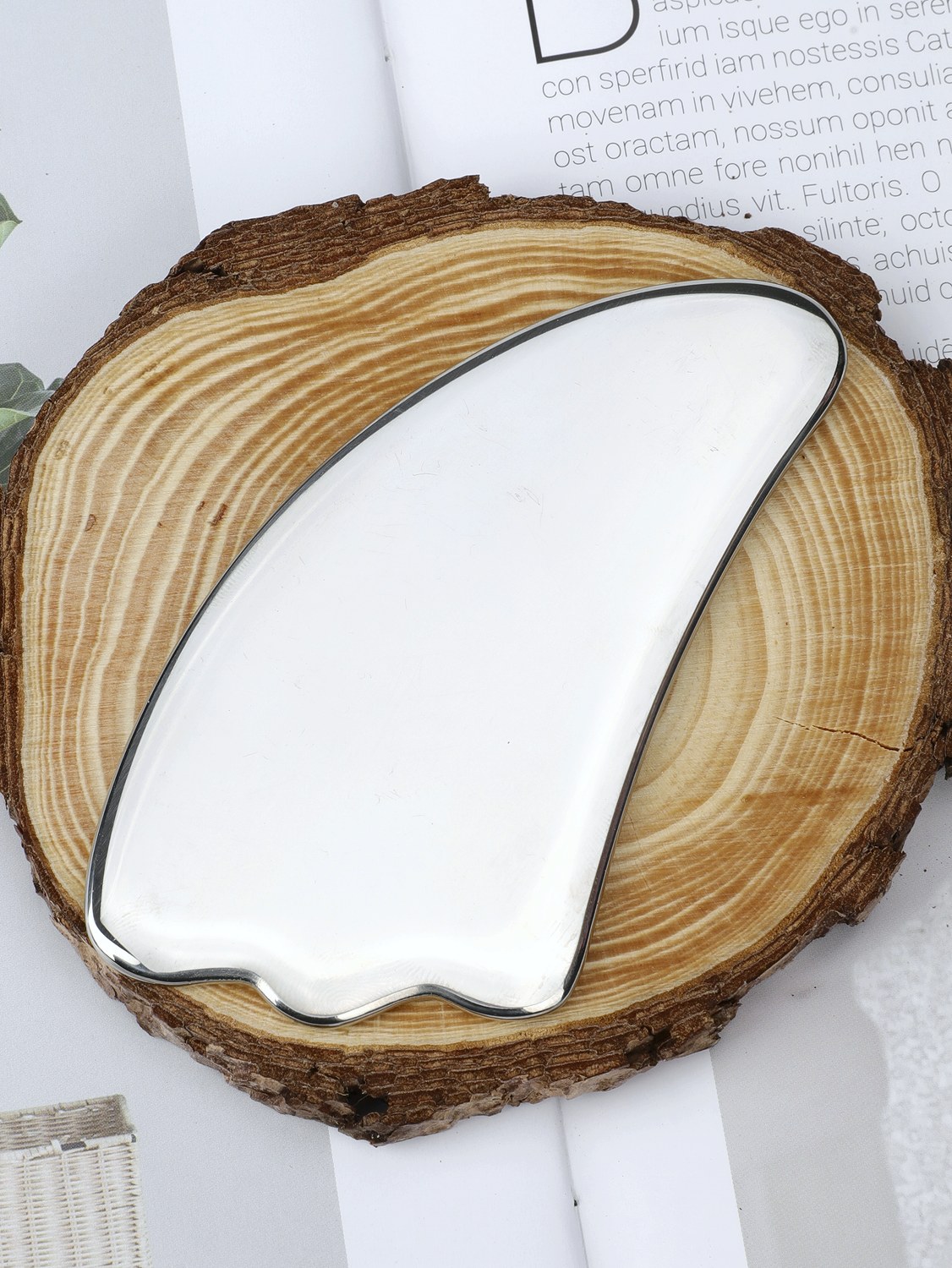
A gua sha tool is held at an angle and drawn across skin. Everything about how that feels comes from the edge: the radius, the polish on the radius, and the consistency of that radius around the whole contour.
Stamped blanks leave a sharp corner. Low-cost producers tumble the parts to blunt the corner, which rounds it unevenly and leaves a slightly dull, inconsistent contact. Tools produced this way are recognisable at first use.
What a proper edge looks like
Every contact edge is radiused to a controlled dimension, then hand-polished to a consistent mirror. The edge should glide without scraping and without a hard point anywhere on the contour, including the tight inside curves.
This is the single step that is hardest to automate and easiest to skip. It is also the step buyers notice immediately when they open a sample.
5. Surface Finish and Colour
Finish is a commercial decision as much as a technical one, because it drives how the tool photographs and how it ages.
Finish | How it looks | How it wears | Best for |
|---|---|---|---|
Mirror polish | Bright, reflective, jewellery-like | Shows fingerprints, keeps shine | Retail hero products |
Brushed satin | Soft, directional grain, low reflection | Hides marks well | Professional and clinical lines |
Matte / sandblasted | Flat and modern, non-reflective | Uniform, no fingerprint issue | Design-led brands, photography |
PVD gold or black | Coloured coating over steel | Coating is a wear surface | Gift sets and limited editions |
If you sell a coloured tool, be clear that the colour is a coating. It is durable when specified and applied correctly, and it is not the same claim as solid stainless. Buyers who understand the difference do not get returns for the wrong reason.
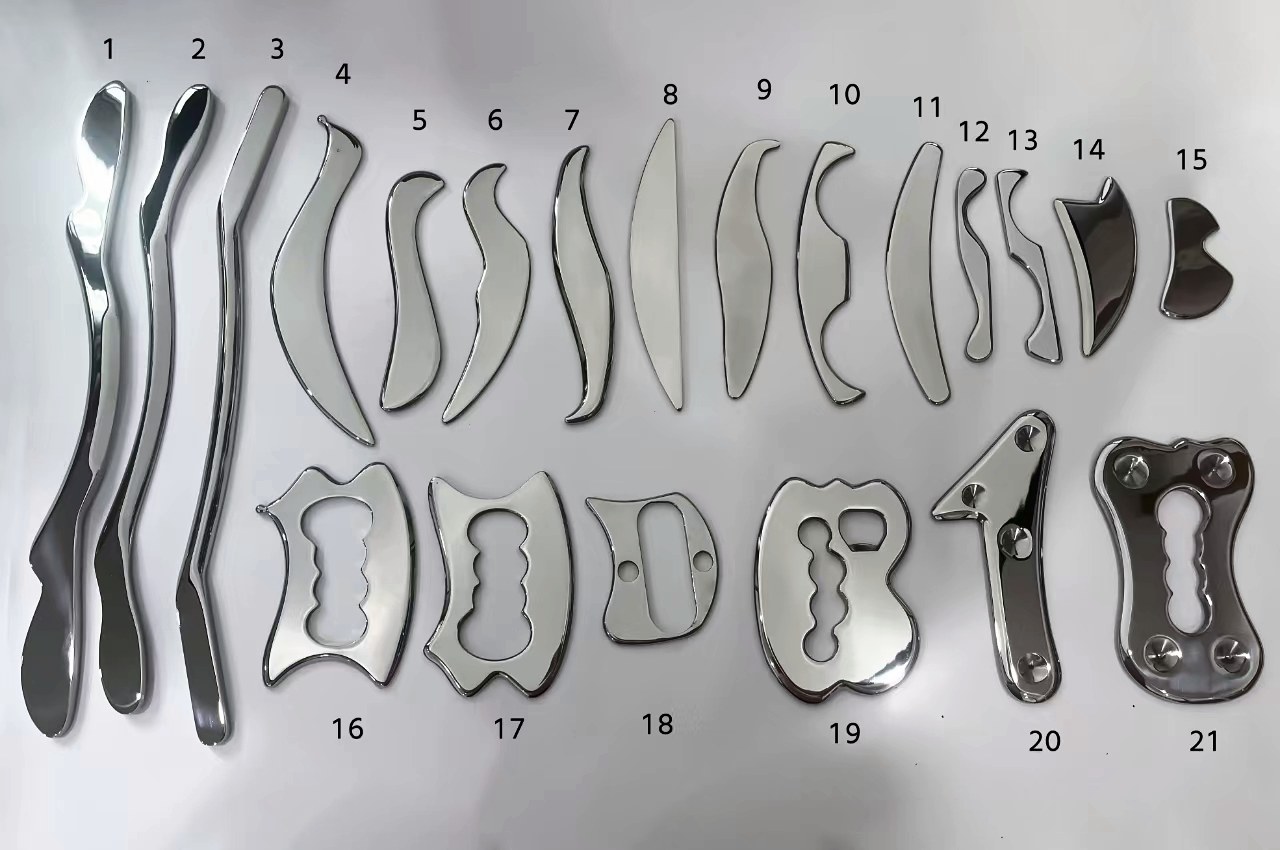
6. Stock Shapes, Custom Shapes and What We Need to Quote
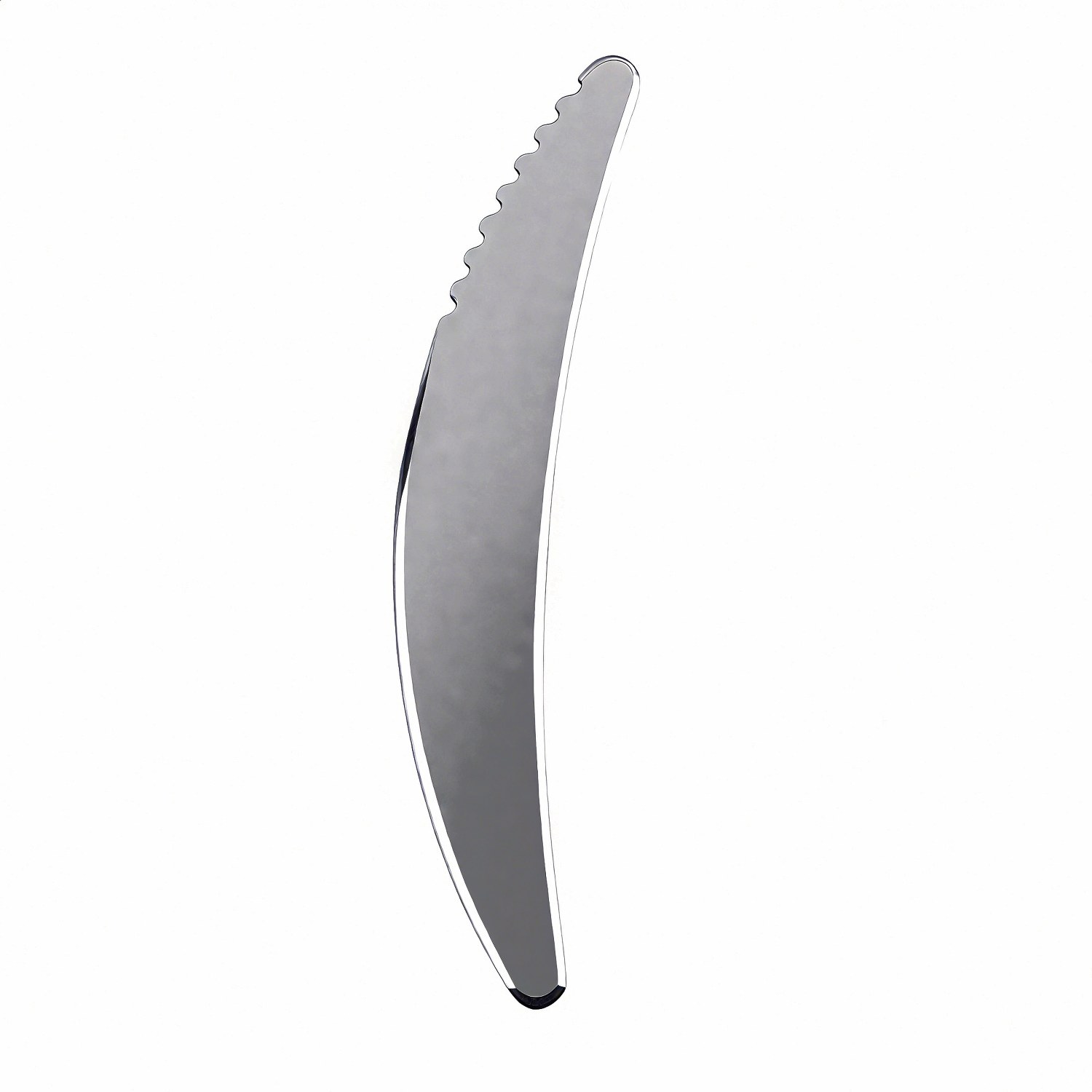
Shape customisation is the request buyers ask about most and understand least, because the answer depends on how far your shape deviates from a profile that already exists. There are two routes, and they carry very different minimums.
Stock shape with your laser logo
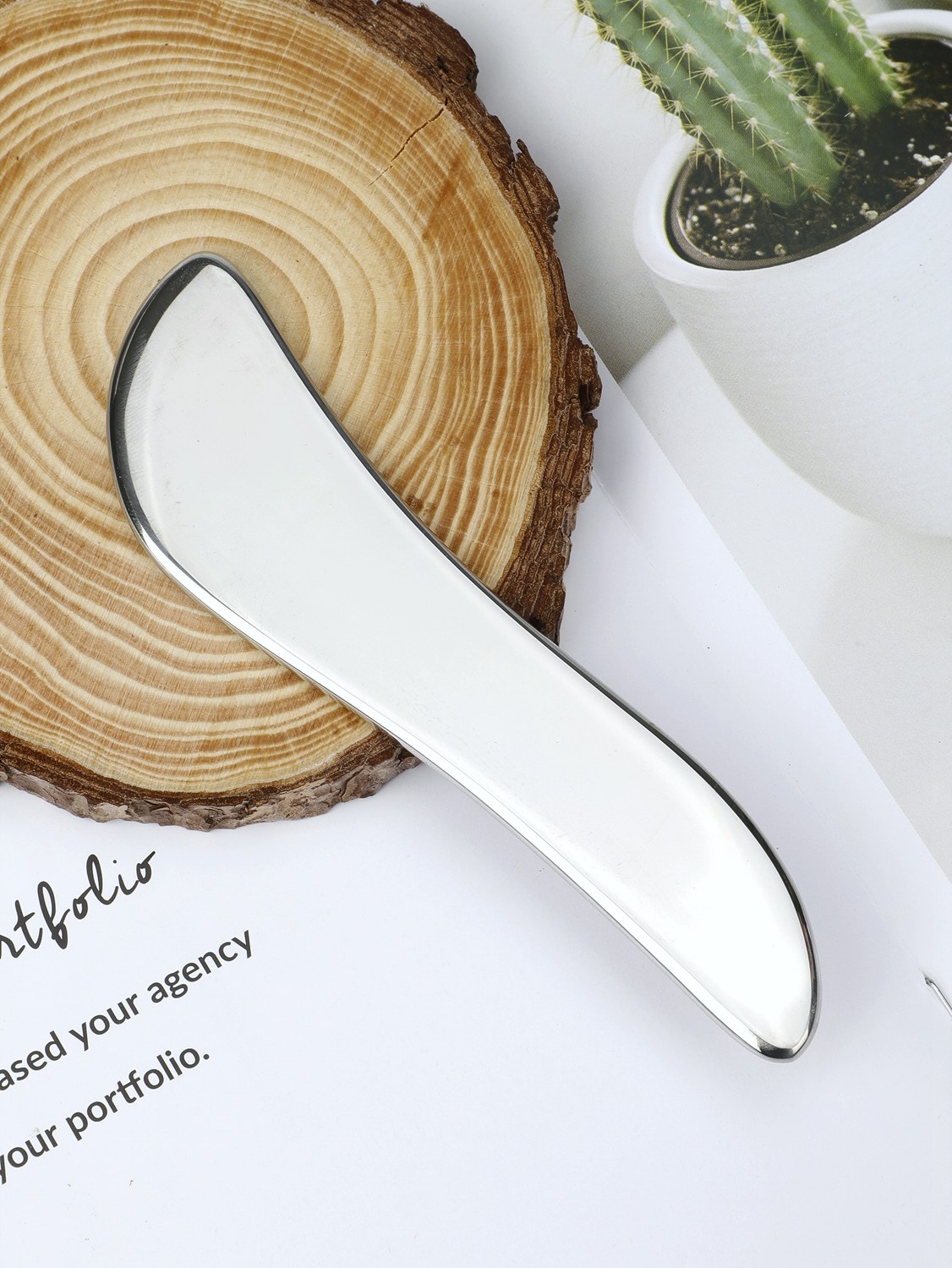
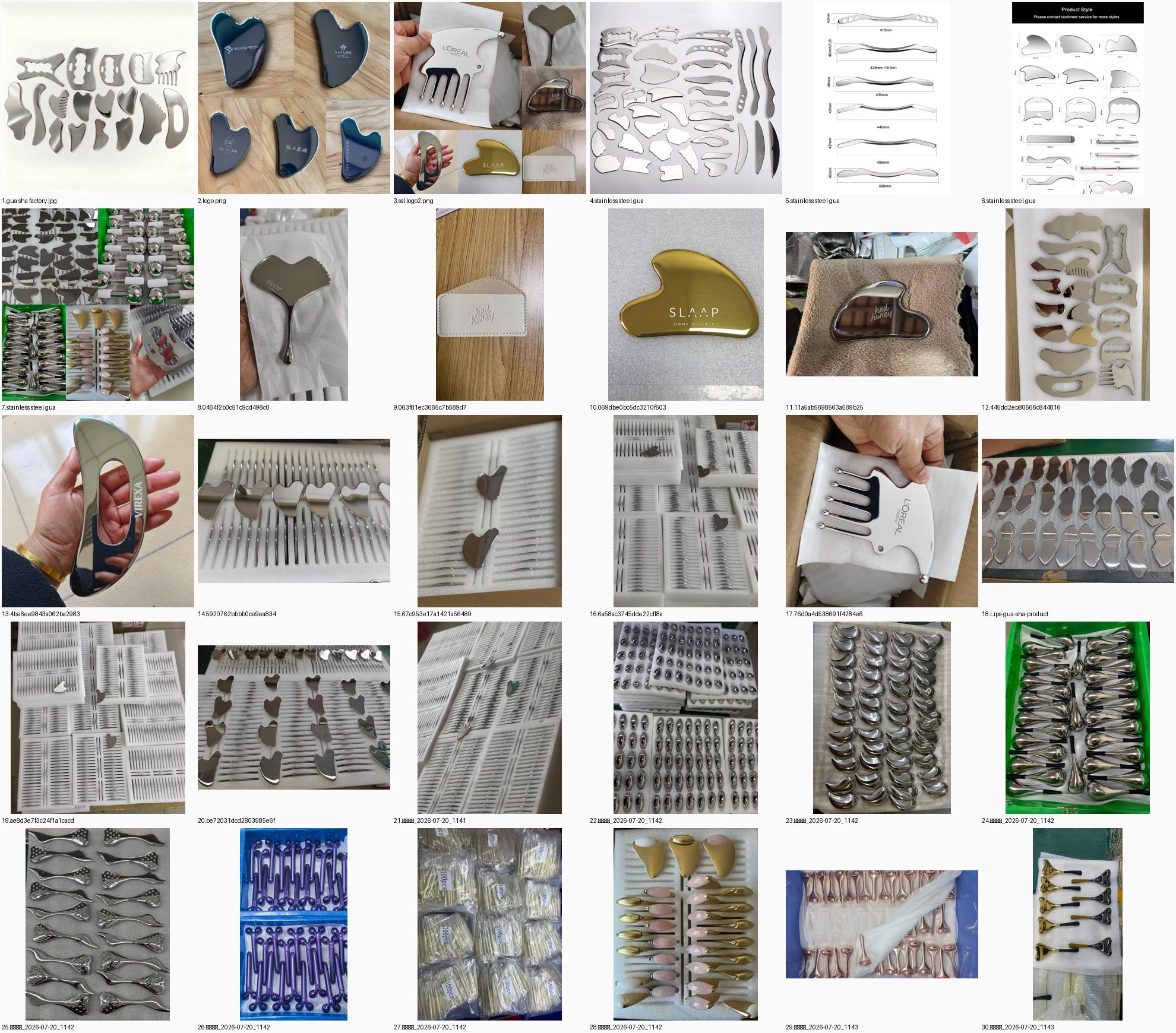
If your tool comes from our existing shape library, the only new production step is marking. No mould has to be cut, so this route starts from 200 pieces per shape. It is the fastest and the lowest-commitment way to launch a product.
Custom shape
A custom shape needs a mould, and the mould is the reason the minimum moves to 1,000 to 3,000 pieces. The exact figure depends on the geometry, the material and how many sizes you want from the same tooling, so it is confirmed per project rather than read off a table.
The mould carries its own cost, which forms part of the project quotation. A supplier who offers a custom stainless profile with no tooling element and no meaningful minimum is not describing a moulded tool.
Route | What changes | Typical minimum | Tooling |
|---|---|---|---|
Stock shape, laser logo | Marking only | From 200 pieces per shape | None |
Custom shape | New contour, or changed dimensions or radius | 1,000 - 3,000 pieces | Mould required |
Extra size from same mould | Same profile, scaled | Depends on the mould | Mould revision |
What we need before the shape can be tooled
A custom shape is cut from a drawing, so we need either a CAD file or a dimensioned technical drawing: overall length, width, thickness, edge radius and any critical angles.
A generated image, a sketch or a rendering is not enough on its own. Those describe how the tool looks but carry no technical parameters, so there is nothing to cut to and no tolerance can be stated against them.
If an image is all you have, we will work with you to turn it into a dimensioned drawing before tooling starts.
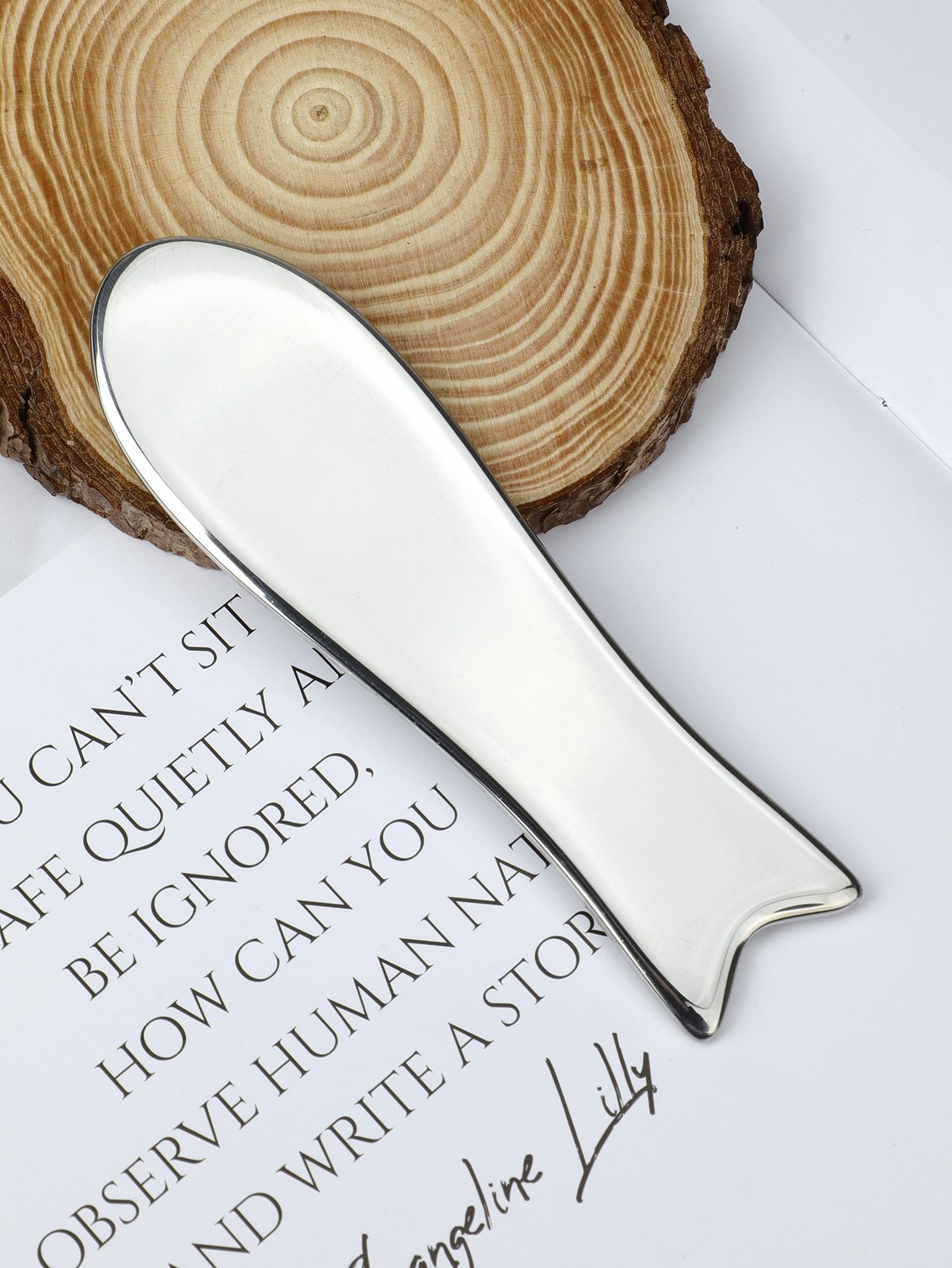
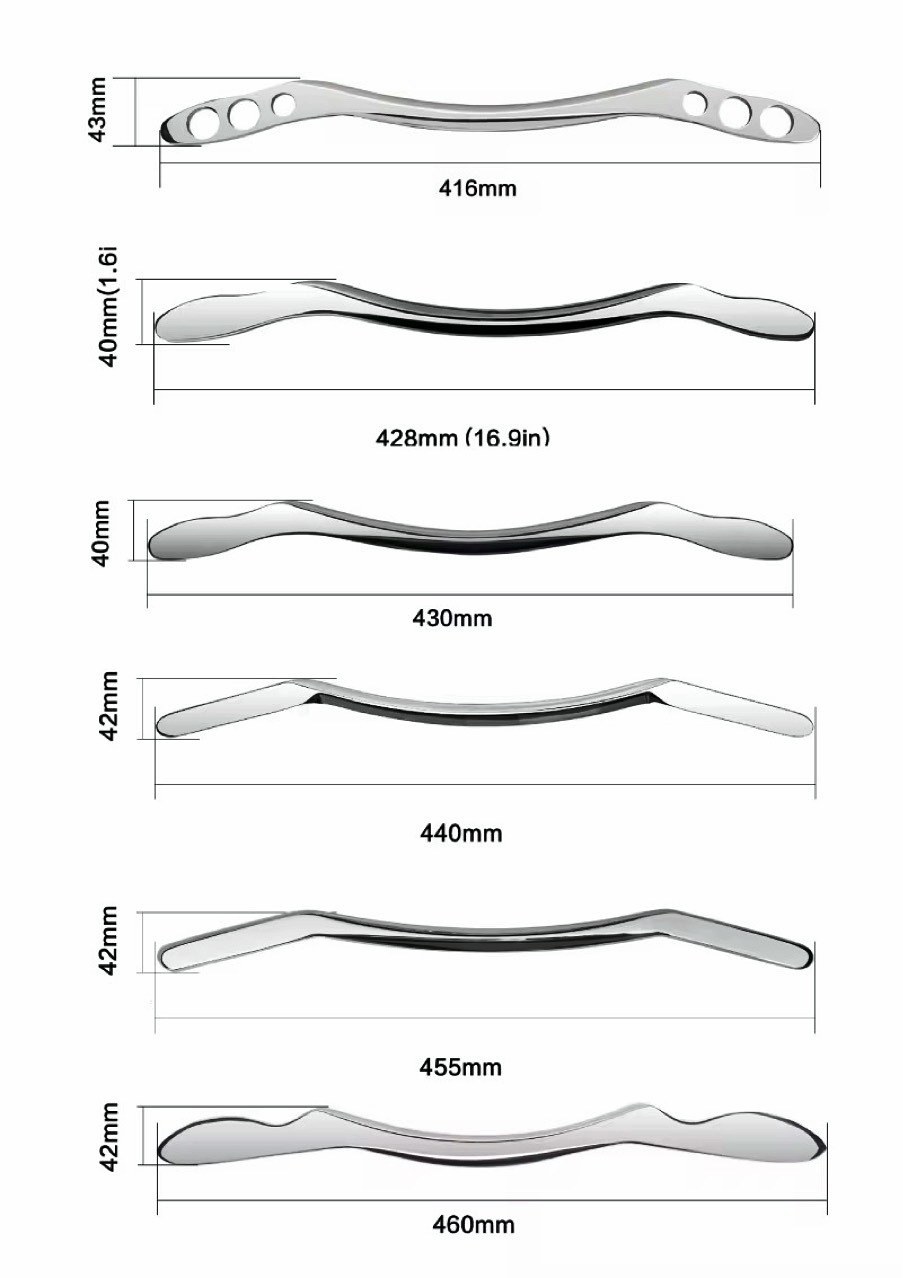
Send a CAD file, a drawing with dimensions, or a physical sample we can measure. That lets us return a tolerance statement on paper rather than an approximation.
7. Custom Logo: Engraving, Stamping and Printing
Logo application is the part of a stainless steel project most likely to disappoint, because buyers picture a bright white mark and receive something far subtler.
Method | How it looks on steel | Durability | Notes |
|---|---|---|---|
Laser engraving | Fine, slightly recessed tone mark | Permanent, part of the surface | Sharpest detail, best for fine logos |
Deep laser etch | Deeper recess, more contrast | Permanent | Suited to larger marks and text |
Stamped or pressed | Debossed mark from tooling | Permanent | Requires die, best for repeat runs |
Pad printing | Ink laid on the surface | Wears with repeated washing | Good for multicolour, least durable |
Colour fill | Ink or enamel in an engraved mark | Durable if engraving is deep | High contrast on dark finishes |
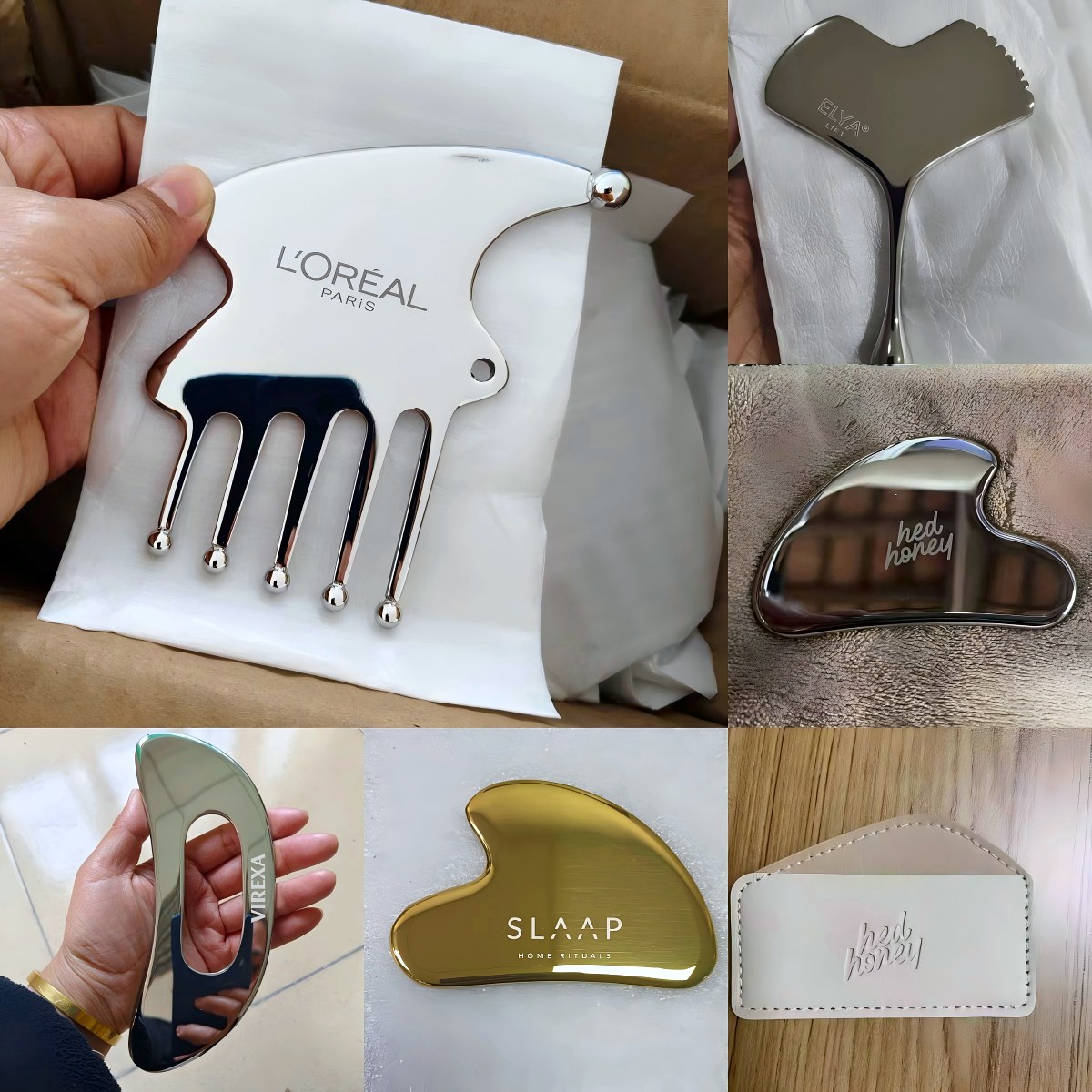
On a mirror-polished tool, a laser mark reads as a tonal shift rather than a printed logo. That is normal and it is what a premium finish looks like. If you need a hard-contrast mark on polished steel, specify colour fill and expect a deeper engraving.
Always approve a marked sample before production. Logo placement relative to the tool edge is the detail that drifts between suppliers, and it is far cheaper to correct on a sample than on a finished batch.
8. MOQ, Tooling and the Order Flow
Stainless steel MOQ in this category is driven by two separate numbers: the quantity needed to run a shape, and the quantity needed to justify your logo and packaging.
What you are buying | Typical starting point | What drives the number |
|---|---|---|
Stock shape, no custom logo | Low, suitable for trials | Packing and carton runs |
Stock shape with laser logo | From 200 pieces per shape | Setup and marking time |
Custom shape | 1,000 - 3,000 pieces | Mould and geometry |
Extra size from same mould | Varies with the mould | Mould revision |
Custom retail packaging | Set per design | Printing plate and assembly |
The sequence we run is unglamorous and it works: enquiry and specification, drawing, material confirmation, sample, written approval, production, in-line inspection, final inspection, packing, shipment.
Ask any supplier to describe that sequence from their side. The gaps in their answer are the steps you will end up managing yourself.
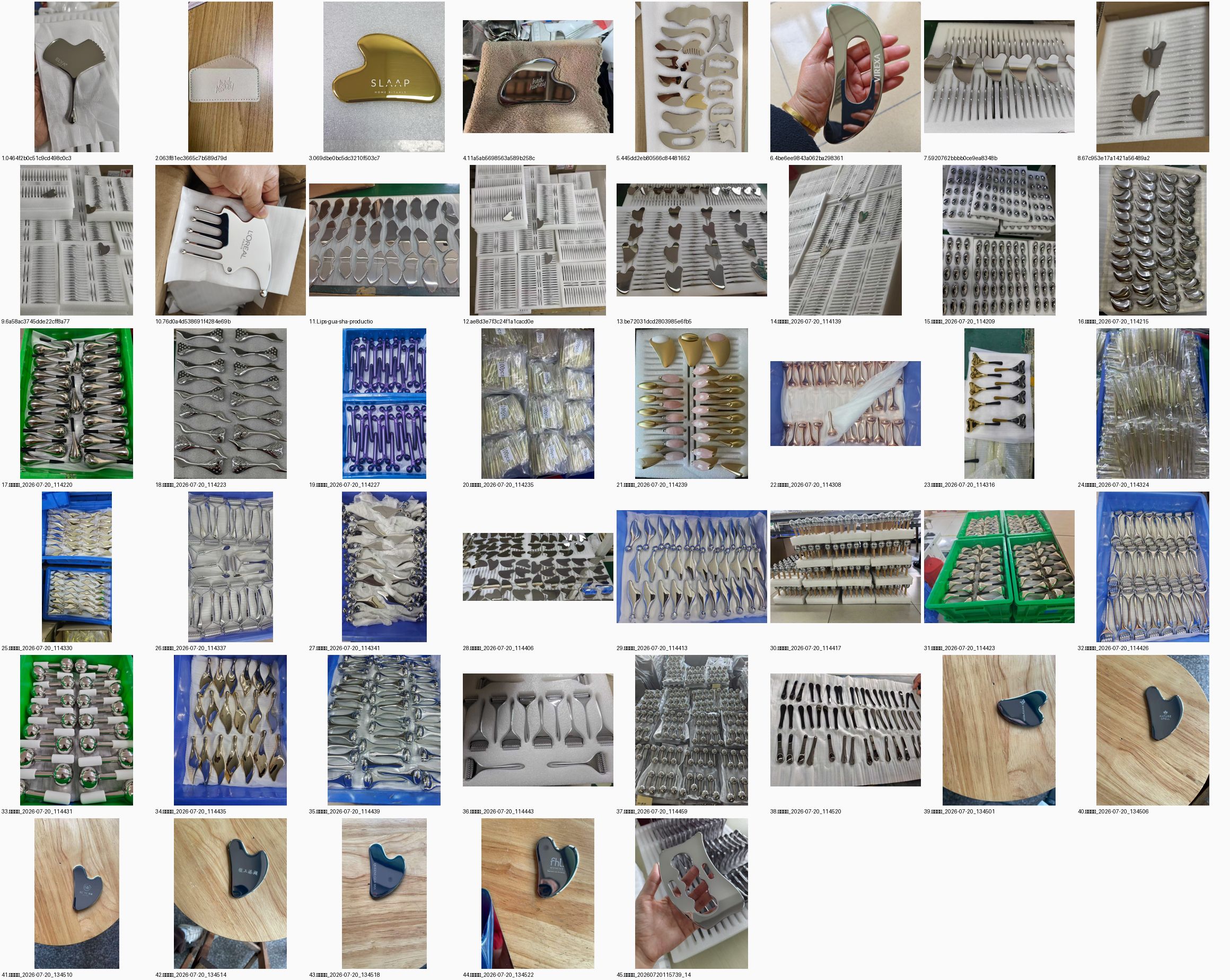
9. Quality Control You Can Actually Verify
Quality control is real when it produces documents you could hand to a customs officer or a retail buyer. If the answer is a verbal reassurance, there is no system.
For stainless steel tools we check four things on every batch: material grade against the certificate, edge radius by gauge and hand, surface finish under raking light, and logo placement against the approved sample.
Cosmetic defects are graded rather than judged. A tool with an unacceptable mark on the contact surface is rejected. A tool with a mark on a non-contact face is graded into a lower tier or scrapped. Having that rule in writing before production prevents an argument at shipment.
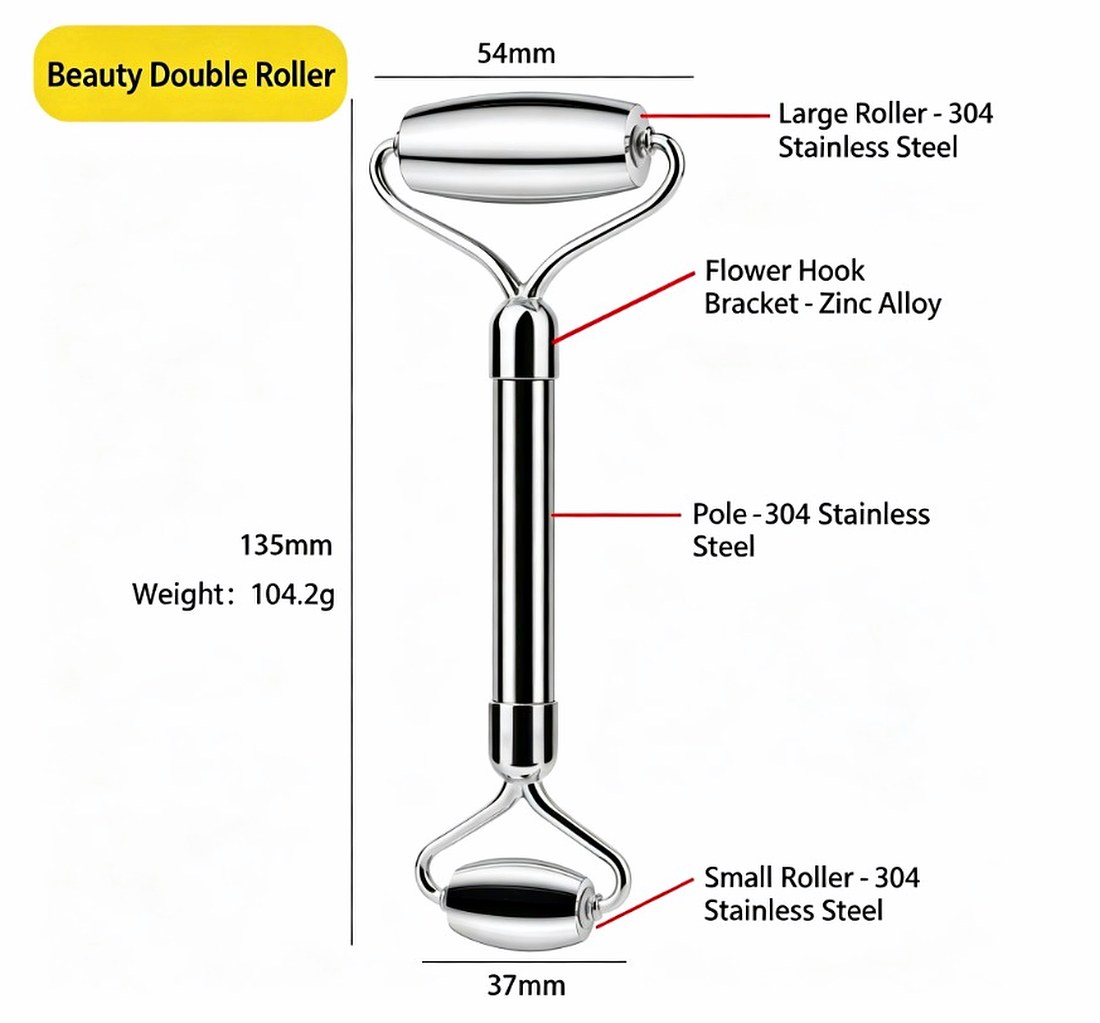
10. Lead Time, Explained Honestly
Stainless steel lead time depends far more on tooling and finishing than on cutting. Blanking a shape takes days; hand-polishing, marking and packing a batch takes longer than most buyers expect.
A general range of roughly one to five weeks covers most projects, moving with quantity, finish, logo method and packaging. A stock shape with a laser logo sits at the fast end. A custom shape with coloured PVD and a custom rigid box sits at the slow end.
Ask for the lead time in stages, not as one number. Cutting, finishing, marking and packing are separate queues, and a supplier who can break them down is a supplier who plans production.
11. Questions to Send a Supplier Today
Select these questuons what you need into your first message. The speed and specificity of the reply tells you most of what you need.
Q1. Which grade of stainless steel do you use by default, and can you supply the mill certificate?
Q2. Which parts of production happen inside your own building?
Q3. How is the contact edge finished, and to what radius?
Q4. Can you send a drawing with tolerances before sampling?
Q5. Which logo methods do you run in house, and what does each look like on a mirror finish?
Q6. What is the minimum quantity for an existing shape with our logo?
Q7. What is the minimum for a custom shape, and does it carry a mould cost?
Q8. What do you need from us to tool a custom shape - a CAD file or a dimensioned drawing?
Q9. What inspection records ship with a batch?
Q10. What is the lead time split by cutting, finishing, marking and packing?
Q11. What happens if a batch fails your inspection?
A supplier who answers most of these precisely is worth a sample order. A supplier who answers two is a broker.
12. Packaging and Presentation
For stainless steel tools the packaging often carries more of the perceived value than the tool, because the tool itself is deliberately minimal.
We produce retail boxes, rigid gift boxes, EVA or moulded inserts, printed pouches, instruction cards and cleaning cloths, branded to your artwork. Inserts matter more than the outer box for metal tools, because a steel tool with no insert slides and scratches in transit.
13. Working With Us
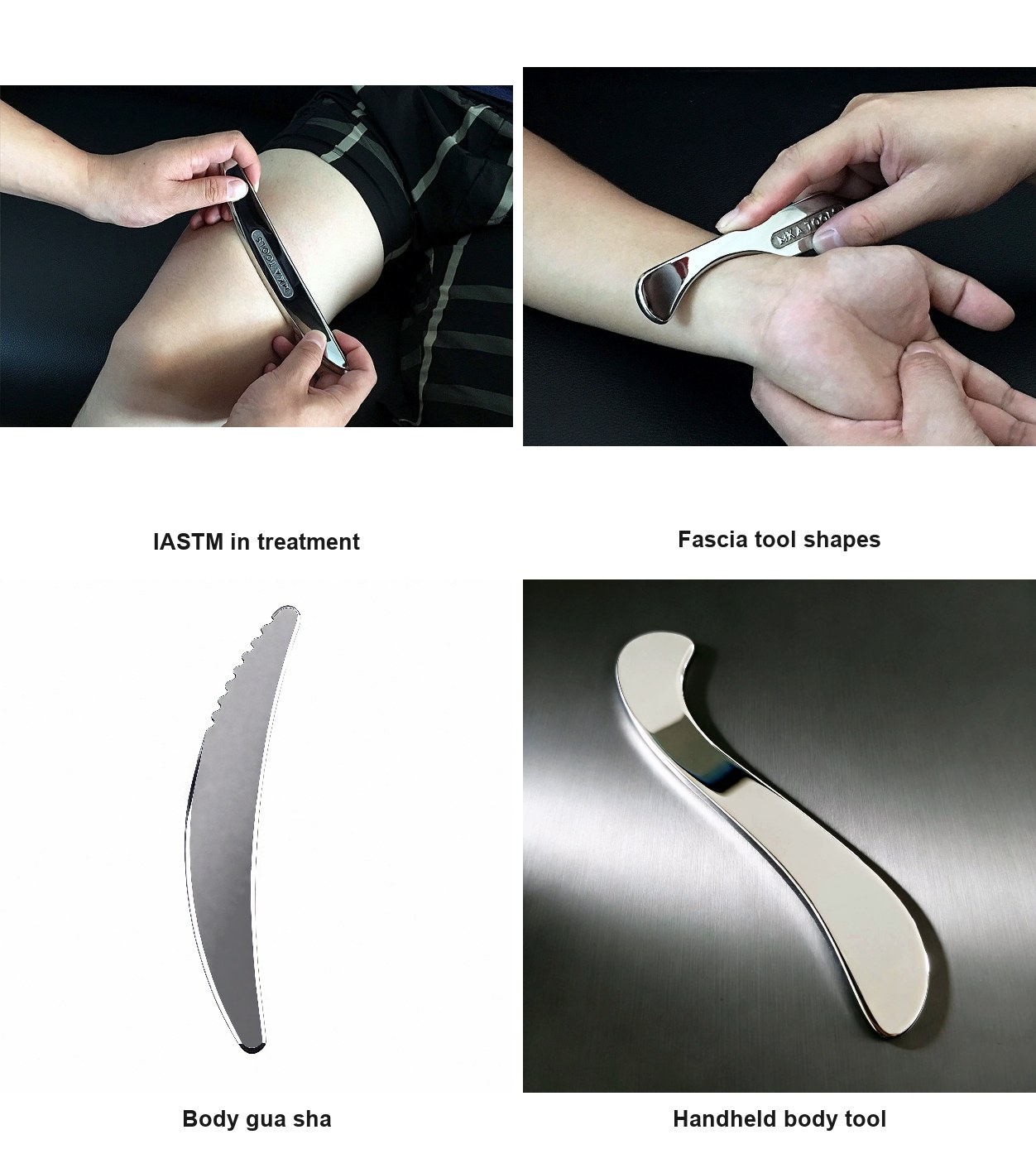
Alison Gua Sha Factory manufactures stainless steel gua sha, fascia and body tools in 304 and 316, alongside natural stone, bian stone and terahertz lines. Cutting, shaping, polishing, laser marking, inspection and packing all happen on our own floor.
Laser logos on a stock shape start from 200 pieces per shape, with full private label packaging produced alongside. A custom shape needs a mould and starts from 1,000 to 3,000 pieces, confirmed against your drawing and material. We will say so when a stock shape would serve your market just as well.
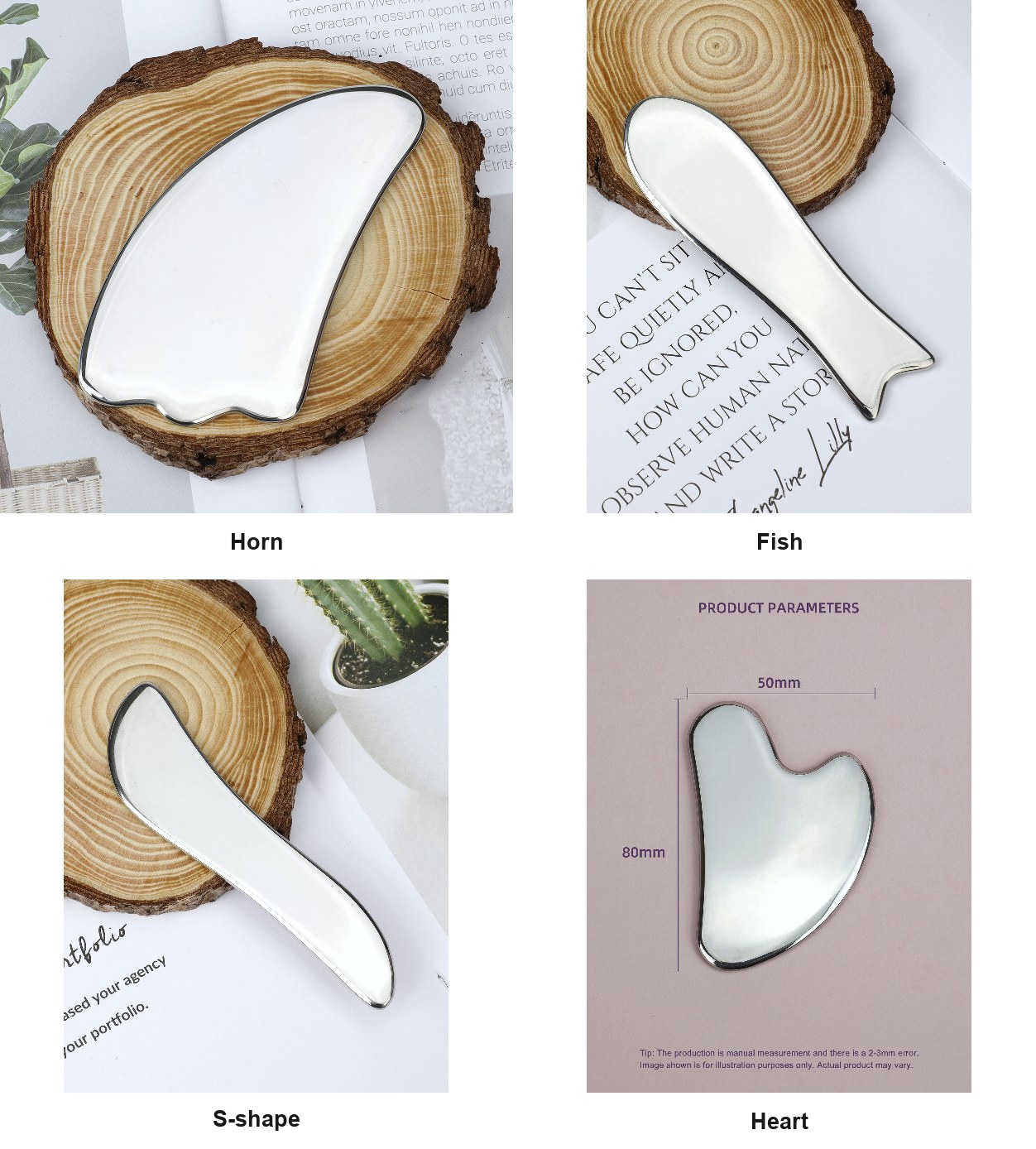
Frequently Asked Questions
What is the difference between 304 and 316 stainless steel for gua sha tools?
316 contains molybdenum, which raises resistance to corrosion in salt and chlorides. 304 is the practical default for most facial tools sold through skincare retail. 316 suits spas, clinical settings and salt-water environments.
Why does some stainless steel gua sha rust?
Because it is usually 420 rather than 304 or 316. 420 is a martensitic steel with less chromium and no nickel or molybdenum, so its surface layer is weaker. It resists rust when dry, but a gua sha tool gets wet, and in salt or chlorides it pits and stains.
How can I tell 420 from 304 before I order?
Smell it first: genuine 304 has no odour, and a strong metallic smell is a warning. A tool that grips a magnet firmly is probably not 304. Soak it in salt water for 24 hours and watch for yellowish-brown water or mottled staining. Then check the edge for burrs, and ask for the mill certificate.
What is tumble polishing and is it worse than hand polishing?
Tumble polishing lets parts rub against abrasive media in a drum. It rounds the edge by contact rather than to a specified radius, so the radius ends up uneven and burrs survive. Hand polishing forms and finishes each piece individually, costs more in labour, and gives a consistent edge including on the tight interior curves.
What is a burr?
A burr is the sharp raised line of metal left along an edge when a shape is cut from sheet and the edge is never properly formed. It catches when you draw the edge across a soft cloth, and it will scratch skin.
Is 304 stainless steel food grade?
Yes. 304 is what the industry calls food grade, and its higher chromium and nickel content keeps the surface passive so it does not leach or react with skincare products. 420 is not a food grade steel.
Can I tell the grade by how smooth it feels?
No. Both grades polish to a very smooth surface and both feel cool on skin. Smoothness is a polishing decision rather than a grade giveaway, so rely on the scent, magnet and saltwater checks, and on the certificate.
Did you run these tests yourselves?
Yes. The photographs in the grade section are from tests we ran on our own floor - the two grades soaked side by side in salt water, photographed after 24 hours. The rust bloom on the 420 is exactly what buyers should watch for.
Is stainless steel better than jade or bian stone for gua sha?
They do different jobs. Stainless steel is unbreakable, hygienic, fully sanitiseable and consistent across batches. Stone feels warmer and carries the traditional story. Many brands run both rather than choosing.
Can you make a custom shape?
Yes, but a custom shape needs a mould, so the minimum is 1,000 to 3,000 pieces and the tooling forms part of the project quotation. We need a CAD file or a dimensioned drawing before we can quote and tool it.
How is a logo applied to a stainless steel tool?
Most commonly by laser engraving, which produces a permanent, slightly recessed tone mark. Deep etching, stamping, pad printing and colour fill are also available. Laser is the most durable and the most detailed.
What is the minimum order quantity?
A stock shape with your laser logo starts from 200 pieces per shape. A custom shape needs a mould and starts from 1,000 to 3,000 pieces, confirmed against your drawing, material and the number of sizes you want.
Will the tool rust?
No. 304 and 316 are austenitic stainless steels and do not rust in normal skincare use and washing. Corrosion risk comes from poor-quality steel or prolonged contact with chlorides, which 316 handles better.
How long does production take?
Most projects run roughly one to five weeks depending on quantity, finish, logo method and packaging. Lead time moves with tooling and hand finishing rather than with cutting.
Can you match a tool we already sell?
Send a CAD file, a dimensioned drawing or a physical sample. We reproduce the geometry and edge radius, and we flag anything that cannot be finished to a skin-safe standard. Photographs alone are not enough to tool from unless they carry dimensions.
Do you supply the material certificate?
Yes. Mill certificates stating steel grade and heat number are available with production, and inspection records ship with the batch.
Can stainless steel tools be sold in a gift set with other materials?
Yes. Many buyers combine stainless steel with bian stone, rose quartz or a roller in one box. Mixed-material orders can be produced and consolidated into a single shipment with consistent packing.
Start Your Stainless Steel Project
Tell us the grade you want, the shapes and quantities you have in mind, whether you need your logo and packaging, and where the goods need to ship.
We will reply with a recommended construction, minimum order, lead time and quotation, and we will say so if a simpler specification would serve you better.
guashafactory@gmail.com | +86 133 3260 7156 | No. 88 Zhengkeng Street, Changan Town, Dongguan City, Guangdong, China