Oct 12, 2026Services Overview
Stainless Steel Gua Sha Edge Geometry and Polishing Quality
Contact edge geometry for stainless steel gua sha tools: radius, forming, polishing, why tumbling fails, how to inspect an edge, and how to specify one.
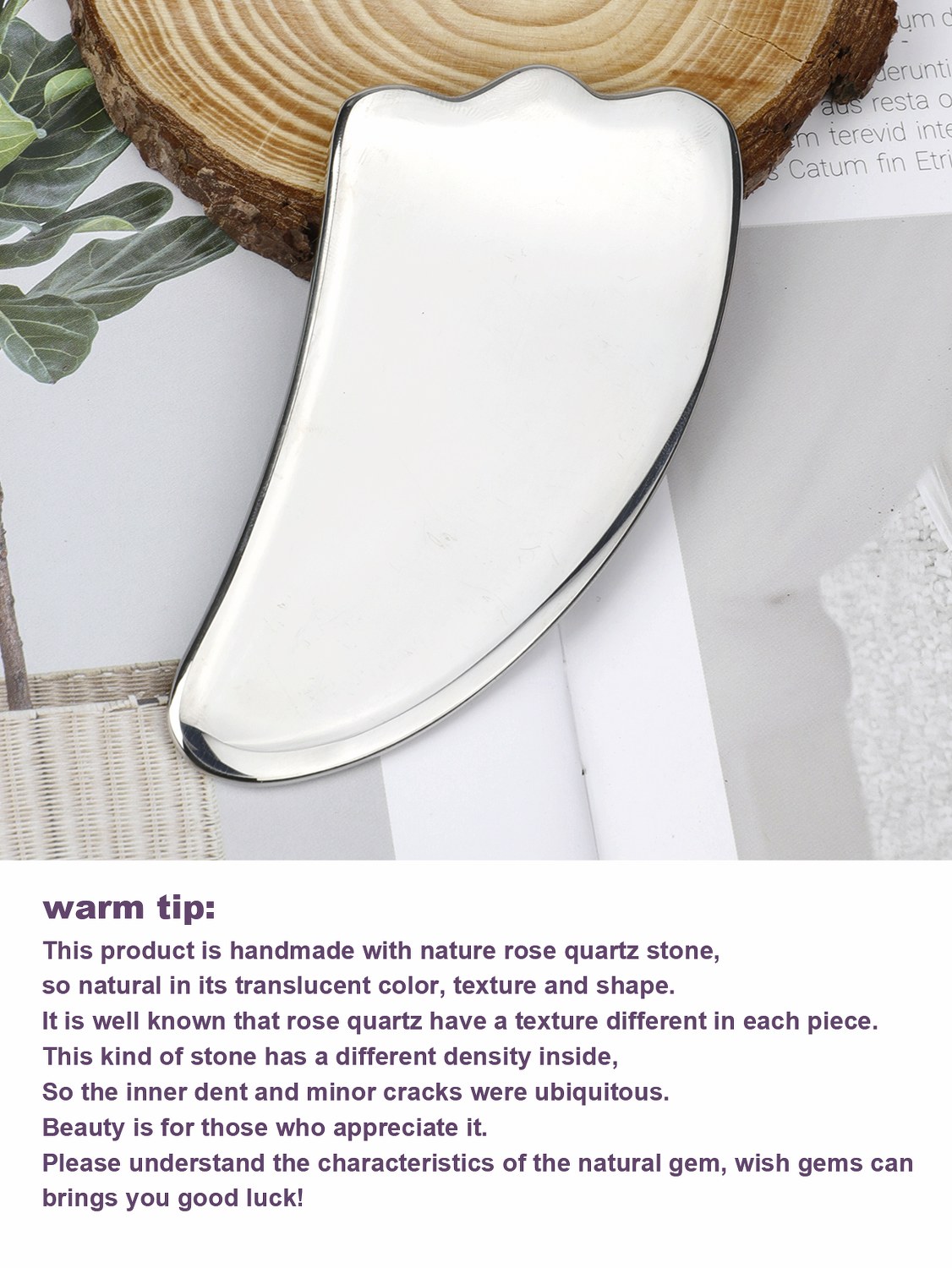
The contact edge is the working part of a gua sha tool. It is also the part most buyers inspect last, because it is hard to photograph and easy to describe in words that sound reassuring without saying anything.
This guide explains how a professional edge is formed, what radius means in practice, and how to inspect an edge so a quality conversation is based on what the tool does rather than what the brochure claims.
1. What a Contact Edge Does
A gua sha tool is held at an angle and drawn across skin. The edge makes contact along a narrow band, and the pressure applied by the user is concentrated through that band.
Everything about how the stroke feels comes from the geometry of that band: its radius, the smoothness of the transition, and whether the radius is consistent around the whole contour.
2. The Radius
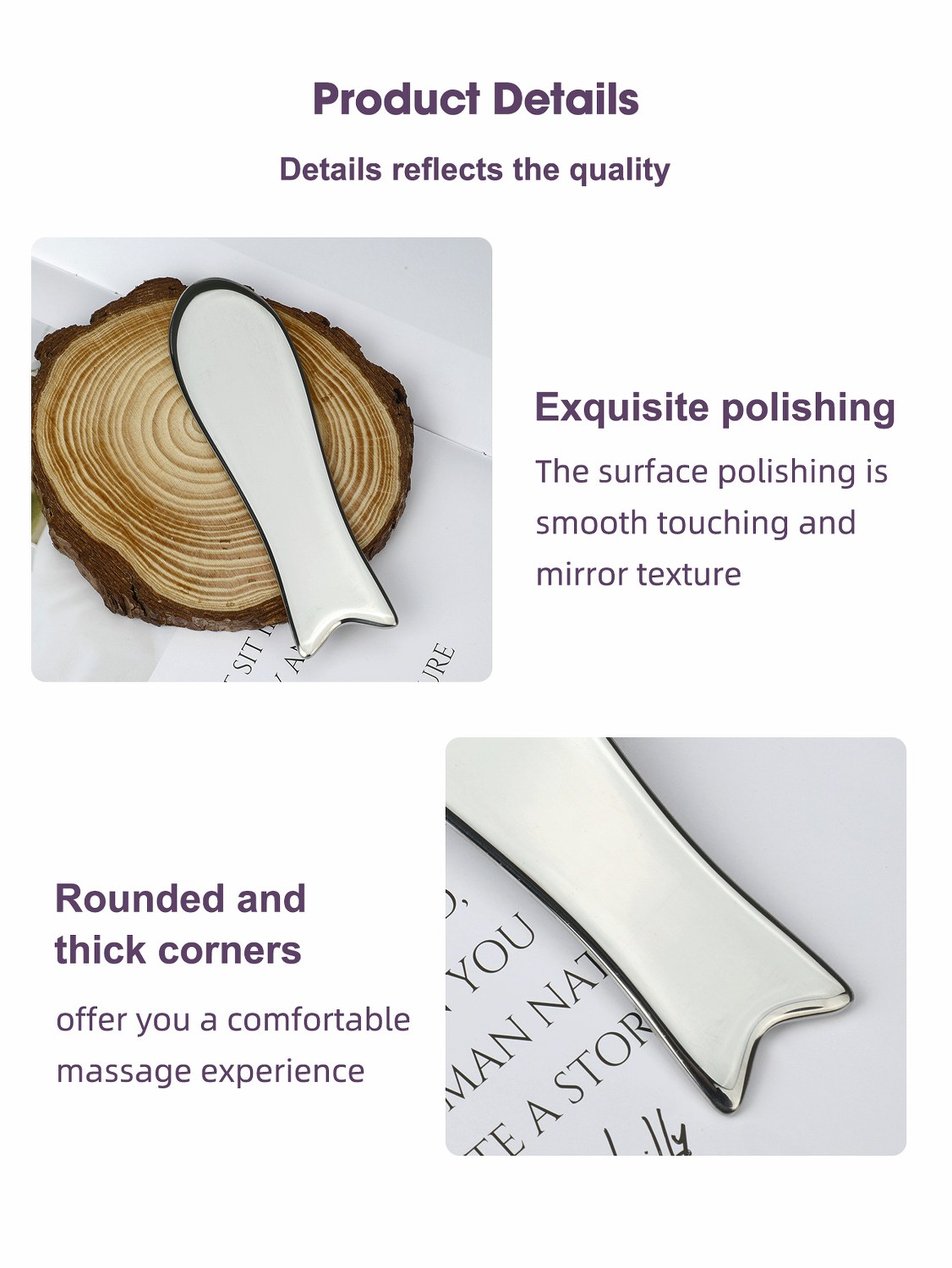
Radius is the measure of how round the edge is. A sharp corner concentrates pressure and can scratch. A fully rounded edge spreads pressure so widely that the tool loses grip and glides without benefit.
The target sits between those extremes, and the right value depends on the tool and how it will be used. A facial tool and a body fascial tool do not want the same edge.
Edge condition | Effect on skin | Cause |
|---|---|---|
Too sharp | Scratches, drags | Insufficient radius or missed forming |
Correct | Smooth glide with grip | Radius formed and polished |
Too rounded | Glides without benefit | Over-polishing or tumble rounding |
Inconsistent | Varies around the contour | Hand finishing without a reference |
3. How the Edge Is Formed
The edge is formed to its radius after the blank is cut. The forming step sets the geometry; the polishing step removes the marks that forming leaves behind.
Both steps matter. An edge that is formed correctly but polished carelessly keeps a fine abrasive line along the contact band. An edge that is polished heavily without forming is rounded unequally.
4. Why Tumbling Is Not Enough
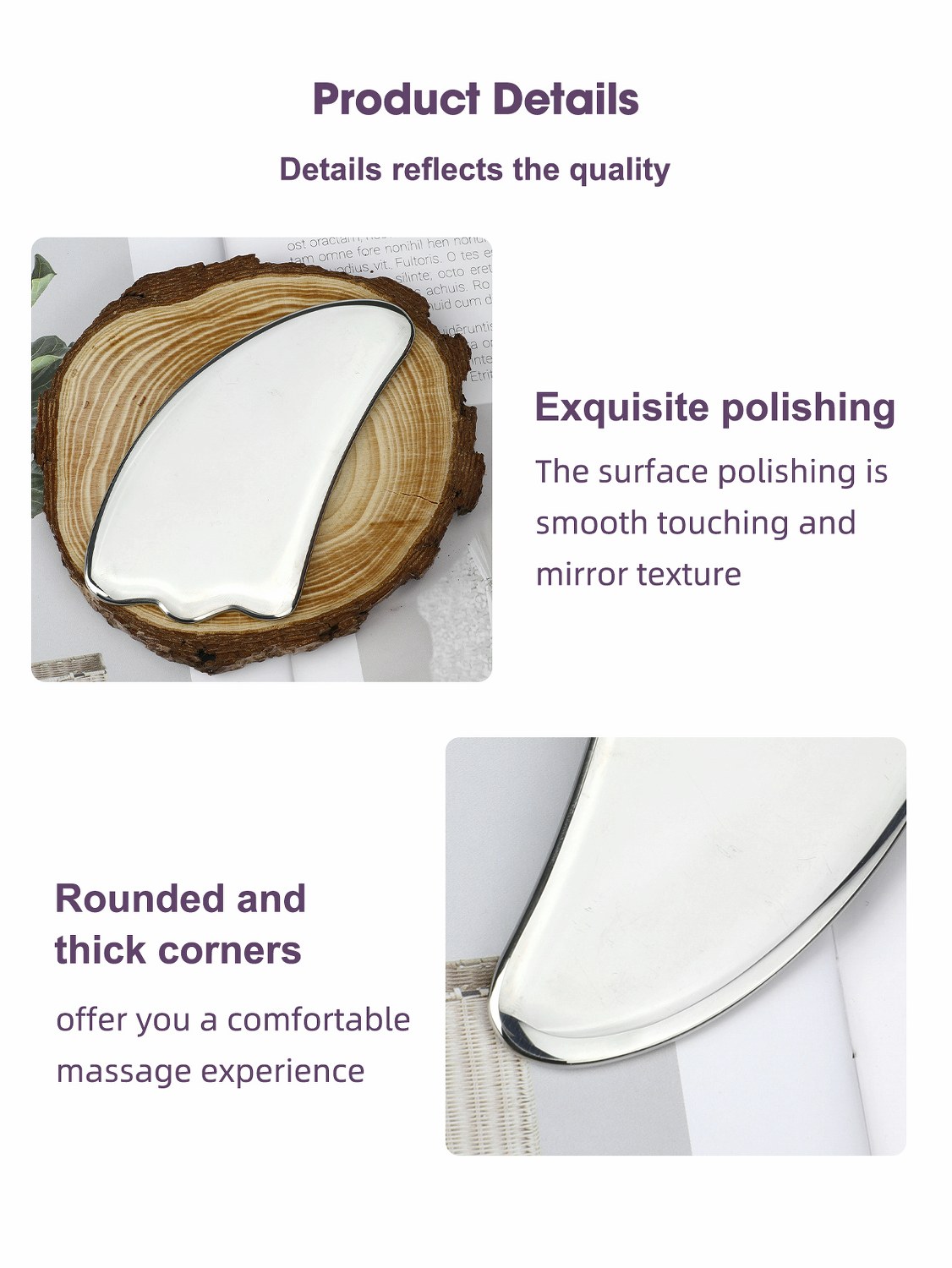
Low-cost production often blunts a stamped blank by tumbling the parts together. Tumbling does round the corner, but it rounds it unevenly, because the parts contact each other randomly.
The result is an edge that is soft in some places and still sharp in others. It is detectable by hand, and it is the difference customers feel immediately when they compare two tools.
If you want to know how a supplier finishes edges, ask whether the radius is formed to a dimension or produced by tumbling. The answer tells you what the tool will feel like.
5. Polishing the Edge
After forming, the edge is polished to remove forming marks and to bring the surface to the same standard as the rest of the tool.
On mirror finishes, the edge should reach a similar reflectivity to the faces. On satin or matte tools, the edge is smooth rather than mirrored, but it should be free of the fine lines that forming leaves.
6. Inspecting an Edge
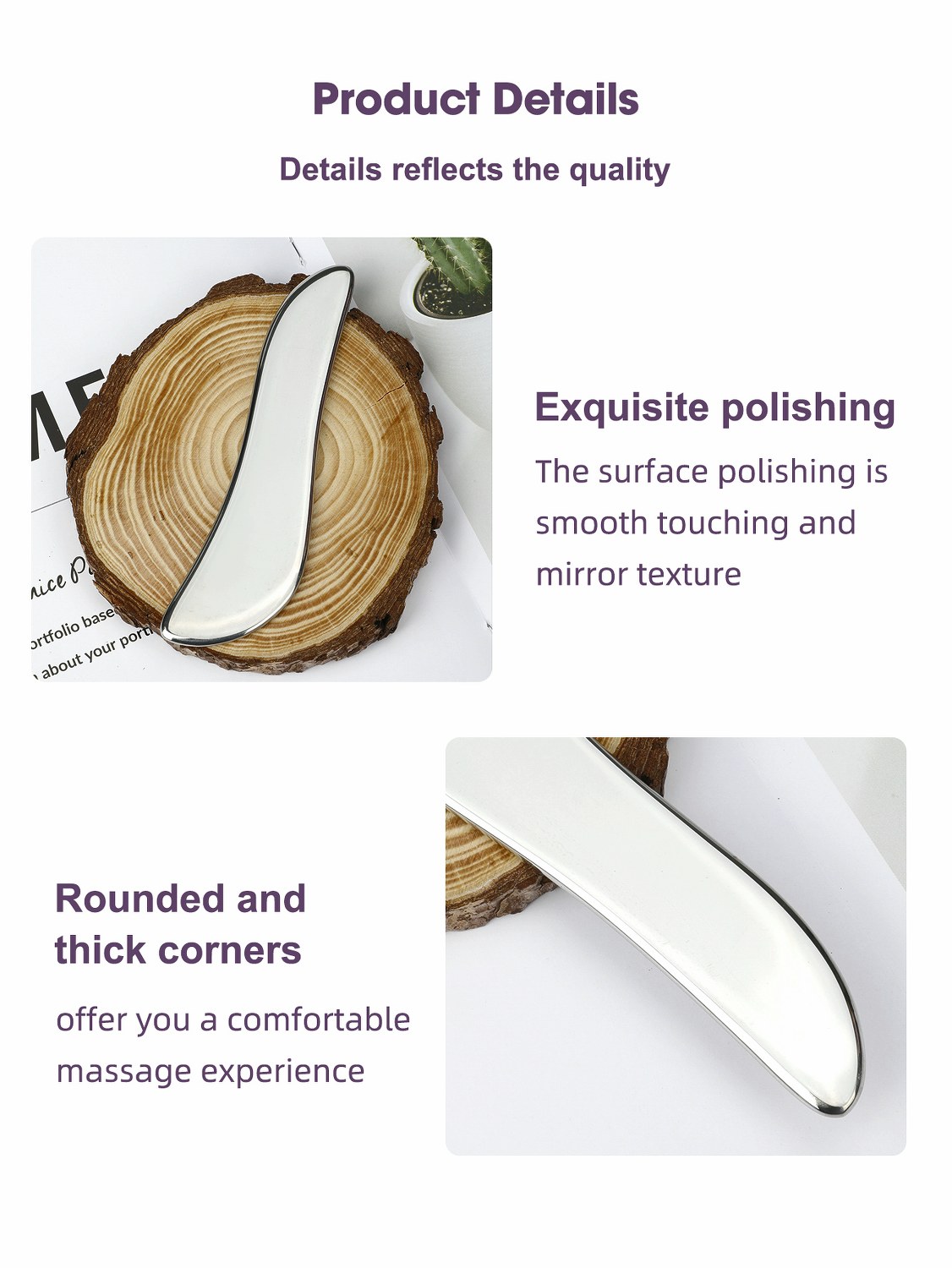
The practical inspection is a combination of gauge and hand. A radius gauge confirms the dimension; a hand test confirms that the transition is smooth around the whole contour, including the tight inside curves.
Draw the edge lightly across the back of a hand or a soft cloth. A correctly finished edge glides. A poorly finished edge catches.
Check the interior curves specifically. They are the hardest area to finish and the most common place where a radius drifts out of specification.
7. Working With Us
Alison Gua Sha Factory forms every contact edge to a specified radius, then hand-finishes it and inspects by gauge and by hand before packing.
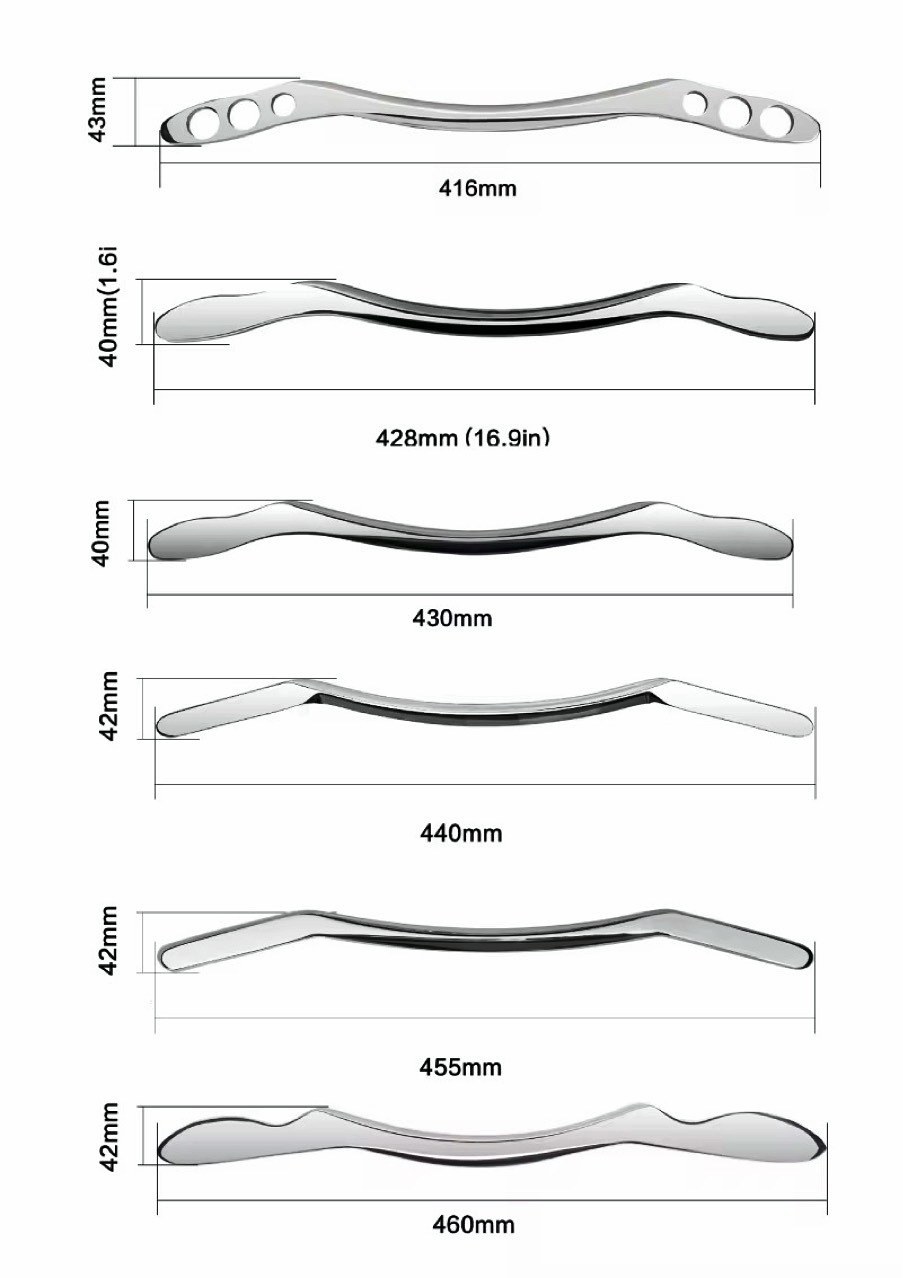
Tell us how the tool will be used and on which part of the body, and we will recommend an edge specification in the drawing for your approval.
guashafactory@gmail.com | +86 133 3260 7156 | No. 88 Zhengkeng Street, Changan Town, Dongguan City, Guangdong, China
Frequently Asked Questions
How do I know if an edge is properly finished?
Draw it lightly across a soft cloth or the back of a hand. A correct edge glides smoothly. A poor edge catches and drags.
Can edge radius be changed on an existing shape?
Yes, but changing the radius makes it a custom shape, so it needs a mould and starts from 1,000 to 3,000 pieces. A stock shape with your laser logo starts from 200 pieces per shape.
Does the edge differ between facial and body tools?
Yes. Body and fascial tools generally take a slightly different radius because the working pressure and the contact area are different.
Will a polished edge scratch skin?
Not when it is formed and polished to specification. Contact-surface defects are rejected in our inspection.
How do you check the edges?
By radius gauge for the dimension and by hand for the transition, including the tight inside curves.
Can you match the edge feel of a sample I send?
Yes. Send the sample and we will measure the radius and reproduce the geometry, flagging anything that cannot be finished safely.
Is tumbling used on your edges?
We form the radius to a dimension and hand-finish it. Tumbling alone produces an uneven radius, which is exactly what buyers notice on cheap tools.
What happens if an edge fails inspection?
The piece is reworked where possible, otherwise rejected. Edge defects on the contact surface are not graded down, they are removed from the batch.