Oct 13, 2026Services Overview
Stainless Steel Gua Sha Manufacturing Process: From Steel to Finished Tool
How stainless steel gua sha tools are made: material certification, blanking, edge radius, polishing, laser marking, inspection and packing, stage by stage.
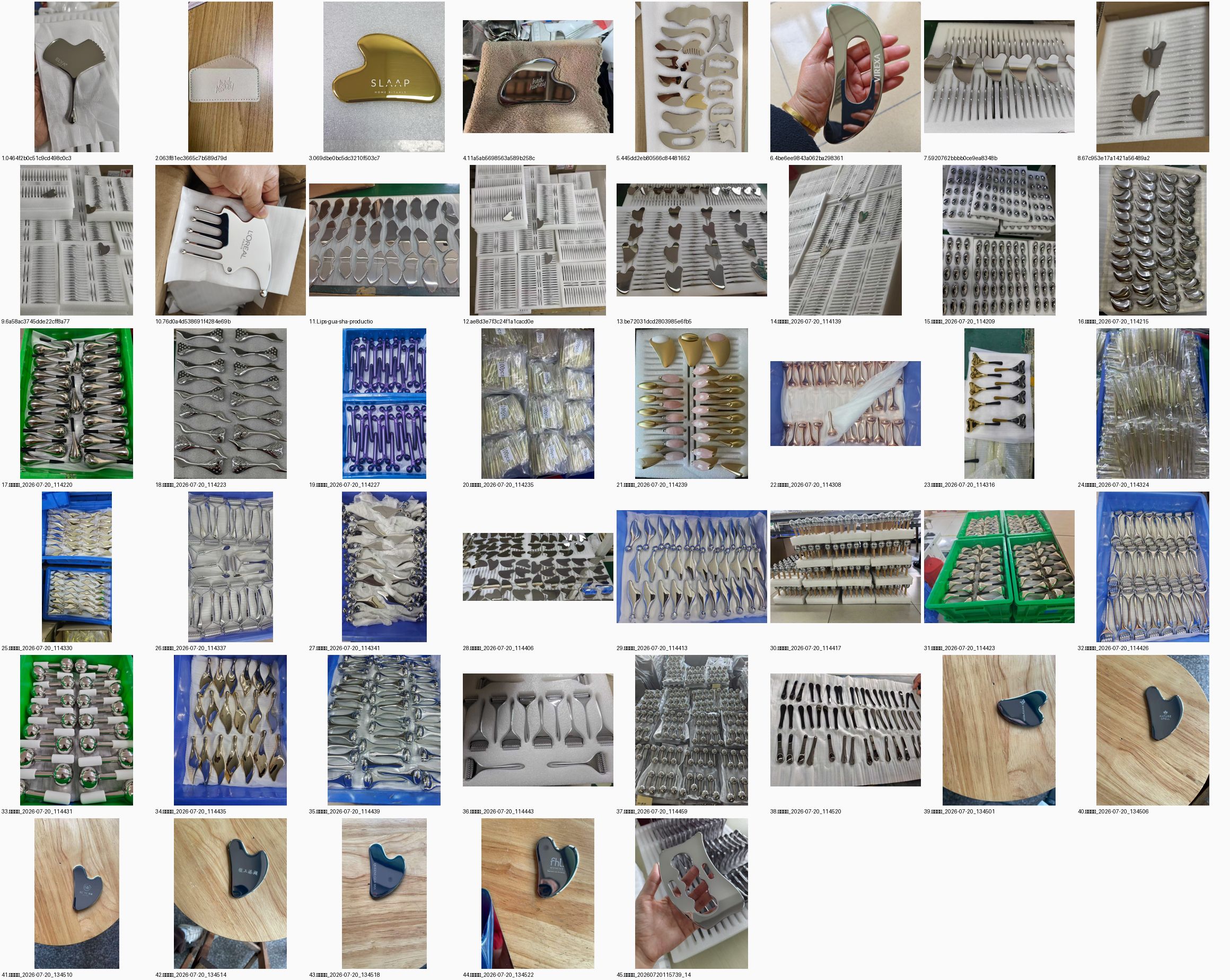
A stainless steel gua sha tool looks simple on a retail shelf. Behind it are six production stages, and each one leaves a mark on the finished piece that a buyer can either control or inherit.
1. Material Selection and Certification
The process starts with the steel, not with the drawing. Food grade 304 or 316 austenitic stainless arrives as sheet or coil with a mill certificate stating grade and heat number.
Checking the certificate against the incoming material is the first control point. If the grade is wrong, every later stage still produces a tool that looks correct and fails in the field.
2. Blanking and Cutting to Shape
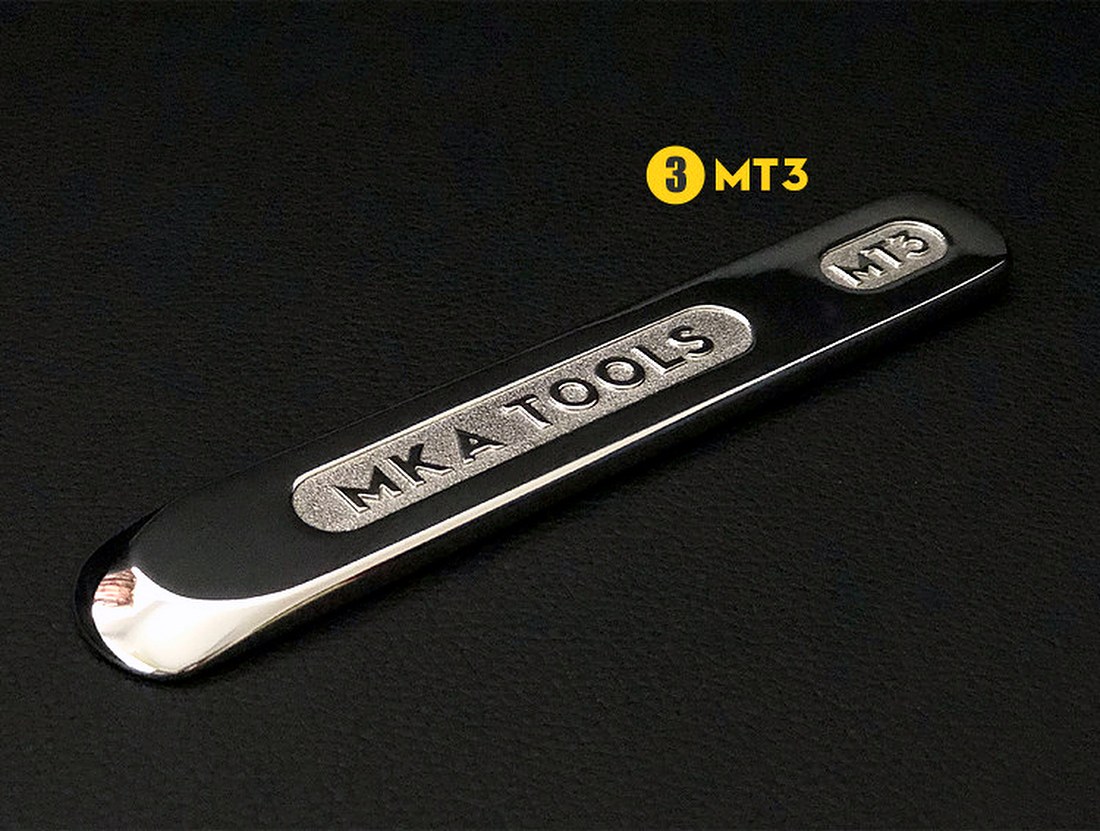
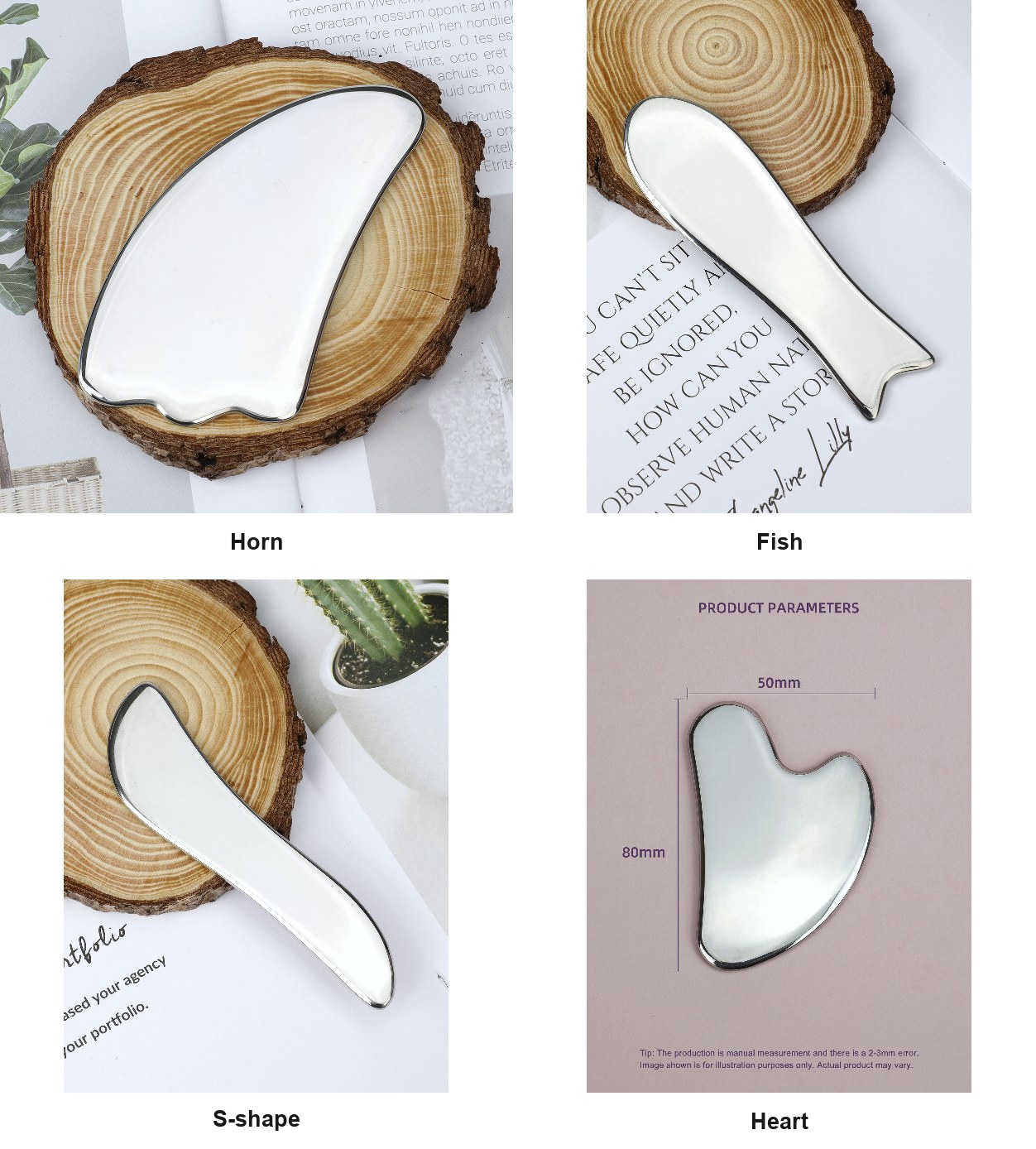
Shapes are cut from sheet using a die or a laser, depending on volume and geometry. A die is faster and gives a more consistent blank edge for high volumes. Laser cutting suits new shapes and shorter runs.
The blank that leaves this stage is flat, roughly shaped and sharp at the perimeter. Everything that follows is about turning that blank into a skin-safe instrument.
Method | Best for | Blank edge | Tooling |
|---|---|---|---|
Progressive die | High volume, stable shape | Very consistent | Die required |
Laser cut | New shapes, short runs | Clean, slight heat mark | No die |
Water jet | Thick plate | Smooth, slower | No die |

3. Edge Forming and Radius
The contact edge is formed to a controlled radius. This is the step that separates a professional tool from a stamped blank, and it is done by machine and finished by hand.
4. Grinding, Polishing and Surface Finish
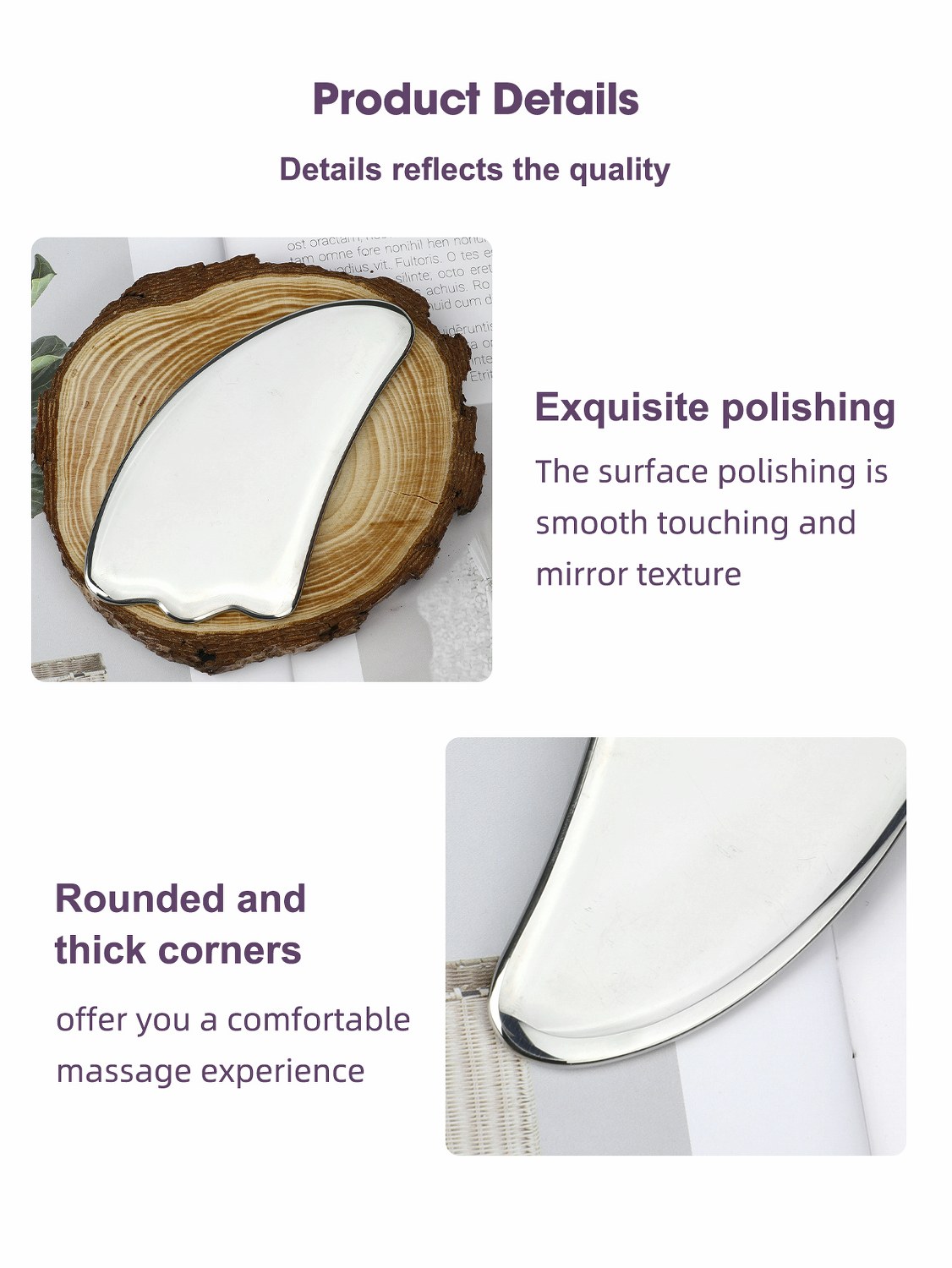
Polishing removes the marks left by forming and produces the final surface: mirror, satin or matte. Mirror finishes need more passes and more careful handling to avoid dragging a scratch across the face.
Satin and matte finishes hide handling marks better and photograph consistently, which is why clinical and professional lines often choose them.
5. Logo Marking
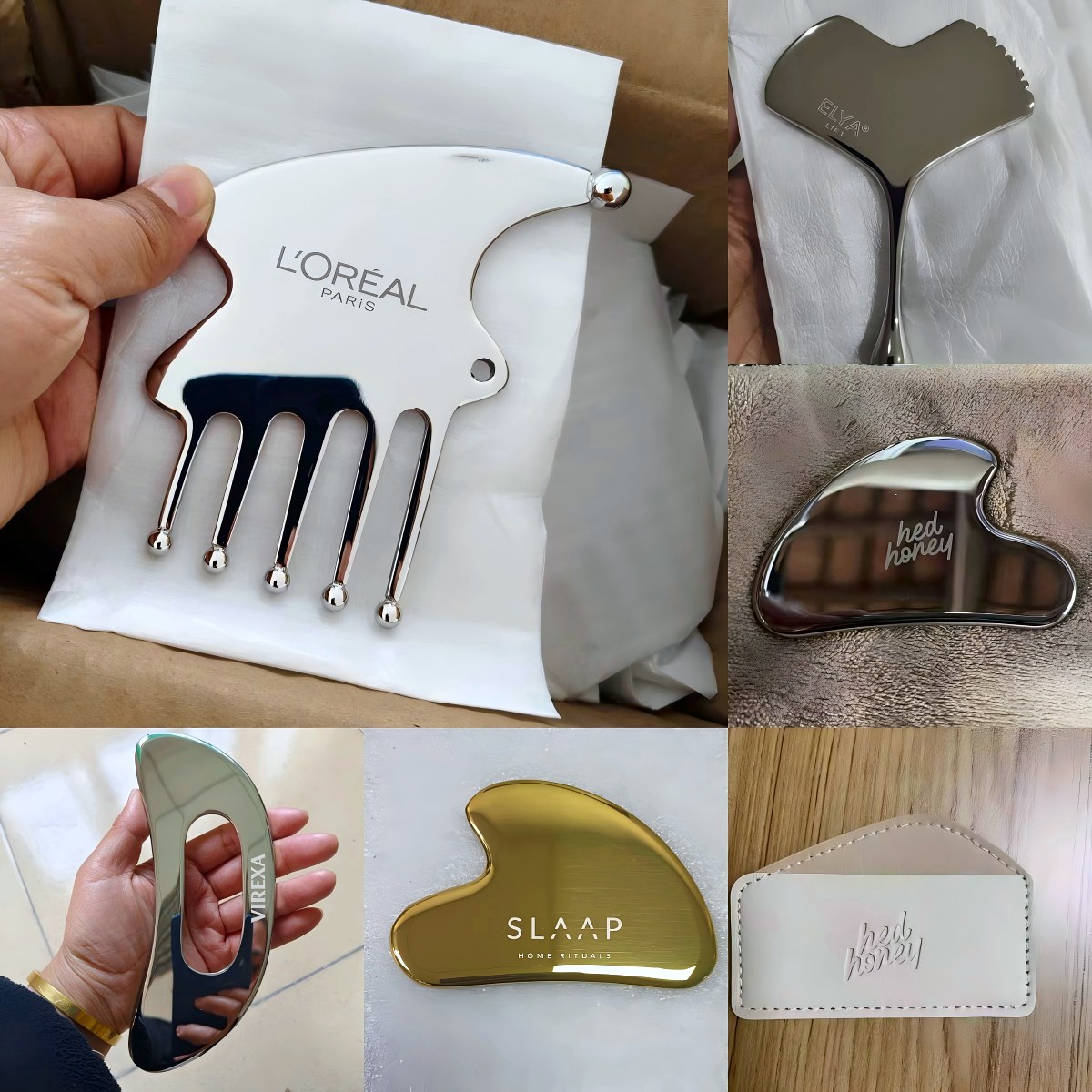
Laser engraving is the most common marking method because it is permanent and needs no consumable ink. It is applied after polishing so the finish is not disturbed.
Placement is set against the approved sample. This is the detail most likely to drift between batches, and it is why a marked sample is approved before production.
6. Cleaning, Inspection and Packing
Finished tools are cleaned, then inspected against the drawing and the approved sample: edge radius, surface, logo placement and dimensions.
Defects on the contact surface are rejected. Defects on a non-contact face are graded down or scrapped. That rule is written before production so there is no argument at shipment.

7. The Stages You Should Ask About
Four stages carry most of the quality risk: edge forming, polishing, logo placement and final inspection. Those are the ones worth asking a supplier to describe in detail.
8. Working With Us
At Alison Gua Sha Factory we run blanking, edge forming, polishing, laser marking, inspection and packing in one building in Dongguan, Guangdong.
Tell us the shapes, quantities, finish and logo method you need, and we will confirm the production route and the lead time stage by stage.
guashafactory@gmail.com | +86 133 3260 7156 | No. 88 Zhengkeng Street, Changan Town, Dongguan City, Guangdong, China
Frequently Asked Questions
Can I visit or video call the production floor?
Yes. We host video calls and factory visits, and we can walk through the stages in order so you can see where your order sits.
Which stage takes the longest?
Polishing usually take longer than cutting, because they are the least automatable steps and the ones that decide surface quality.
Can you produce a shape we already sell?
If it matches our library, it is a stock shape and starts from 200 pieces per shape with your laser logo. If the geometry differs, it is a custom shape, so it needs a mould and starts from 1,000 to 3,000 pieces. Send a CAD file, a dimensioned drawing or a physical sample.
Do you use 304 or 316 by default?
304 is the default for retail facial tools. We use 316 where the tool will live in wet, salt or clinical environments, or where the customer reads the grade line.
How is the final surface decided?
The finish is specified before production, because mirror, satin and matte need different polishing routes and different handling through packing.
Can stainless steel tools be combined with other materials in one order?
Yes. Stainless steel is often ordered alongside bian stone or rose quartz and consolidated into a single shipment.
What is the minimum quantity?
A stock shape with your laser logo starts from 200 pieces per shape. A custom shape needs a mould and starts from 1,000 to 3,000 pieces, confirmed against your drawing and material.