Gua Sha Retail Display Guide | Alison Gua Sha Factory
How to display gua sha tools so shoppers pick them up: formats that fit your shelf, display-ready packaging, and the MOQs and lead times to plan around. Quote within 24 hours.
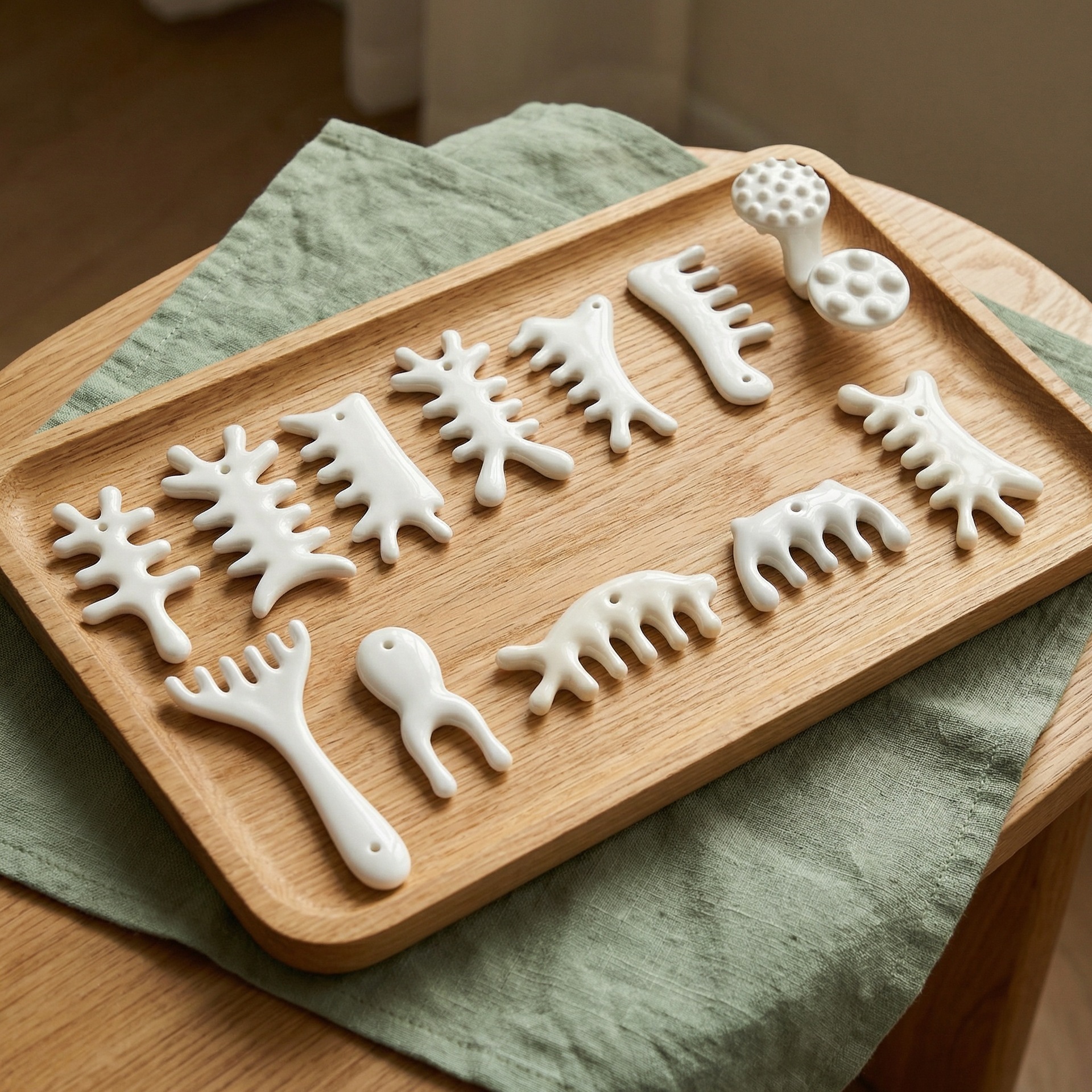
A gua sha display earns its shelf space when a shopper can see the tool, understand what it is for, and pick it up without help. That takes three things working together: a pack the stone shows through, a short message that says what the tool does and how to use it, and a fixture that holds the tools upright, facing the customer, at a height where hands reach naturally. If any one of the three is missing, the display looks tidy and sells nothing. This guide is for retail buyers, spa owners and brands putting gua sha tools into shops for the first time, ordering 100 pieces or more. It is not for a brand redesigning a whole store, because that is a separate project with its own designer, budget and timeline.
The shelf that sells nothing
A boutique owner orders fifty rose quartz boards for her new wellness shelf. She has good taste, and the shelf shows it. The boards arrive loose in a plain carton, each one wrapped in tissue, so she lays them flat in a shallow wooden tray, a few overlapping, with a small handwritten card that says gua sha. The tray sits on the middle shelf between the candles and the bath salts, and it looks beautiful in the morning light. By the end of the first week she has sold two. The rest lie in the tray, gathering dust, while customers walk past, glance at the pink shapes and keep walking, because nothing on that shelf tells them what the object is, what it does, or why it costs what it does.
She moves the tray to the counter by the till, thinking that a busier spot will fix it. A few more sell, mostly to customers who already own one and recognise it on sight. The customers who have never used gua sha still do not stop, because the tray still answers none of their questions. They cannot see the edge of the tool, which is the part that does the work, because the boards lie flat and the edge faces the shelf. And they cannot pick one up without disturbing the whole arrangement, so they do not pick one up at all. The problem was never the location of the shelf. The problem was that the display asked the customer to already know the product, and most customers do not.
Why most gua sha displays fail
The first reason is that a gua sha tool is small, flat and quiet, and a shelf full of small flat quiet things reads as one thing. A facial board is about the size of a hand, and when it lies flat its most interesting feature, the shaped edge, disappears. The stone itself does most of the selling, because the colour and the polish are what catch the eye, but a flat board shows only a small patch of stone to a person walking past. The fix is simple and cheap: stand the tools up. A board that stands upright, leaning against a small riser or slotted into a grooved base, shows its full shape, its edge and its colour at once, and a customer can see from two steps away whether the tool is a wing shape, a heart shape or a comb. If the display holds the tools flat, ask the supplier for a pack or a fixture that holds them upright, because the flat tray is where most first displays fail.
The second reason is that the pack hides the product. A gua sha tool in a closed cardboard box is invisible, and a customer will not open a sealed box to look at a product they have not decided to buy. The pack that works on a retail shelf is the one that shows the stone: a window box with the tool visible through the front, a clear sleeve, or a gift box with the lid open on the display unit. A window box starts at 1,000 pieces, a custom gift box starts at 500 pieces and a printed pouch starts at 500 pieces, so a display-ready pack is a real commitment, not something to decide after the tools are already made.
The third reason is that the display says nothing. A tool on a shelf with no explanation is a decoration, and decorations do not get bought by first-time customers. The message that works is short and practical, and it answers three questions in plain words: what this tool is for, how to use it, and what comes with it. A care card inside the box can carry the longer instructions, but the shelf itself needs one short line a customer can read in a few seconds, such as the shape, the material and the one use the tool is best for. If the shelf message names a result the tool cannot prove, a retail buyer will ask for the evidence, and a claim with no document behind it is the fastest way to lose a shelf. Keep the claims on the pack to what the material and the tool actually are, and put the how-to on the card, not a promise on the box.
Choosing a display format for your channel
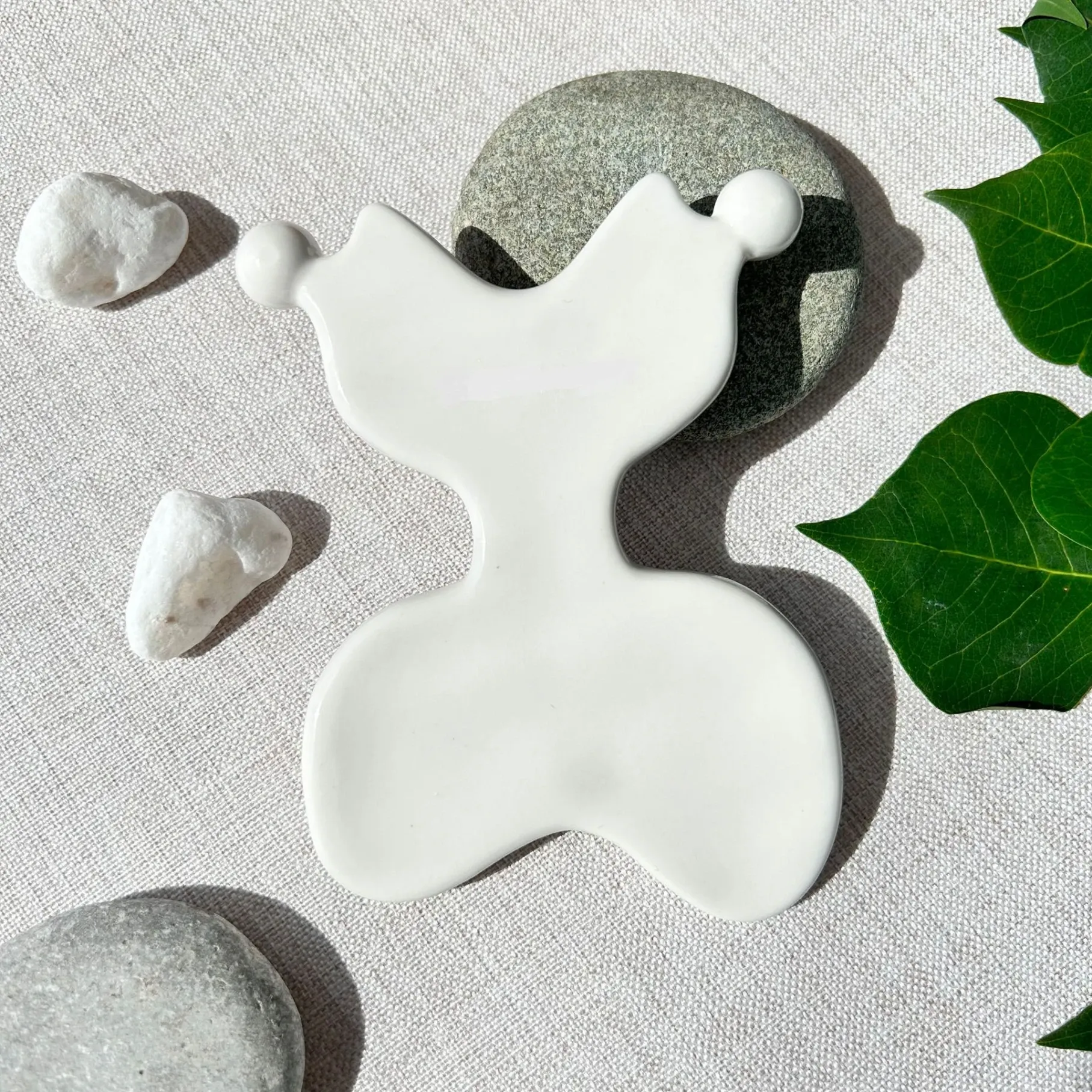
The right format depends on where the customer meets the product, so start from the channel rather than from the fixture. A beauty boutique or gift shop sells one tool at a time to a customer who is browsing, so the display has to work at arm's length. For that shop, a countertop unit that holds six to twelve tools upright, with the window boxes facing out and one open sample the customer can hold, is usually the best balance. The open sample matters more than the unit itself, because a customer who has held the tool, felt its weight and its edge, is far more likely to buy than a customer who has only looked at a box. Ask the supplier for one or two extra pieces for the open sample, and for a spare of the bestselling shape, because a display with an empty slot looks like a shop that has run out.
A spa or wellness studio sells differently. The customer there has already had a treatment, or is about to, and the tool is recommended by a therapist they trust, so the display is a reminder rather than a first introduction. For a studio, a small shelf near the reception desk with three or four shapes, the care card visible, and the price written plainly will do more than a large unit, because the conversation has already happened in the treatment room. The studio order is also smaller and more regular, so a first order of 100 pieces is possible on in-stock and regular styles if our sales team confirms the style qualifies, and reorders can follow the same shapes once the studio knows which one its clients ask for.
A larger retailer, a department store or a chain, needs the opposite of a boutique unit. Their display has to survive being stocked by staff who have never seen the product, restocked in a hurry, and shopped by customers who will not ask for help. For that buyer, the pack has to carry the whole message: the window, the material, the shape, the how-to and the price, all readable without a shop assistant. The display unit itself should hold the tools so they cannot slide, fall or turn backwards, because a unit that needs daily tidying will be tidy for a week and then ignored. Before a chain order, ask for a finished sample of the pack and the unit together, and test it the way a customer will meet it: take a tool out, put it back, and see whether the next customer can do the same without help. If the tool does not go back in easily, the unit is wrong, and no amount of branding on the outside will fix it.
What to check before you order display stock
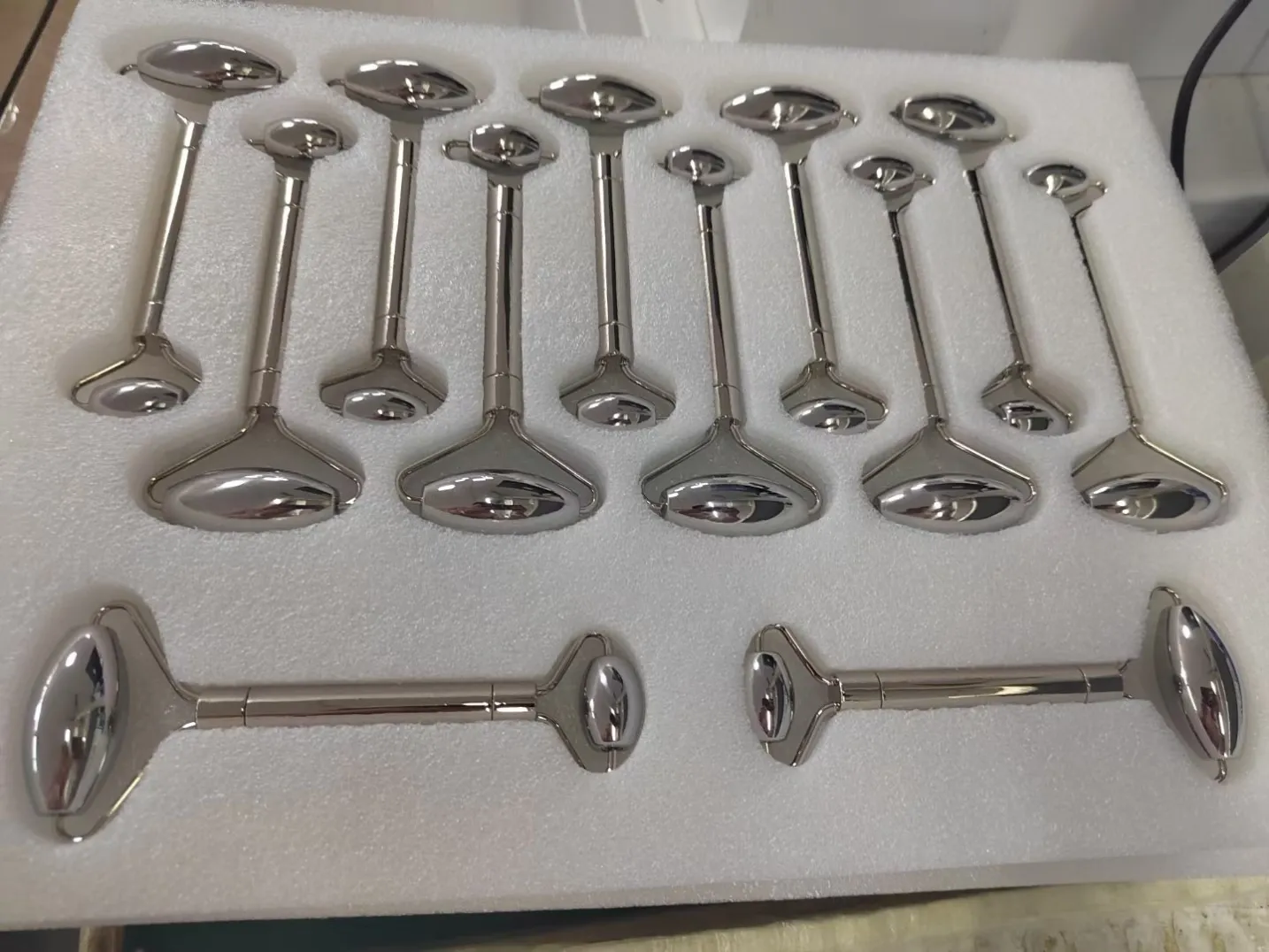
There are four checks that save more money than any fixture choice, and all four are about the order, not the shelf. The first is the shape and the material. A retail display works best with a small range, not a large one: two or three shapes in one or two materials, so the customer can compare and choose without being overwhelmed. Pick the shapes that sell best in your channel, confirm the material and the finish with a physical sample, and build the display around those few pieces. The price range depends on the material: resin runs from per piece, natural stone from , bian stone from , ceramic from , and stainless steel 304 from , all EXW in US dollars for orders of 200 to 5,000 pieces, with logo and packaging quoted separately per style and size.
The second check is the logo. A display tool with no logo is a tool any shop can sell, and a display tool with your logo is a tool only you can sell, so the logo decision shapes the whole order. A laser-engraved logo on a stock shape starts at 200 pieces per model, and a silk-screen logo starts at 1,000 pieces. A laser sample takes 1 to 3 days, a silk-screen sample takes 7 to 10 days, so the logo sample is the part of the order that takes the longest to see. Ask for the logo sample on the actual tool, in the actual position, before production, because a logo that looks fine on a drawing can sit in the wrong place on a curved edge, and the display is where that mistake is most visible.
The third check is the pack, and it is the check most first orders skip. The pack has to protect the tool on the shelf and in the bag on the way home, and it has to show the stone. A window box starts at 1,000 pieces, a custom gift box at 500 pieces, a printed pouch at 500 pieces, a custom flip-top box at 500 pieces, and a printed pouch is the pack that doubles as the storage the customer keeps. The packaging unit price is quoted per size and per style, because a box for a facial board and a box for a body set are different boxes, so send the tool shape and the quantity with the inquiry and we will quote the pack together with the tools.
The fourth check is the clock. An unbranded stock order can ship in as little as 3 days, and a branded stock order takes 25 to 30 days after the artwork is approved, so the lead time is counted from artwork approval, not from the day the inquiry is sent. Send the inquiry with the tool, the pack and the display in one message, approve a finished sample of the whole set before production, and count the clock from the day the artwork is approved. We will reply with a quotation within 24 hours, with the recommended construction, the minimum order, the lead time and the price for your shape and quantity.
Pick two or three shapes, stand them upright where the customer can see the edge and the stone, put the short message where it can be read in a few seconds, and keep one open sample the customer can hold. Order the display-ready pack with the tools, approve a finished sample before production, and send one inquiry with the tool, the pack and the quantity together. Get a quote through our contact page, or message us on WhatsApp, and start with the sample that matches the shelf you plan to fill.
Frequently asked questions
What is the minimum order for display-ready packaging? A window box starts at 1,000 pieces, a custom gift box starts at 500 pieces, a custom flip-top box starts at 500 pieces, and a printed pouch starts at 500 pieces. The packaging unit price is quoted per size and per style, so send the tool shape and the quantity with the inquiry and we will quote the pack together with the tools.
Can I start with a 100-piece order for a retail display? A first order of 100 pieces is possible on in-stock and regular tool styles if our sales team confirms the style qualifies, but display-ready packaging starts at 500 pieces for a gift box or a pouch and 1,000 pieces for a window box, so the first display pack run is larger than the first tool order. Plan the first display-ready packaging run at 500 pieces, and ask sales to confirm whether your tool style qualifies for the 100-piece first order.
How long does branded display stock take? A branded stock order takes 25 to 30 days after artwork is approved, and an unbranded stock order can ship in as little as 3 days. Count the clock from artwork approval, not from the day you send the inquiry, and approve a finished sample of the whole set before production starts.