Services Overview
304 vs 316 Stainless Steel Gua Sha: Which Grade Should You Order Wholesale?
Stainless steel gua sha manufacturer for wholesale and private label: 304 and 316 range, customisation routes, order structure, MOQ, shipping and repeat orders.
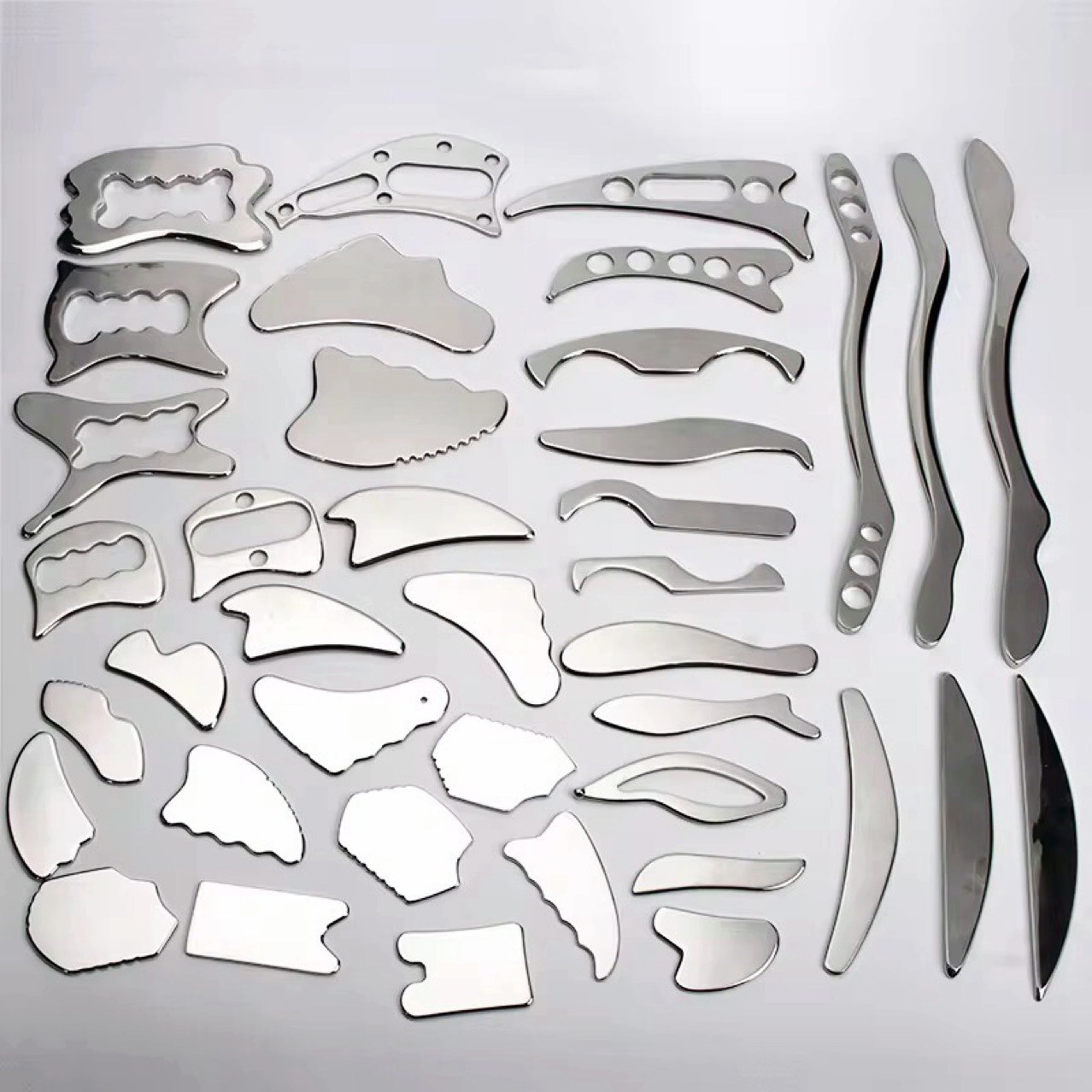
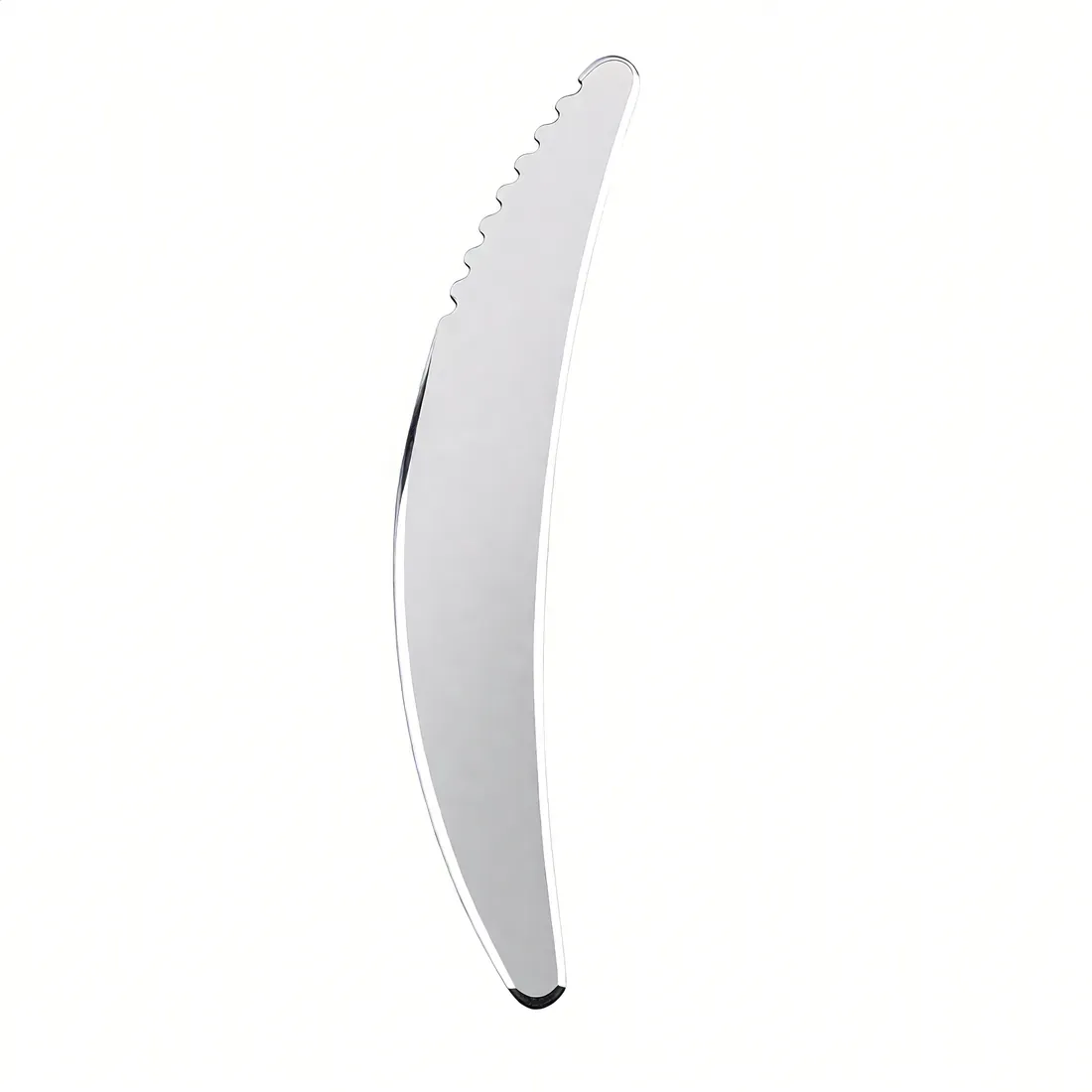
For most retail and marketplace gua sha programmes, order grade 304 stainless steel. It is food-contact safe, polishes to the same mirror or satin finish as 316, and costs less. Order grade 316 only when the tool will be used professionally, cleaned with chloride cleaners, or sold with a corrosion-resistance claim. Its 2-3% molybdenum gives it measurably better resistance to salt and chloride. At Alison Gua Sha Factory, stock shapes start at 200 pcs in either grade, with laser logo from 200 pcs.
304 vs 316 Composition
Element | Grade 304 | Grade 316 |
Chromium | about 18% | about 16-18% |
Nickel | about 8% | about 10-14% |
Molybdenum | None added | about 2-3% |
Iron | Balance | Balance |
Source: standard austenitic stainless compositions. Confirm the mill certificate for each production batch.
Which Grade Should You Order?
Buyer / use | Recommended grade | Why |
Retail, marketplace, gift sets | 304 | Lower cost, same look, adequate for normal bathroom use |
Spa, clinic, professional kits | 316 | Better chloride / salt-water resistance |
Product copy makes a corrosion claim | 316 | The claim needs the alloy behind it |
Travel sets, unbreakable / hygienic positioning | Either | Both are unbreakable and washable; choose on price vs. channel |
Metal tools moved from clinic shelves to mainstream skincare in a few years, and the buyers driving that shift want something unbreakable, hygienic and consistent across a production run. As a stainless steel gua sha manufacturer we make the range from flat sheet, and this guide covers the two common grades, the finishes that sell, and how a wholesale programme is structured from the first enquiry to a repeat order.
It is written for brand owners and sourcing managers who need to specify a grade, choose a finish and plan a first quantity without over-committing on tooling.
Cost and Lead Time
Grade 304: USD 1.49-5.99 per pc (EXW, 200-5,000 pcs). Grade 316 is typically priced higher than 304 because of nickel and molybdenum; 316 pricing on request, custom shapes quoted per drawing.
Branded stock shapes take 25-30 days after artwork approval. Unbranded stock shapes ship from 3 days. A laser logo sample takes 1-3 days.
Frequently Asked Questions
Is 304 stainless steel safe for skin?
Yes, both 304 and 316 are austenitic food-contact-safe grades and both polish to the same finish.
Will 304 rust in a bathroom?
Not in normal fresh-water bathroom use. It is 316 that is specified where salt water or chloride cleaners are routine.
Can I get my logo on either grade?
Yes, laser logo from 200 pcs on stock shapes.
What is the MOQ?
Stock shape with or without logo: from 200 pcs. Custom shape: quoted per drawing. Printed gift box / pouch: 500 pcs.
Which finish should I choose?
Mirror for retail shelf impact; satin / brushed to hide fingerprints; sandblast for a uniform low sheen that photographs well.
Why Metal, and Where It Fits a Range
A metal implement solves three problems that stone and ceramic cannot. It survives a bathroom floor, it can be washed without changing appearance, and it can be dropped into a moulded case without foam. That combination suits travel sets, professional kits and any line sold with a hygiene claim.
It also takes a laser mark cleanly, which means the brand can sit on the surface without a printed label that peels. Buyers building a full range usually position metal as the durable option beside a stone hero product.
Weight is the other reason buyers choose it. A board with real mass feels considered in the hand, and that first impression carries more weight at retail than a specification line on the box.
Grade 304 and Grade 316: What a Wholesale Buyer Should Specify
Both grades are austenitic, both are food-contact safe, and both polish to the same visual standard. The difference is the alloying addition: grade 316 carries molybdenum, which improves resistance to chloride. In practice that matters for a tool that lives in a wet bathroom and is wiped with a cleaning product.
Property | Grade 304 | Grade 316 |
|---|---|---|
Corrosion resistance | Good in fresh water and normal bathroom use | Better against salt and chloride cleaners |
Finish consistency | Polishes to mirror or satin easily | Same visual result, slightly harder to cut |
Typical buyer | Retail and marketplace lines | Professional, spa and premium lines |
Cost position | Lower | Higher, driven by the alloy |
For most retail programmes grade 304 is the sensible specification, and the saving is better spent on finishing and packing. Grade 316 earns its place when the product is sold into a professional channel or carries a corrosion claim in the copy.
Finishes Buyers Ask For
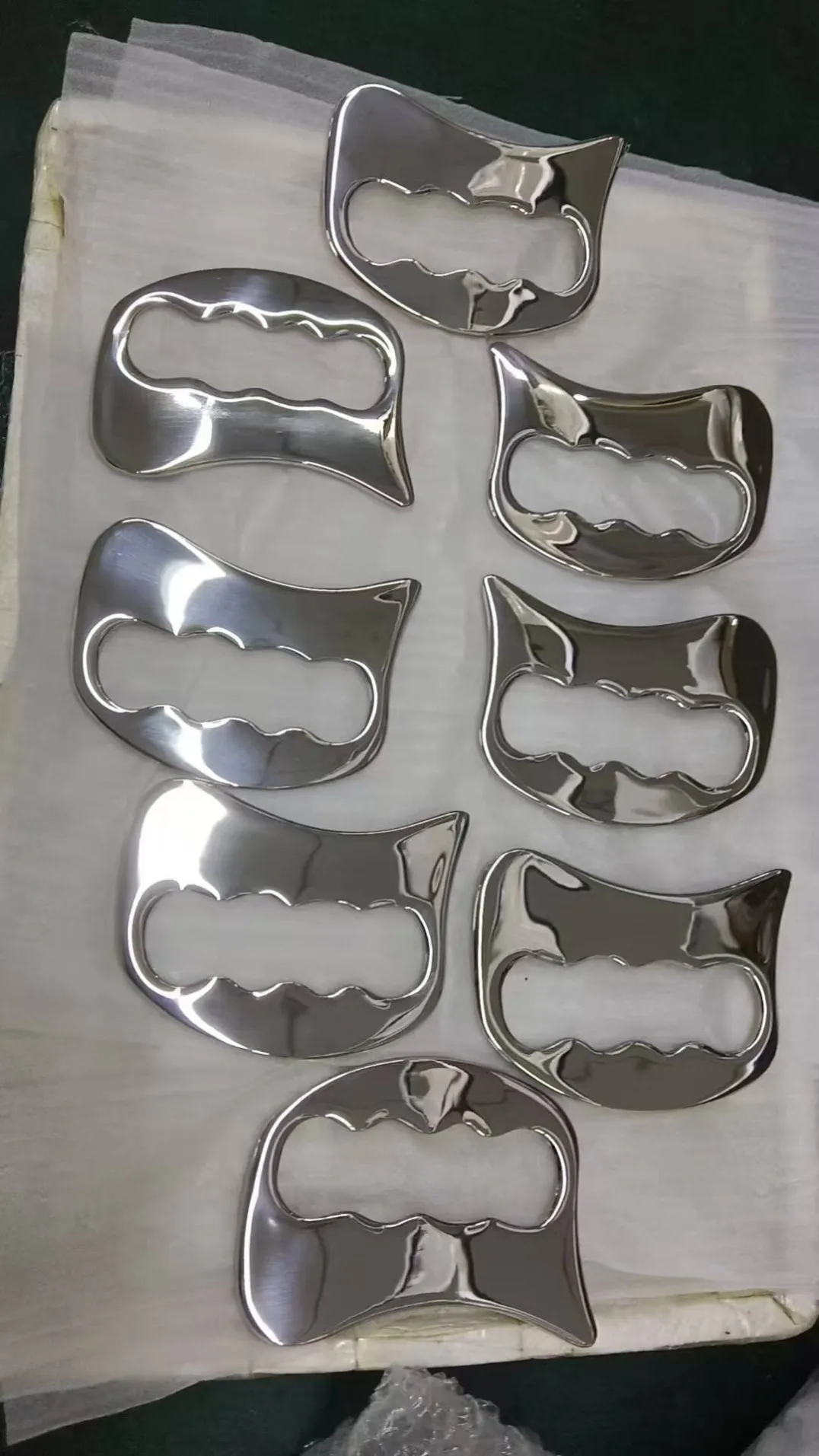
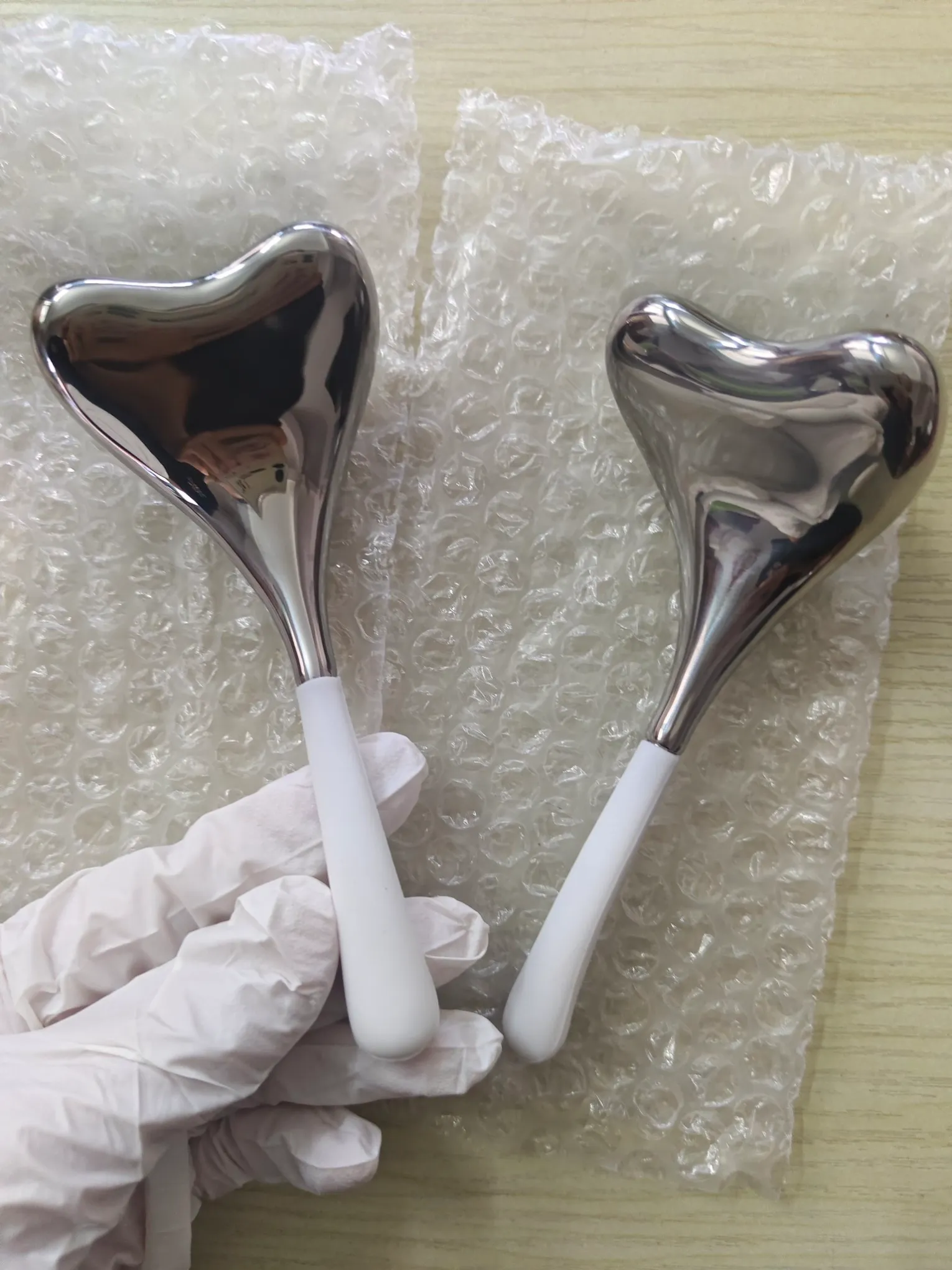
Finish is where a metal tool either looks expensive or looks like cutlery. Four options cover almost every brief, and each one changes the production route rather than only the appearance.
Polished and satin surfaces
- Mirror polish, the default for retail, produced by successive abrasive stages and a final buff.
- Satin or brushed, which hides fingerprints and suits a matte retail aesthetic.
Blasted and coated surfaces
- Sandblast, a uniform low-sheen surface that photographs well under studio light.
- Colour coating, applied over a prepared surface and cured, which adds a colour-matching stage.
Ask to see the same shape in two finishes side by side. A photograph flatters every surface, and the difference between a good polish and an average one only appears when the two samples are compared.
Finish also decides how a tool photographs. A high polish reflects the studio around it, so a catalogue shot needs controlled lighting; a satin surface is far easier to shoot for a marketplace listing, which matters when a buyer has to supply images for twenty SKUs.
How Orders Are Structured
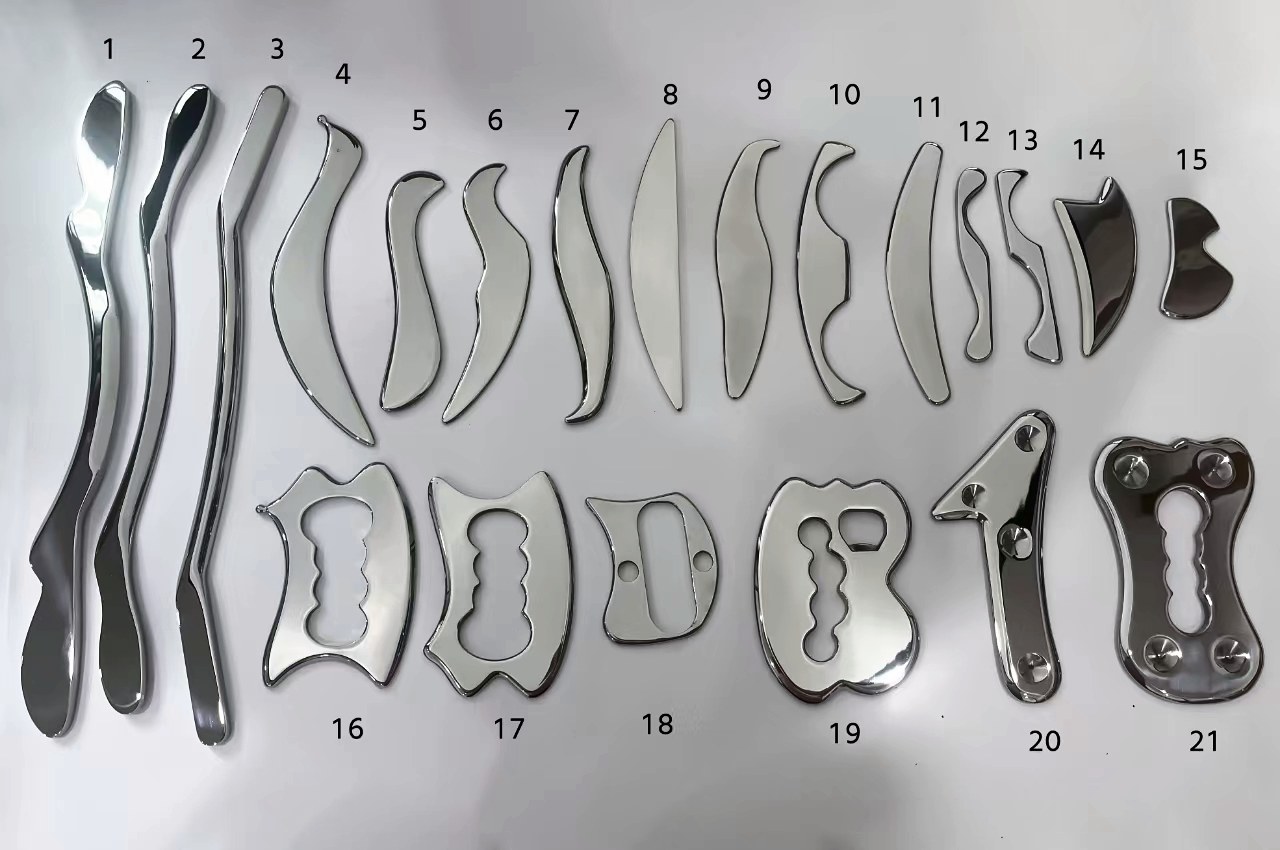
Three structures cover the wholesale programmes we run. The right one depends on whether the silhouette is already proven in your market. Wholesale price (EXW, USD, 200-5,000 pcs): Stainless steel 304 USD 1.49-5.99 per pc; Stainless steel 316 pricing on request. Logo and gift box or pouch: quoted per material and size. 200 pcs minimum, volume discounts, quotation within 24 hours.
Structure | What it involves | Typical starting quantity |
|---|---|---|
Stock shape, no logo | Production and packing only | From 200 pcs |
Stock shape with laser logo | A marking file and a setup, then production | From 200 pcs |
Custom shape | Tooling, sampling, approval, then production | From 1,000 pcs, Quoted per drawing |
Mixed orders are normal. A brand can take four stock shapes, add a logo to two of them and ship the whole set in one carton, which keeps freight per unit down on a first run.
Custom shapes are worth it when the silhouette itself carries the brand. They are not worth it on a first order, where the same budget spent on packing and photography returns more.
Customisation Beyond the Logo
Logo marking is the entry point, but three further options come up on almost every brief.
- Edge profile, which changes the scraping feel and can be specified per shape.
- Thickness, which changes weight and the pressure a user can apply.
- Etched or debossed branding, which survives longer than a surface print on a metal face.
Each of these is a production decision, so specify them before sampling. Changing a thickness after the sample is approved restarts the cycle.
Inspection, Packing and Documentation
Metal is easier to inspect than stone because defects are visible: a scratch, a polish swirl, a burr on an edge. We check edges by hand on every piece and inspect surfaces on a stated sampling plan, then photograph any rejection batch.
Packing follows the channel. Retail lines usually take a printed box with a moulded insert; marketplace lines take a pouch and a card; professional lines take a roll case. Carton dimensions and weights are issued with the quotation so freight can be estimated before the order is placed.
Lead Times and the Repeat Order
Stock shapes with a logo typically move through production faster than a new mould, and the packing stage is the variable one. Buyers planning a launch date should read how lead times are planned before fixing a campaign date.
The repeat order is where a programme proves itself. We keep the approved sample, the marking file and the packing specification on record, so the second run matches the first without a new approval cycle. Brands that order quarterly use that record to skip sampling altogether.
Building the Rest of the Range
Most buyers pair metal with a second material so the range has a price ladder. Stone and ceramic cover the entry and mid positions, and a full-line partner can produce all three and consolidate the shipment. Our OEM and ODM comparison explains which model suits each stage, and the stone programme covers the mineral side.
Where a brand sells into professional channels, the metal line usually carries the durability claim while the stone line carries the ritual story. That pairing gives a buyer two price points from one supplier, and it means the catalogue photography, the packing specification and the shipping schedule stay under one owner.
Consolidation matters more than it looks. One carton from one supplier removes the documentary overhead of a second shipment, and it keeps the arrival dates aligned so the whole range can go live on the same day rather than in three staggered batches.
Tell us the shapes, the grade you are considering and the destination market, and we will confirm the finish options, the order structure and the production window.