Sustainable Gua Sha Packaging | Alison Gua Sha Factory
How to choose eco-friendly packaging for your gua sha line: recyclable boxes, reusable pouches and honest claims — plus the MOQs and lead times to plan around. Quote within 24 hours.
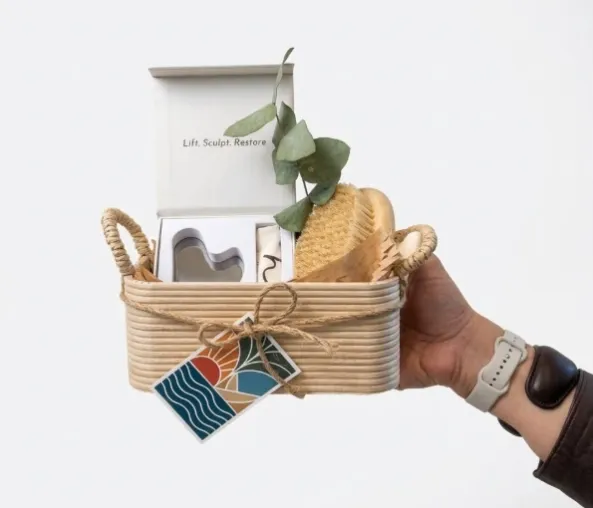
Sustainable packaging for a gua sha brand means three things at once: a box or pouch your customer can recycle or reuse, enough protection that a stone tool survives shipping without chipping, and claims printed on the pack that you can back up with a document if anyone asks. The simplest way to get all three is a recycled kraft or certified paper box with a printed cotton or linen pouch inside, ordered from the same supplier that makes your tools. A custom gift box starts at 500 pieces and a printed pouch starts at 500 pieces, so the packaging order and the tool order can run on one clock, with one artwork approval and one delivery to plan around. This guide is for brands ordering 100 pieces or more that want packaging they can defend, not just packaging that looks green in a product photo. It is not for a brand that needs a fully compostable pack certified for a specific market, because that is a separate specification to agree with your supplier in writing before production starts.
The gift set that arrived in pieces
A small beauty brand launches its first gua sha gift set for the holiday season. The founder spends weeks choosing the tools: a rose quartz board, a matching roller, a printed pouch with her logo. She orders pretty paper boxes from a packaging supplier she found separately, because the price per box is lower than her tool supplier quoted. The boxes look perfect in the sample photo, thin cream board with a soft-touch finish and a small window so the stone shows through. The tools ship from one factory, the boxes from another, and everything meets in her warehouse two weeks before launch. She packs the first fifty sets herself, and the fit is wrong. The board slides inside the box, the roller rattles against it, and there is no insert holding either piece in place, because nobody measured the inside of the box against the actual tools. She adds tissue paper to fill the gap and ships anyway, because the launch date cannot move.
The first customer emails arrive within a week. Two boards chipped at the edge. One roller cracked where it meets the handle. The founder refunds three orders, re-packs the remaining stock with foam she buys at retail, and learns the lesson that costs her the season: the box is not the wrapping around the product, it is part of the product, and a sustainable pack that fails to protect a stone tool is not sustainable at all, because every replacement doubles the shipping, the packaging and the waste.
Why sustainable packaging fails for stone tools
The first reason is a real conflict that no branding can wish away. A gua sha tool is a piece of stone, ceramic or metal, heavier and more fragile than the creams and serums it sits next to on a shelf. A paper-only pack that would be fine for a cotton pad will not protect a stone board in a courier bag. The protection has to come first, because a broken tool means a replacement shipment, and a replacement means a second box, a second pouch and a second delivery, which wipes out whatever material was saved on the first pack. When you choose packaging, ask how the tool is held inside the box before you ask what the box is made of. A moulded pulp insert, a fitted paper tray or a snug pouch that stops the tool moving will do more for your real environmental footprint than switching the outer board to a greener-sounding material while the tool rattles loose inside.
The second reason is that most of the words brands print on sustainable packaging are claims, and claims need paperwork. Recycled, recyclable, biodegradable, compostable and plastic-free each mean something specific, and each one means something different in different markets. A box can be recyclable in one city and not in another, and a material can be biodegradable in an industrial facility while sitting unchanged in a home compost heap. If your supplier cannot send you a certificate for the paper, the ink or the material you want to name, do not print the name. Ask for the document first, print only what the document supports, and keep the document on file with the order, because the customer who asks for proof is usually a retail buyer or a distributor, and they ask before they place a large order, not after.
The third reason is that packaging is often ordered as an afterthought, from a second supplier, on a second timeline. The tool order is placed, production starts, and only then does someone ask where the boxes are coming from, by which point the box supplier needs its own artwork approval, production time and shipping. Ordering the box and the pouch from the same supplier that makes your tools removes one timeline and one round of measurement errors, because the supplier already has your tool in hand and can build the insert around it. If you do use a separate packaging supplier, send them a physical sample of the tool before they quote, and ask them to confirm the inside measurements in writing.
Choosing the packaging that fits your brand
The right pack depends on how your customer meets the product, so start from the sales channel rather than from the material. A direct-to-consumer brand that ships single tools to customers' homes needs the lightest pack that still protects the tool, because every gram adds shipping cost and every layer adds waste your customer has to deal with. For that brand, a recycled kraft box with a printed cotton or linen pouch inside is usually the best balance: the box protects the tool in transit, the pouch becomes the storage the customer actually keeps, and the whole pack can be described honestly as a reusable pouch in a recyclable box, provided the paper and the pouch are what you say they are. Keep the print to one or two colours, because heavy ink coverage and foil finishes make a paper box harder to recycle.
A premium gift brand sells a set, not a single tool, and the box is part of the gift. That brand can justify a rigid gift box with a fitted insert, a printed pouch and a care card, because the customer keeps the box and the set is priced for it. A custom gift box starts at 500 pieces, a printed pouch starts at 500 pieces, and a custom flip-top box starts at 500 pieces, so a gift set run is a 500-piece commitment on the packaging even if the tool order is smaller. Order the box, the pouch and the tools together, approve one artwork set for all three, and ask for a finished sample of the whole set before production, because a gift set is judged as a set, and a box that does not match the tools inside it is noticed the moment the lid opens.
A spa, studio or wholesale buyer needs the opposite of a gift box. Their tools go into treatment rooms and retail shelves, so the pack has to be simple, stackable and cheap to store. For that buyer, a printed pouch with a simple outer carton is usually enough, and the money is better spent on the tool and on a care card that tells the customer how to clean and store it. A pouch starts at 500 pieces, so a studio ordering 500 tools can match the pouch run to the tool run exactly, and a buyer who needs a window on the pack so the stone shows on a shelf should know that a window box starts at 1,000 pieces. Whatever the channel, do not let the packaging order become larger than the tool order without a reason, because packaging sitting in a warehouse is money sitting in a warehouse, and a design change next season turns it into waste.

The claims you should not print
The riskiest sentence on a sustainable pack is the one that sounds the most reassuring. Biodegradable is the most common, and the least useful, because it says nothing about where, how fast, or under what conditions the material breaks down. Compostable is stronger, but only if the pack is certified for the composting system your customer actually has, and a certificate for industrial composting does not help a customer with a garden heap. Plastic-free is easy to print and hard to defend, because a box with a plastic window, a laminated finish or a plastic-coated insert is not plastic-free, and the window is the part your customer will notice first. If any part of the pack contains plastic, say which part, or drop the claim.
There are two safer ways to write the pack. The first is to describe what you did instead of what the pack is: recycled kraft board, a reusable cotton pouch, soy-based ink, no plastic window. A description of a material is easier to verify than a promise about what happens to it after use, and a retail buyer can check a material against a certificate in one email. The second is to print only the claim your supplier can document. If the paper is certified, say so and keep the certificate with the order. If the pouch is organic cotton, ask for the certificate before you print the word organic. If there is no certificate, leave the claim off the pack and put the honest description on instead. A pack that says less and proves everything it says will pass a retail buyer's checks. A pack that says more than it can prove will fail them.
Test the pack the way your customer will receive it, not the way it looks on a desk. Order a finished sample of the whole set, box, insert, pouch and tool together, and drop it from waist height onto a hard floor, then open it and look at the tool. Ship one sample to yourself by courier in the same outer packaging your customer will get. If the tool moves inside the box, the insert is wrong. If the box crushes at the corner, the board is too thin. A sample costs a few days: a laser-engraved sample takes 1 to 3 days, a silk-screen sample takes 7 to 10 days.
What to send with your inquiry
Send one message that lets your supplier quote the tools and the packaging together, because a split quote is where the timelines drift apart. Start with the tool: the material, the shape and size, and the quantity, including a few spare pieces for breakage and for your own samples. Then the packaging: whether you want a gift box, a pouch or both, whether the box needs a window, what you want printed on it, and whether you need an insert that holds the tool still. Add your logo artwork and say whether it needs colour, because a silk-screen logo starts at 1,000 pieces while a laser-engraved logo on a stock shape starts at 200 pieces per model. Add your target market and the documents that market requires, so certificates and test reports are prepared alongside production rather than chased after the goods have shipped. And add the date you need the goods, because the lead time is counted from artwork approval, not from the day you send the inquiry.
The lead times to plan around are the same ones that govern the tools. An unbranded stock order can ship in as little as 3 days. A branded stock order takes 25 to 30 days after artwork is approved, and that approval is the step most launches forget to schedule. A first order of 100 pieces is possible on in-stock and regular styles if our sales team confirms the style qualifies, but custom packaging starts at 500 pieces, so plan the first branded packaging run at 500 pieces even when the first tool order is smaller. We will reply with a quotation within 24 hours, with the recommended construction, the minimum order, the lead time and the price for your shape and quantity. The packaging unit price is quoted per size and per style, because a box for a facial board and a box for a body set are different boxes.
Pick the pack that protects the tool first, then make that pack as sustainable as the certificates you can actually get, then print only the claims those certificates support. Send the inquiry with the tool and the packaging in one message, approve a finished sample of the whole set before production, and count the clock from artwork approval. Get a quote through our contact page, or message us on WhatsApp, and start with the sample that matches the pack you plan to print.
Frequently asked questions
What is the minimum order for custom gift boxes and pouches? A custom gift box starts at 500 pieces, a printed pouch starts at 500 pieces, a custom flip-top box starts at 500 pieces, and a window box starts at 1,000 pieces. The packaging unit price is quoted per size and per style, so send the tool shape and the quantity with your inquiry and we will quote the box and the pouch together.
Can I order sustainable packaging with a 100-piece first order? A first order of 100 pieces is possible on in-stock and regular tool styles if our sales team confirms the style qualifies, but custom packaging starts at 500 pieces, so a 100-piece first tool order and a 500-piece first packaging order are two different commitments. Plan the first branded packaging run at 500 pieces, and ask sales to confirm whether your tool style qualifies for the 100-piece first order.
How long does branded packaging take? A branded stock order takes 25 to 30 days after artwork is approved, and an unbranded stock order can ship in as little as 3 days. Count the clock from artwork approval, not from the day you send the inquiry, and approve a finished sample of the whole set before production starts.