Laser vs Silk-Screen Gua Sha Logo | Alison Gua Sha Factory
Laser vs silk-screen logo on gua sha: MOQ, sample times and which method suits your brand. Laser from 200 pcs, silk-screen from 1,000 pcs. Compare before you order.
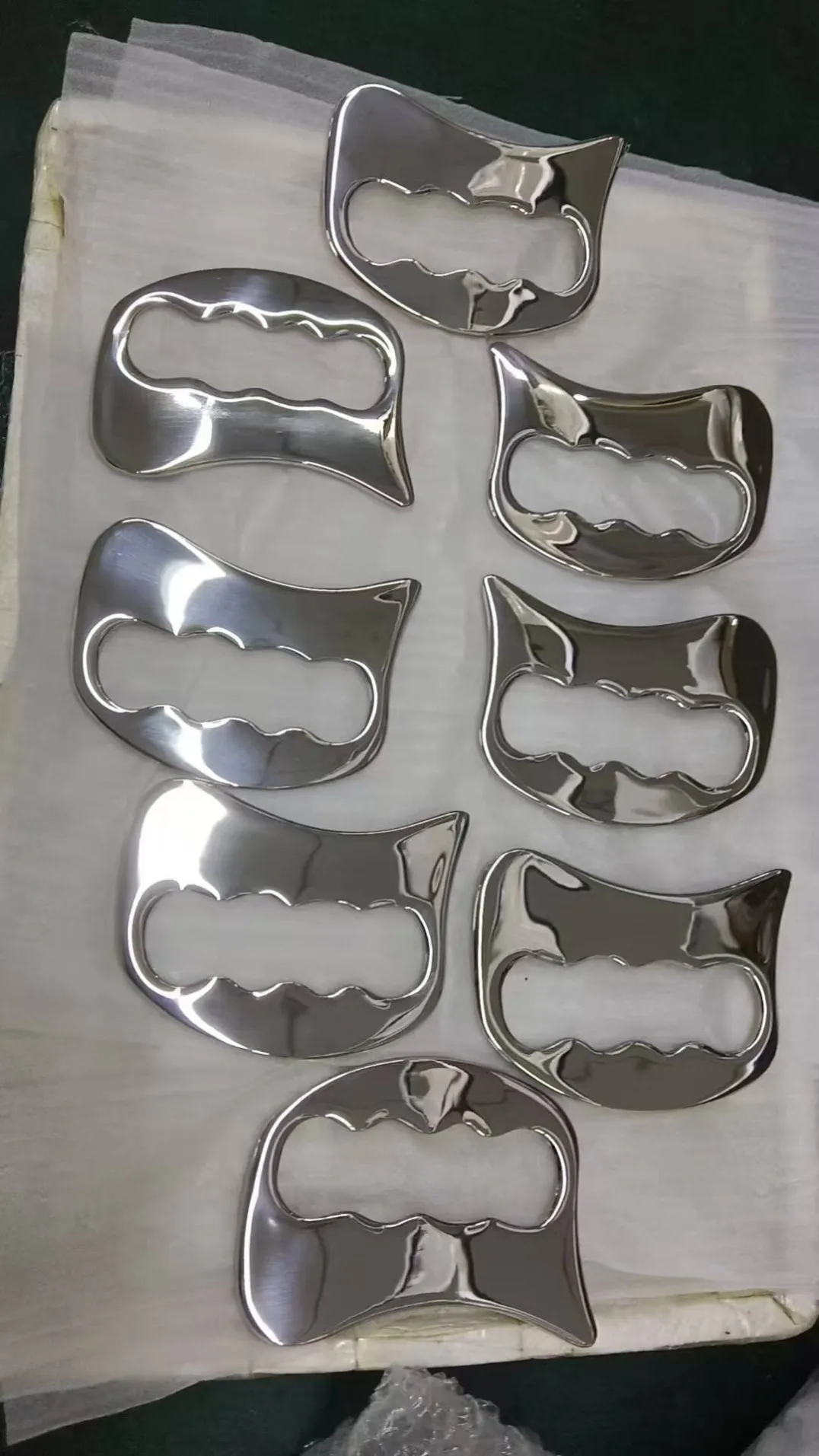
Laser engraving or silk-screen printing — which logo method should your gua sha brand order? Laser engraving starts at 200 pieces per stock model, with a laser-engraved sample ready in 1 to 3 days, and it etches your logo into the surface of the tool. Silk-screen printing starts at 1,000 pieces, with a sample ready in 7 to 10 days, and it prints your logo in ink on the surface. Both take the same branded-stock lead time of 25 to 30 days after artwork approval. Choose laser when the logo must survive handling, oil and washing; choose silk-screen when the logo needs colour and the order is large enough to justify the higher minimum.
The buyer who picked the wrong logo method
Picture this. You run a facial brand and you order 500 stainless steel gua sha boards with your logo printed in a soft gold colour, because the printed proof looked warm and premium on screen. The boards arrive looking beautiful. Then your customers start using them with facial oil, wiping them clean after every use, and within weeks the gold starts to thin at the edges where fingers grip the board. Nobody complains about the steel. They complain that the brand looks worn out, and a worn logo reads as a cheap tool, even when the tool itself is perfect.
Now picture the buyer on the other side of the same choice. She runs a gift-set brand and orders 200 ceramic boards with her logo laser-engraved, because engraving sounded like the premium option. The engraving is crisp and permanent. But her logo is a two-colour design — a dusty pink wordmark with a small green leaf — and engraving only gives her one tone: the colour of the ceramic showing through where the glaze is cut. The pink and the green are gone, and with them the look her customers recognise on the shelf.
Both buyers made the same mistake. They picked a logo method before they picked what the logo had to do. A logo on a gua sha tool is not a picture on a page. It is handled with oiled hands, wiped clean, dropped in a bag, and held against skin every day. The right question is never which method is better in general. It is which method survives your customer's routine, and which one your quantity can support.
How laser engraving actually works on a gua sha tool
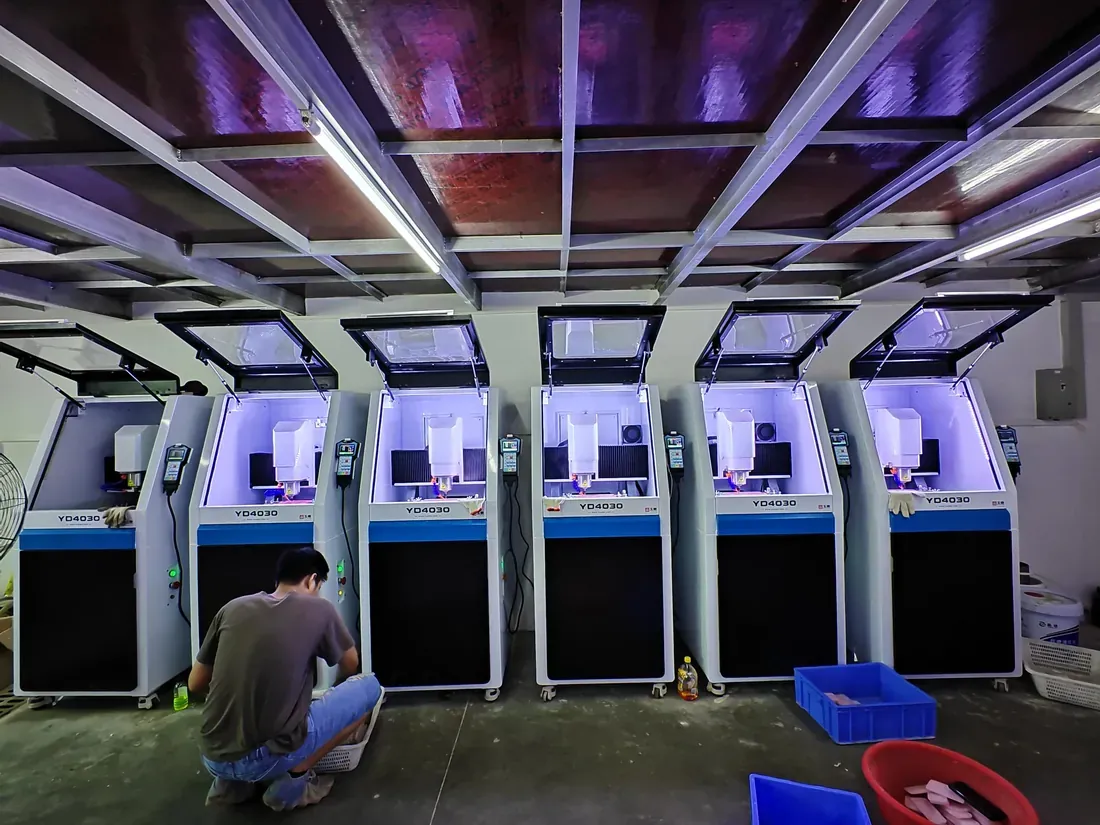
Laser engraving cuts your logo into the surface of the tool. There is no ink and nothing sitting on top of the surface to wear away, which is why it is the default choice for most of the private-label orders we make. On stainless steel, the laser marks the metal directly, and on natural stone it etches into the stone, so the logo becomes part of the tool rather than a layer on it. That is the reason buyers who sell premium facial tools, or tools used with oil every day, usually start here: the logo looks the same on the hundredth use as it did on the first.
The commercial terms are the simplest we offer. A stock shape with a laser-engraved logo starts at 200 pieces per model, and there is no mould fee, because nothing is being moulded — your artwork goes straight onto a shape we already make. A first order of 100 pieces is possible on in-stock and regular styles if our sales team confirms the style qualifies, so a small brand can test a logo without committing to a large run. A laser-engraved sample takes 1 to 3 days, which means you can hold the real thing, check the depth and the legibility of the lettering, and approve it before the full order is made. The cost of the logo itself is quoted per material and size, because engraving a small stone board and a large steel body tool are different jobs, and we do not publish a single fixed logo price.
Laser engraving has one honest limit, and it is the one the gift-set buyer above ran into: it gives you one tone. The mark is the material itself, cut or darkened by the laser, so a multi-colour logo becomes a single-colour mark. Fine lettering works well, and a clean wordmark engraves beautifully. A logo that depends on two or three colours to be recognisable does not. If your brand mark only works in colour, laser engraving will flatten it, and no amount of depth will bring the colour back.
How silk-screen printing actually works
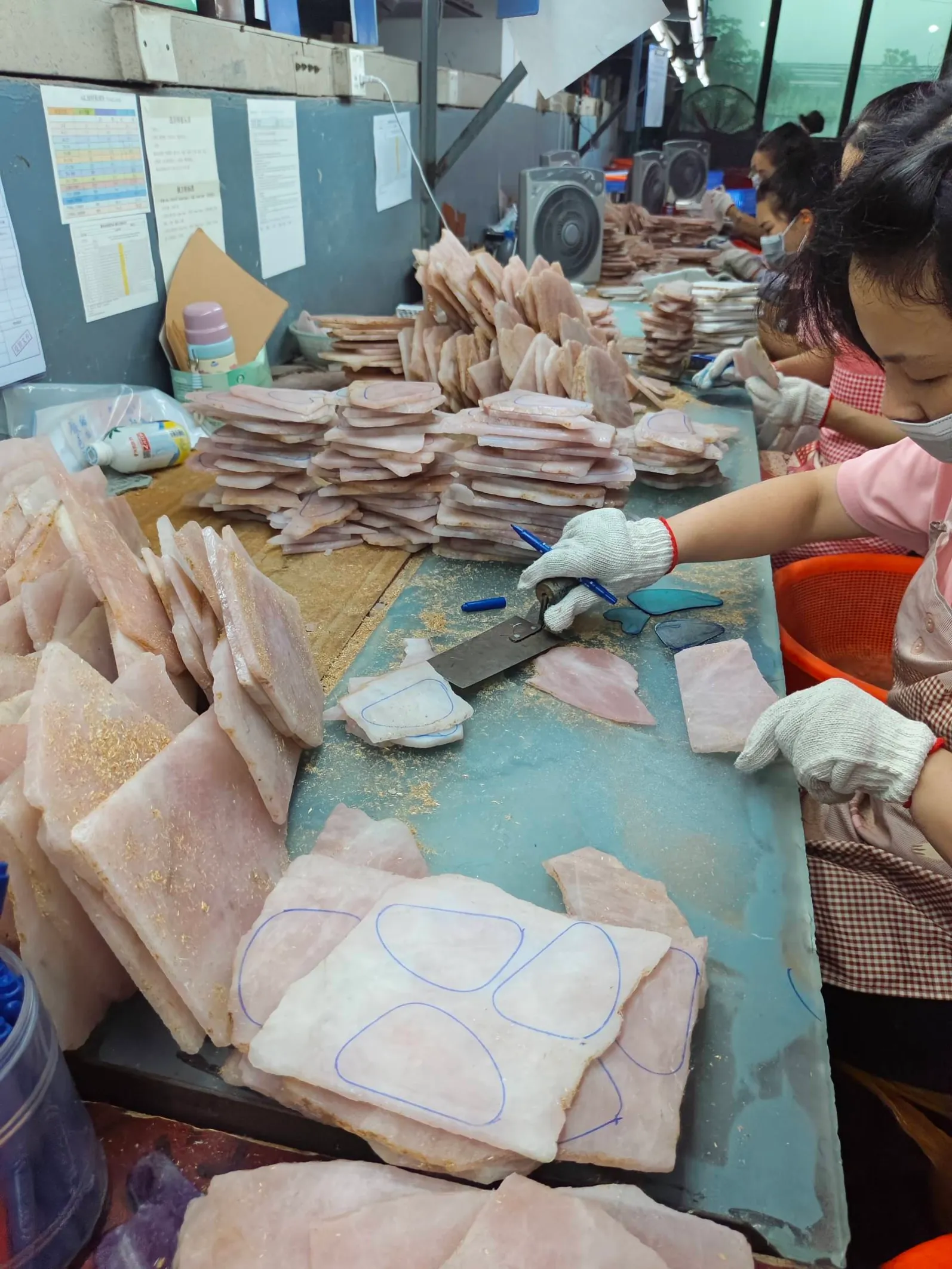
Silk-screen printing lays your logo on the surface of the tool in ink, which is exactly what makes it the right choice when colour matters. A printed logo can carry your brand colours — the pink wordmark, the green leaf, the gold accent — in a way engraving cannot. It suits a large flat face on a board, where the print has room to sit cleanly, and it suits brands whose packaging and logo share one colour story that has to match across the box, the pouch and the tool.
The terms are stricter, and they should be, because printing is a different kind of setup. Silk-screen printing starts at 1,000 pieces, five times the laser minimum, so it only makes sense once the order is large enough to carry that commitment. A silk-screen sample takes 7 to 10 days, longer than a laser sample, because the screen has to be made and the ink has to be matched and tested on the real material. Like laser, the logo cost is quoted per material and size rather than published as a fixed price, and the branded-stock lead time is the same 25 to 30 days after artwork approval. Unbranded stock, for comparison, can ship in as little as 3 days, but an unbranded tool has no logo at all, so that speed is only useful when the logo is not part of the order.
Silk-screen has its own honest limit, and it is the mirror image of laser's: the logo sits on the surface, so it lives or dies by adhesion. Ink on a smooth, glazed or oiled surface needs to be tested, not assumed. That is why the sample matters more here than anywhere else in the order. Approve the print on a physical sample, rub it the way a customer would, wipe it with oil the way a customer would, and check the edges where fingers grip the board. A print that survives that test will survive your customer. A print approved from a screen photo will not tell you any of this.
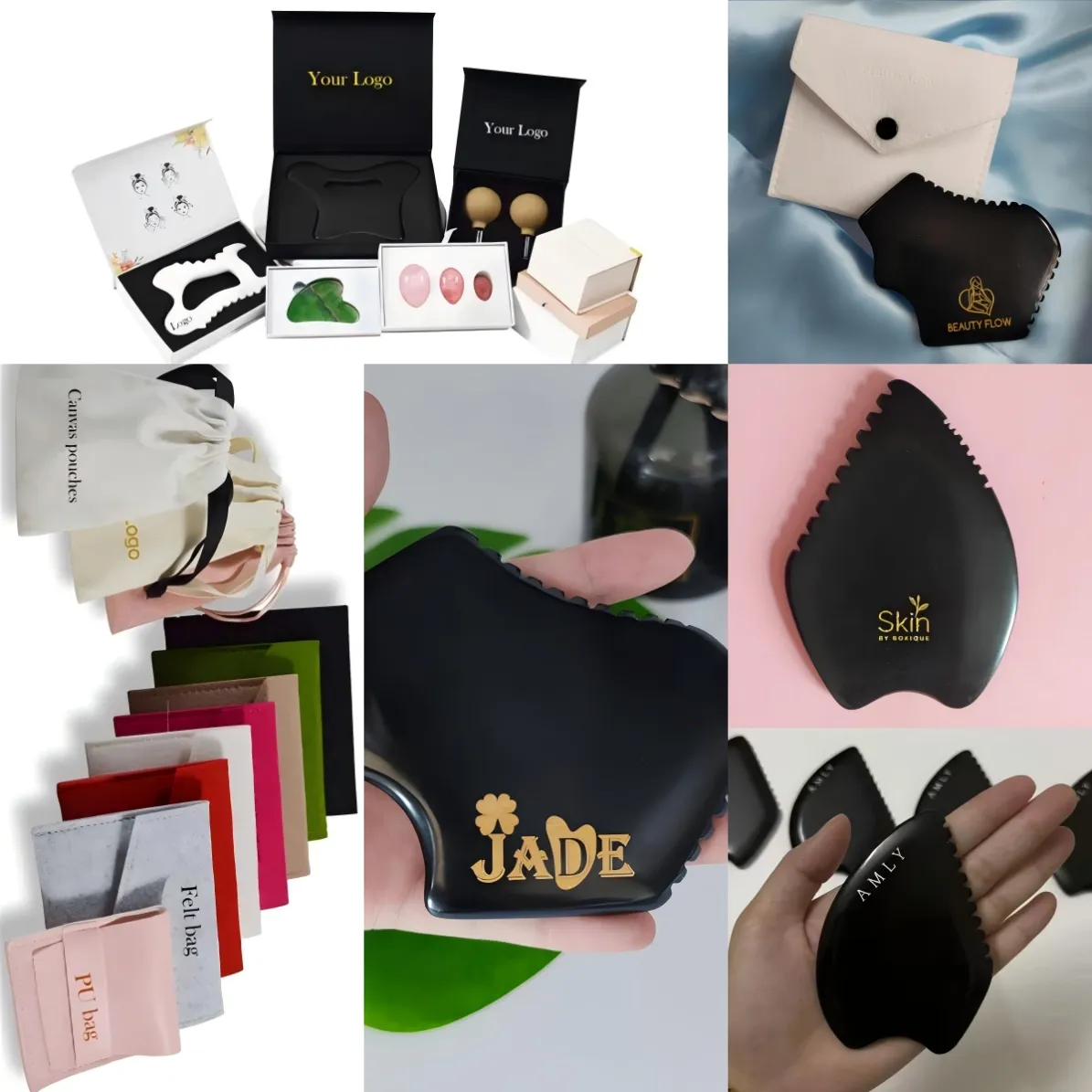
The numbers side by side
The two methods are easier to choose between once the numbers are next to each other. Laser engraving starts at 200 pieces per stock model, with no mould fee, and a sample in 1 to 3 days. Silk-screen printing starts at 1,000 pieces, with a sample in 7 to 10 days. Both need artwork approval before the clock starts, and both take 25 to 30 days for a branded stock order after that approval. Both are quoted per material and size for the logo cost, with no fixed logo unit price published, and both sit on top of the same tool prices: bian stone USD 0.78 to USD 5.89 per piece, natural stone USD 0.69 to USD 5.99, stainless steel 304 USD 1.49 to USD 5.99, ceramic USD 1.49 to USD 5.49 and resin USD 0.59 to USD 3.99, all EXW, for orders of 200 to 5,000 pieces. Stainless steel 316 is quoted per style on request.
The quantity gap is the number that decides most orders. At 200 to 500 pieces, laser engraving is the only one of the two that is open to you, and it is open on a stock shape with no mould fee. At 1,000 pieces and above, both methods are open, and the choice becomes about the logo itself rather than the minimum. Custom shapes follow their own minimums on top of this: a custom bian stone shape starts at 200 pieces, a custom natural stone shape at 500 pieces, and a custom stainless steel or ceramic shape at 1,000 pieces because a mould is required, while a resin custom shape is quoted per shape. A gift box or a pouch starts at 500 pieces, so packaging can be added to either logo method once the order reaches that size.
One more number belongs in this comparison, because it is the one buyers forget: we quote within 24 hours. Send the shape, the quantity, the logo artwork and the material, and the quotation comes back with the logo method, the lead time and the packaging in the same reply, instead of in three separate rounds. That matters most when the logo method is still undecided, because the quote can show both options side by side for the same quantity, and the difference between them is usually smaller than the cost of choosing wrong and reordering.
Which method fits your brand
Choose laser engraving when the logo has to last. A premium facial brand, a tool sold for daily use with oil, a stainless steel body tool that will be wiped clean after every session, and any brand whose logo is a clean single-colour wordmark all point to laser. It also fits when the order is small: a first order of 200 pieces, or 100 pieces on a qualifying in-stock style, can carry a laser logo, while silk-screen cannot start at all below 1,000 pieces. If you are testing a new market, launching a first private-label run, or ordering for a training kit where the tool will be handled hard, laser is the lower-risk way to put your name on the tool.
Choose silk-screen printing when the logo has to be in colour. A gift set where the tool must match the box, a retail line where the logo colour is the brand recognition, a promotional bundle where the print carries a campaign colour, and any order of 1,000 pieces or more where the artwork has two or more colours all point to silk-screen. It also fits when the logo sits on a large flat board face with room for the print to breathe. Small, fiddly lettering and curved edges are harder for print than for engraving, so the artwork should be checked on a sample before the run, not after.
There are two cases where the answer is to order a sample of each. The first is a brand whose logo works in one colour but looks better in two: a laser sample shows you the honest single-tone version, and a silk-screen sample shows you the colour version, and holding both tells you which one your customer will actually recognise. The second is a brand ordering a new material for the first time, because engraving and printing behave differently on stone, steel, ceramic and resin, and the material you choose changes the answer. A laser-engraved sample takes 1 to 3 days and a silk-screen sample 7 to 10 days, so ordering both costs a little over a week and saves a reprint.
What goes wrong with each method
Most laser problems come from artwork that was never meant to be engraved. Lettering that is too small or too thin disappears when it is cut into stone or steel, and a logo with fine detail turns into a blur at the size of a gua sha board. Send vector artwork, keep the smallest lettering large enough to read at arm's length, and approve the depth on a physical sample, because a screen proof cannot show you how deep the cut reads in real light. The second laser mistake is engraving a logo that needs colour to make sense, and discovering on arrival that the colour is gone. If the colour carries meaning, say so in the inquiry and the quotation will steer you to print instead.
Most silk-screen problems come from approving the print without testing it. A print approved from a photo has never been rubbed, oiled or wiped, and the first customer will do all three. Approve the physical sample, rub the printed area with your thumb, wipe it with facial oil, and check the edges where the board is gripped. The second silk-screen mistake is ordering below the real commitment: a 500-piece order cannot carry a 1,000-piece print minimum, so the choice is to raise the quantity, switch to laser, or split the order across two drops. The third is sending low-resolution artwork: print needs clean edges at full size, and a small image stretched to fit a board face will print soft no matter how good the screen is.
The shared mistake is approving artwork late. A branded stock order takes 25 to 30 days after artwork approval, so the clock starts at approval, not at the order, and a logo method that needs a 7-to-10-day sample cannot be rushed by approving the artwork on the last day. Send the artwork with the inquiry, get the sample in the same week, and the production clock starts while there is still time to fix the logo instead of after it.
Your next step
Send us four things and we will quote within 24 hours: the shape you want, in-stock or custom, the quantity, your logo artwork, and the date you need the goods. If you have not decided between laser and silk-screen, say so in the inquiry and order one sample of each first. A laser-engraved sample takes 1 to 3 days and a silk-screen sample 7 to 10 days, and holding both tells you more about the logo than any comparison article can. Check the laser sample for legibility at arm's length and the print sample for adhesion after oil and wiping, then choose. If you already know which method fits, send the artwork with the inquiry so the logo quote comes back accurate the first time. Every shipment goes through three full inspections with edges checked by hand, our tools are RoHS compliant, and a stone certificate is available on request.
Frequently asked questions
What is the minimum order for a laser-engraved logo? A stock shape with a laser-engraved logo starts at 200 pieces per model, with no mould fee. A first order of 100 pieces is possible on in-stock and regular styles if our sales team confirms the style qualifies.
What is the minimum order for a silk-screen printed logo? Silk-screen printing starts at 1,000 pieces.
How long does a logo sample take? A laser-engraved sample takes 1 to 3 days and a silk-screen sample takes 7 to 10 days.
How long does a branded order take? A branded stock order takes 25 to 30 days after artwork approval, for either logo method. Unbranded stock can ship in as little as 3 days.
How much does the logo cost? Logo engraving and printing are quoted per material and size, so send the artwork and the material with your inquiry and the quotation will include the logo cost.
Can I get my logo in colour? Yes, with silk-screen printing, which prints in ink and carries brand colours. Laser engraving gives a single-tone mark in the material itself, so a multi-colour logo should be printed rather than engraved.
Related reading:
Get a quote: